
Affiliate disclosure: As an Amazon Associate, we earn from qualifying purchases, at no extra cost to you. We research rather than test, and commissions never change our rankings. This site is reader-supported: those commissions pay for hosting, research and keeping every guide up to date, so if a guide helped you, buying through our links is an easy way to support it. How we rank · Full disclosure
A quality all-terrain tire with the three-peak mountain snowflake (3PMSF) mark meets an industry acceleration-traction standard for severe snow, but that standard only measures straight-line acceleration on packed snow — not braking, cornering or ice. A dedicated winter tire's softer rubber compound stays pliable at lower temperatures and adds real grip in exactly those areas. The honest answer depends on how much sustained cold and ice the tire actually has to handle.
3PMSF vs M+S: Two Different Bars
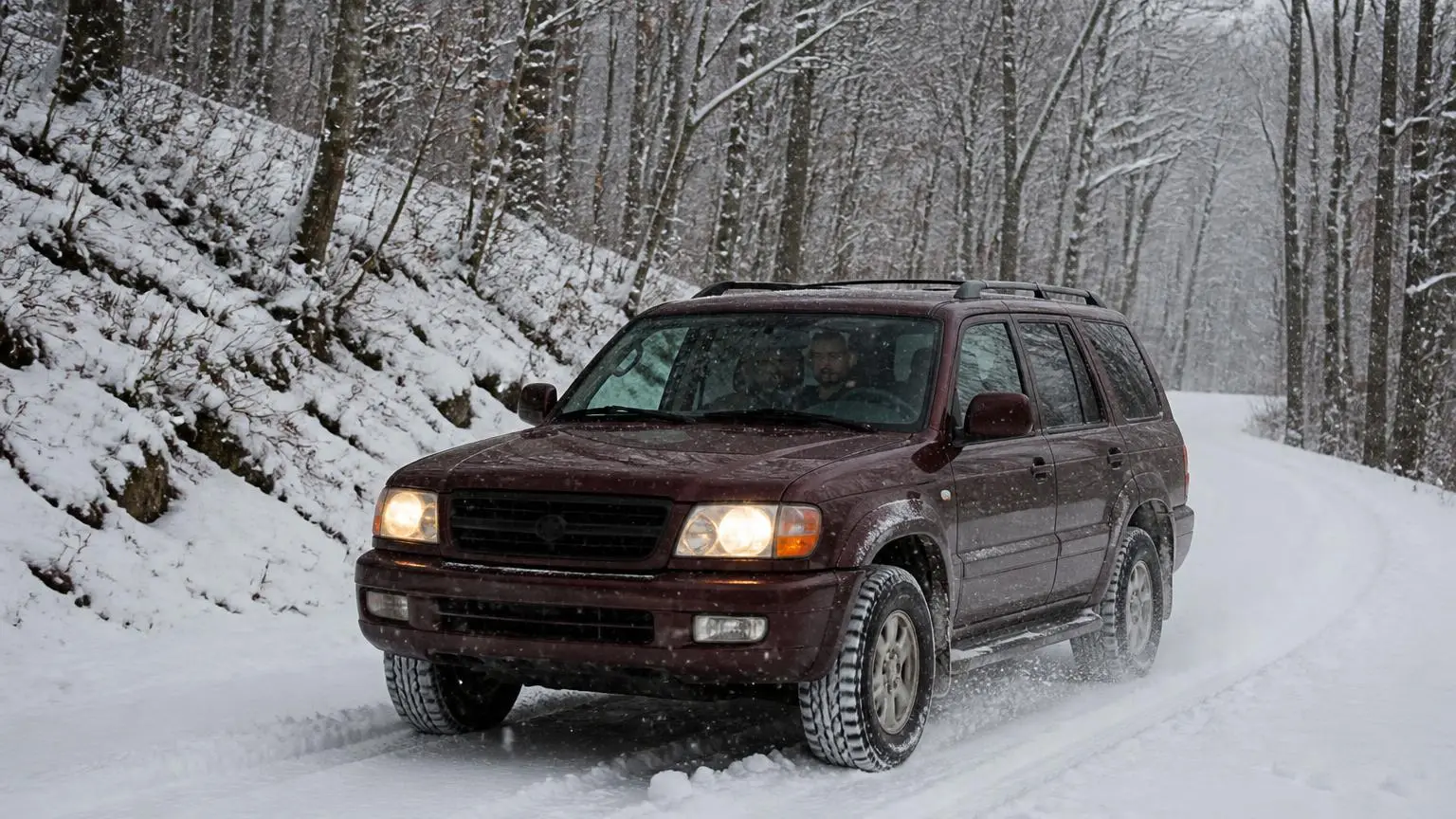
"All-terrain" describes a tread pattern designed for a mix of pavement, gravel and light off-road use — it says nothing on its own about snow performance. Mud and Snow (M+S) is the lower bar: a manufacturer self-certifies that the tread has at least 25% void area, with no independent test involved. The three-peak mountain snowflake is the higher bar, defined by USTMA and earned only by scoring at least 110 on the ASTM F1805 traction-index test on packed snow (112 for the 16-inch reference-tire class) against a reference tire rated 100 — about 10% better acceleration traction. Most all-terrain tires carry M+S by default; a smaller share also carry 3PMSF, and checking the actual sidewall symbol, not the "all-terrain" name, is the only way to know which a given tire has.
What the 3PMSF Test Doesn't Measure
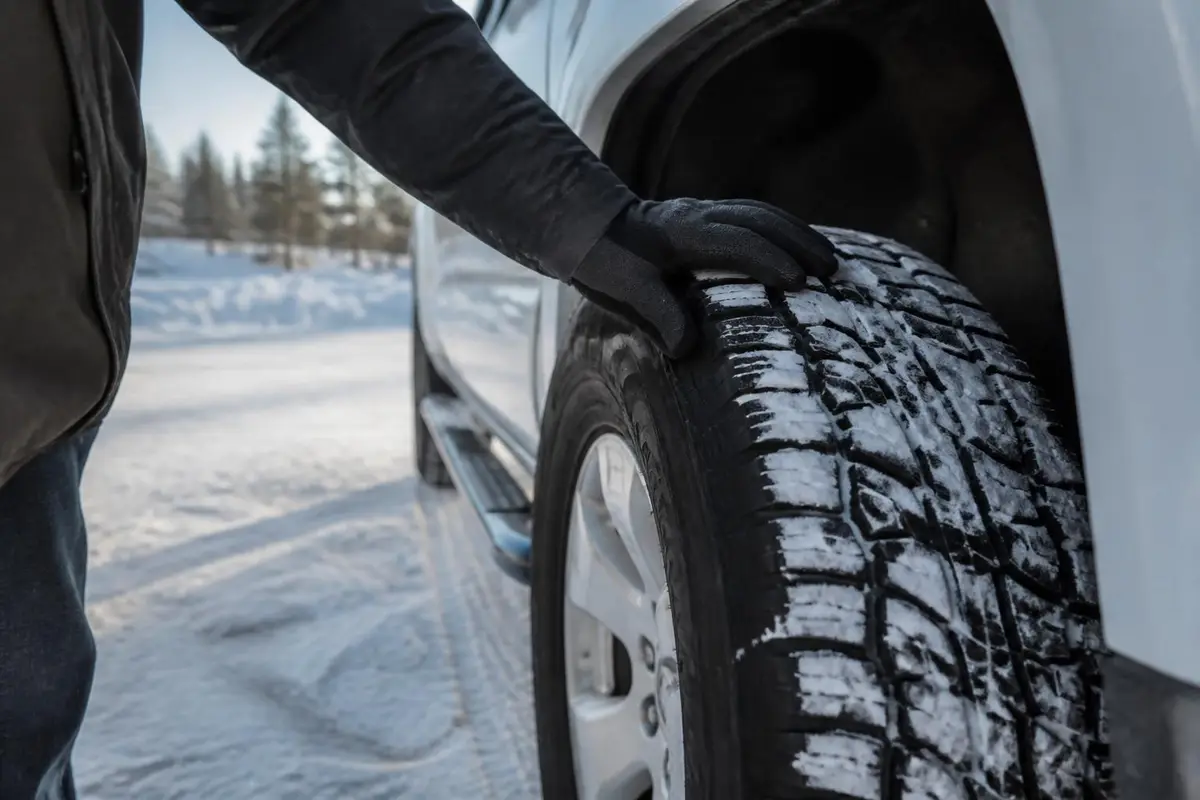
ASTM F1805 measures straight-line acceleration traction on medium-packed snow only — it says nothing about braking distance, cornering grip, or performance on ice. A tire can pass 3PMSF comfortably and still stop and turn worse on ice than a dedicated winter tire, because a winter tire's rubber compound is formulated with a higher proportion of natural rubber specifically to stay soft and flexible in cold temperatures (Continental); a compound not designed for winter conditions goes hard and brittle in the cold, which is exactly what cuts an all-terrain tire's grip once temperatures drop well below freezing.

A Different Label Entirely: UTQG
Tires also carry a separate federal Uniform Tire Quality Grading (UTQG) rating — treadwear, traction (AA to C) and temperature resistance (A to C) — required since 1978 (NHTSA's TireWise program). UTQG's traction grade measures wet-pavement braking, not snow or ice, so it answers a different question than 3PMSF entirely; a tire with a top traction grade can still lack the snowflake mark, and vice versa. Checking both ratings separately, rather than assuming one implies the other, avoids buying on the wrong number.
All-Terrain vs All-Season in Snow: Which Is Better?
An all-terrain tire is better in snow than a typical all-season tire only when it carries the three-peak mountain snowflake mark; the name "all-terrain" alone proves nothing. Michelin describes all-season tires as offering acceptable snow traction in areas with light winter weather, with rubber that stiffens as temperatures drop and reduces grip. It also explains that the M+S marking on those tires is based on tread design set by the manufacturer, not a certified performance test, while the snowflake mark requires passing a standardized traction test. That puts a snowflake-rated all-terrain ahead on proven snow traction, and an M+S-only all-terrain on roughly the same footing as an ordinary all-season for certification purposes. Check the sidewall for the symbol rather than relying on how aggressive the tread looks. Neither tire type is tested for ice by the snowflake standard, so for sustained cold or icy roads the winter-tire comparison below still applies.
When a 3PMSF All-Terrain Tire Is Enough
For occasional snow — a few storms a season, mostly on plowed roads, without sustained sub-freezing driving — a 3PMSF-rated all-terrain tire is a reasonable single-tire-set compromise, since it also has to perform the rest of the year on pavement, gravel and light trail use, and it satisfies most states' traction requirements on its own. The tread depth bar varies by state: Colorado's Traction Law requires at least 3/16 inch, while Washington's traction-tire rule (WAC 204-24-040) requires only 4/32 inch (1/8 inch) on a tire carrying the M+S or mountain/snowflake mark — both numbers well short of a fresh tire's tread depth, so a tire can satisfy a state's traction requirement and still be closer to needing replacement than it looks.
When a Dedicated Winter Tire Is the Better Call
Daily winter driving in a genuinely cold climate, frequent ice, or mountain-pass commuting are conditions where the compound difference matters most, since ASTM F1805 never tests ice or braking at all. See winter and snow 4WD for how dedicated winter tires compare against chained all-terrains, and best all-terrain tires for snow if an all-terrain tire is still the right call.
Chains Can Still Apply, Rating or Not
A 3PMSF-rated tire satisfies a state's Traction Law in most cases, but a stricter posted Chain Law, or Caltrans's R-3 chain-control level, requires chains on every vehicle regardless of tire rating. Check the current requirement for a specific route — see are snow chains worth it for the exact chain-control levels — rather than assuming a good tire rating is always an exemption.
Recommended gear
Gear for snow and winter trips
Affiliate disclosure: As an Amazon Associate, we earn from qualifying purchases, at no extra cost to you. Purchases through these links help keep this site running and up to date. Learn more

Best for getting unstuck from sand, mud or snow without another vehicle.
- Nylon recovery boards that give spinning tires grip in sand, mud or snow.
- Double as a shovel to clear sand from in front of the tires.

Best for a kinetic rope with matching soft shackles.
- 7/8 in x 30 ft kinetic rope plus two 7/16 in soft shackles.
- Comes with a waterproof storage bag.

Best for a compact compressor for tires up to 33".
- Compact 12V compressor, 120 PSI, for tires up to 33 in.
- Small enough to keep in the vehicle full-time.

Best for plugging a tread puncture on the trail.
- Reamer-and-plugger kit for tread punctures.
- Lets you plug a tire on the trail instead of changing it.
We research products from manufacturer specs and owner feedback; we don't test them ourselves. How we choose.
Sources
- USTMA — TISB 37: Tires for Use in Severe Snow Conditions — The 3PMSF mark requires a minimum ASTM F1805 traction-index score of 110 (112 for 16-in reference tire) versus a reference tire rated 100 — about 10% better acceleration traction on packed snow, measured on straight-line acceleration only.
- Colorado DOT — Passenger Vehicle Traction and Chain Laws — Colorado's Traction Law accepts tires with the mud/snow (M+S), all-weather, or 3PMSF mark and at least 3/16-inch tread depth as meeting the traction requirement.
- Continental — Buying Winter Tires — Winter tire compounds use a higher proportion of natural rubber to stay soft and flexible in cold temperatures; a compound not designed for winter goes hard and brittle in the cold.
- NHTSA — TireWise: Tire Safety Ratings and Awareness — The Uniform Tire Quality Grading (UTQG) system rates treadwear, wet-traction (AA-C) and temperature resistance (A-C) — a separate rating from 3PMSF that doesn't measure snow or ice performance.
- Washington State Legislature — WAC 204-24-040, Traction Tires — Washington's approved traction tire requires only 4/32 inch (1/8 inch) tread and an M+S or mountain/snowflake sidewall mark.