
Affiliate disclosure: As an Amazon Associate, we earn from qualifying purchases, at no extra cost to you. We research rather than test, and commissions never change our rankings. This site is reader-supported: those commissions pay for hosting, research and keeping every guide up to date, so if a guide helped you, buying through our links is an easy way to support it. How we rank · Full disclosure
TL;DR
- Colorado's Traction Law — the lower of its two winter-storm tiers — accepts chains "or an approved alternative traction device," and AutoSock says CDOT approved it as the only textile traction device meeting that requirement.
- Colorado's stricter Passenger Vehicle Chain Law requires chains or an approved alternative traction device on every vehicle, no drivetrain exemption — the same tier a fabric sock has to satisfy.
- A sock stretches on by hand with no tensioning tool, which is the real mechanical reason it installs faster than a chain — SAE's chain-clearance classes (S/U/W) don't apply to a fabric sock the way they do to a metal chain.
- Sizing is by tire diameter and width, not vehicle model — the same truck can need two different sock sizes across trims and wheel packages.
At a Glance
| Traction device | Best for | Trade-off |
|---|---|---|
| Fabric snow sock | Occasional storm use; fastest hand-fit, no tool | Less bite than metal in deep/icy conditions; wears faster on bare pavement |
| Cable-style chain | Regular winter driving; quicker than a link chain | Less deep-snow bite than a ladder-style link chain |
| Ladder-style link chain | Sustained deep, packed mountain-pass snow | Heaviest, slowest to install, roughest on bare pavement |

Best for Owners of passenger cars and light SUVs who want an established, widely available fabric traction device.
- Fabric snow sock.
- Passenger-vehicle fitment.
- Pack of 2.

Best for Owners of larger SUVs, vans and pickups needing an XL fitment sized for those tires.
- Pro Series fabric traction device.
- XL sizing for SUV/van/pickup.
- Pack of 2.
Best for Owners running larger truck tires who need the widest fitment in the same product line as the XL pick.
- Pro Series fabric traction device.
- XXL sizing for larger truck tires.
- Pack of 2.

Best for Owners comparing a second brand against the AutoSock and K&K Auto lines above.
- Fabric traction device.
- N47 fitment.
- Pack of 2.
How a Snow Sock Actually Works
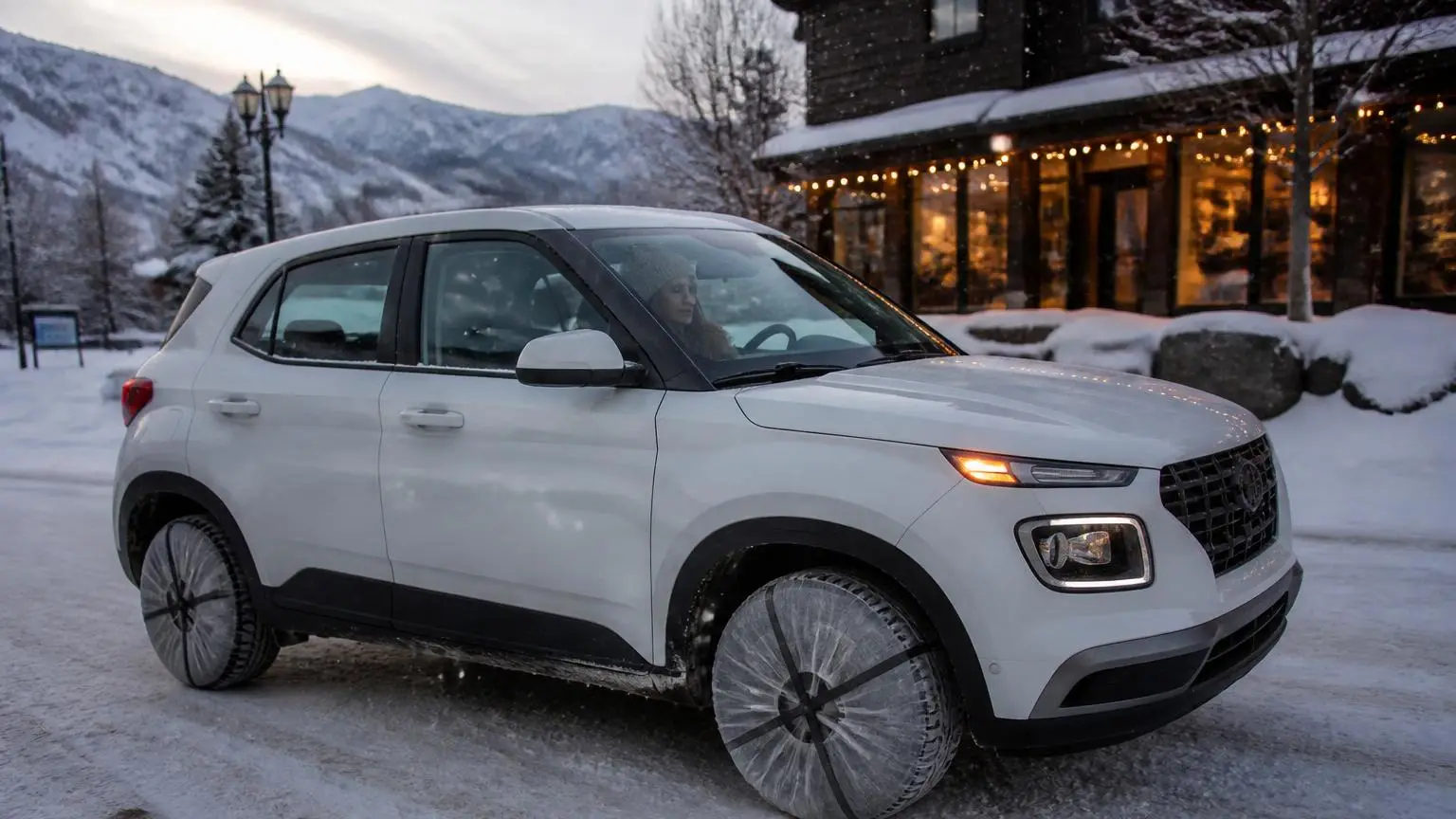
Unlike a metal chain, a fabric snow sock relies on the textile's weave gripping snow and compacting it slightly for traction, rather than a rigid metal link biting in. It stretches over the tread by hand with no tensioning bar or lever tool at all, which is the actual mechanical reason it installs faster than a chain — a chain's speed disadvantage isn't the metal itself, it's the tensioning step a sock skips entirely. That makes socks lighter and more compact to store, at some trade-off in raw traction on deep or icy conditions compared with a metal chain.
Are Snow Socks Legal in Place of Chains? What Colorado's Two Tiers Actually Require
It depends on the state and vehicle class. Colorado runs a two-tier system: its Traction Law (the first tier, activated during a winter storm) accepts AWD/4WD vehicles with mud-and-snow or winter tires at 3/16-inch tread, all-weather tires at the same tread depth, or "chains or an approved alternative traction device" as compliant options. AutoSock's own regulatory page states it is the only textile traction device CDOT has approved to meet that requirement. Colorado's stricter Passenger Vehicle Chain Law — the final tier before road closure — requires chains or an approved alternative traction device on every vehicle, with no drivetrain exemption; a fabric sock has to clear this tier too, not just the lighter Traction Law. Non-compliance carries a $100 fine plus a $33 surcharge, rising to $500 plus a $157 surcharge if it causes a road closure. Other states vary in how explicitly they name fabric devices versus metal chains in statute, so confirming the specific requirement for a route before relying on socks alone is worth the few minutes it takes — see winter and snow 4WD for the chain-law background.
Sizing by Vehicle Class, Not Just Model
The picks above scale from a standard passenger-vehicle fitment (AutoSock HP870) up through XL and XXL sizes from the same K&K Auto line for SUVs, vans, pickups and larger trucks. Confirm the tire's actual diameter and width against the maker's fitment chart rather than sizing off vehicle body style alone, since the same model often spans more than one tire size across trims and wheel packages — a base trim on a smaller factory wheel and an off-road trim on a larger one can need two different sock sizes.
When Socks Make More Sense Than Chains
A driver who needs an occasional, get-you-through-the-storm traction aid gets more value from the lighter, more compact sock; a driver doing regular chain-controlled mountain-pass runs gets more from a metal chain's deeper bite and longer service life on repeated hard use. See snow chains vs snow socks for the direct comparison.
Installing and Storing a Sock
A sock stretches over the tread by hand, with no tensioning bar or lever tool, which is the main install-speed advantage over a chain. Fabric wears faster than metal on bare, dry pavement, so removing a sock once the road is clear extends its life — the makers generally intend socks for intermittent storm use rather than sustained daily winter driving over cleared roads.
How We Rank Snow Socks
Every pick here is weighed against its manufacturer-stated fitment range and construction, cross-referenced with a wide base of verified owner reviews on installation and grip. We do not buy or install snow socks ourselves — see how we rank for the full method and affiliate disclosure for how the site is funded.
Sources
- Colorado DOT — Passenger Vehicle Traction and Chain Laws — Colorado's two-tier system: the Traction Law accepts chains or an approved alternative traction device among its compliant options; the stricter Passenger Vehicle Chain Law requires chains or an approved ATD on every vehicle regardless of drivetrain; fine amounts.
- AutoSock USA — Regulations and Legal Status — AutoSock's own manufacturer claim of being the only textile traction device approved to meet Colorado's chain-law requirement, and nationwide approval claims.
- SAE J683 (via Laclede Chain — SAE Classifications) — SAE chain-class clearance figures, used to contrast a metal chain's clearance-class requirement against a fabric sock's lack of an equivalent clearance class.
- Caltrans — Chain Controls / Chain Installation — R1/R2/R3 chain-control levels, used for the at-a-glance comparison against California's alternative-traction-device rules.
- National Weather Service — Winter Weather Watches, Warnings and Advisories — Winter Storm Watch/Warning definitions, used for when a sock's occasional-storm use case actually applies.