

Affiliate disclosure: As an Amazon Associate, we earn from qualifying purchases, at no extra cost to you. We research rather than test, and commissions never change our rankings. This site is reader-supported: those commissions pay for hosting, research and keeping every guide up to date, so if a guide helped you, buying through our links is an easy way to support it. How we rank · Full disclosure
Chains use rigid metal links, built to SAE clearance classes and rated for sustained or repeated use, that dig into packed snow and ice. Snow socks are a woven fabric device that stretches over the tire and grips through friction against the tread rather than mechanical bite — lighter, quieter and faster to install, but not built for the same repeated, heavy use. The right pick depends on how often and how hard the actual winter driving is, and on which device the specific route's chain-control law actually names.

At a Glance
| Snow chains | Snow socks | |
|---|---|---|
| How it grips | Rigid metal links bite into snow and ice | Woven fabric grips through friction |
| Fitment standard | SAE Class S/U/W clearance | Manufacturer tire-size range, no SAE class |
| Install time | Slower — drape, connect, drive, re-tighten | Faster — stretches on, no tensioning tool |
| Best for | Sustained or repeated use, ice, mountain-pass driving | An occasional storm or lightweight backup |
| Legal acceptance | Accepted at every posted chain-control level | Accepted where the law names "approved alternative traction devices"; not universal |
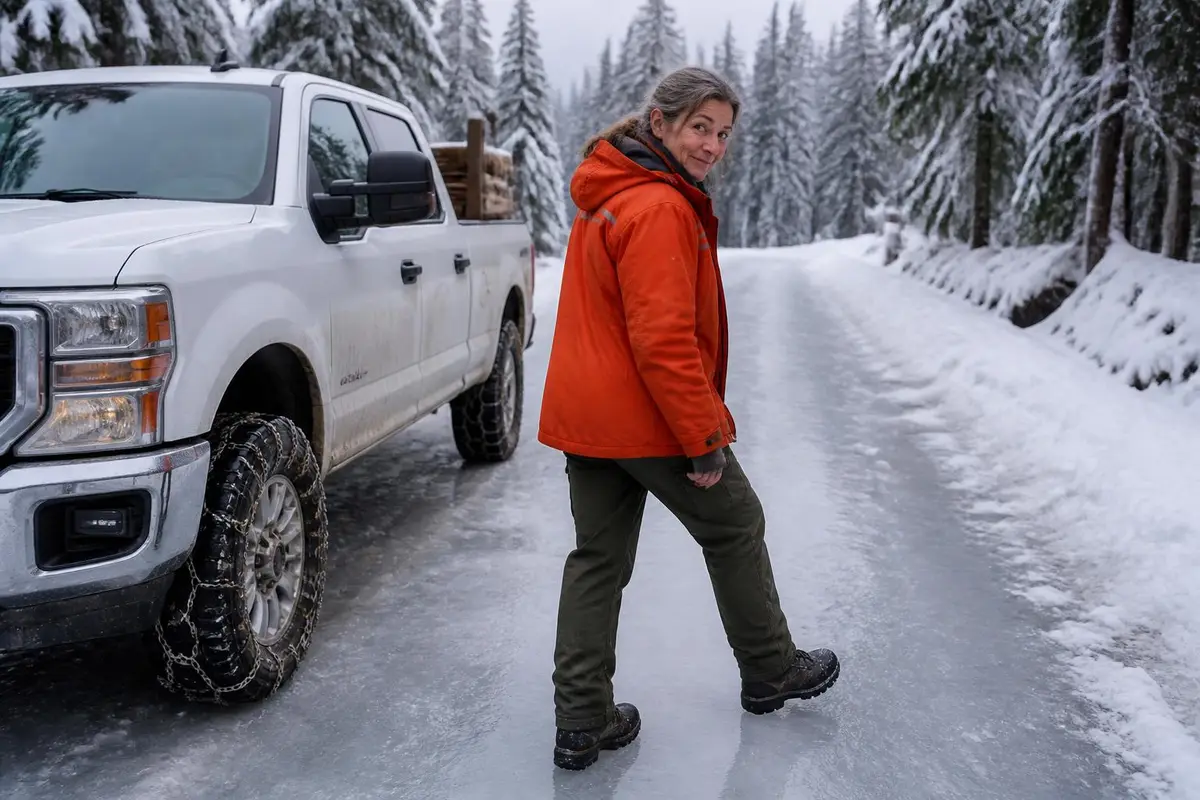
Traction: Chains Win in Deep or Icy Conditions
A metal chain's rigid links dig into packed snow and ice in a way a fabric sock's woven surface can't match, which is why sustained mountain-pass or repeated-ice driving favors chains despite the extra weight, noise and stiffer ride. For lighter, more occasional snow, both work reasonably well, and the sock's lower weight and easier storage become the bigger factor.
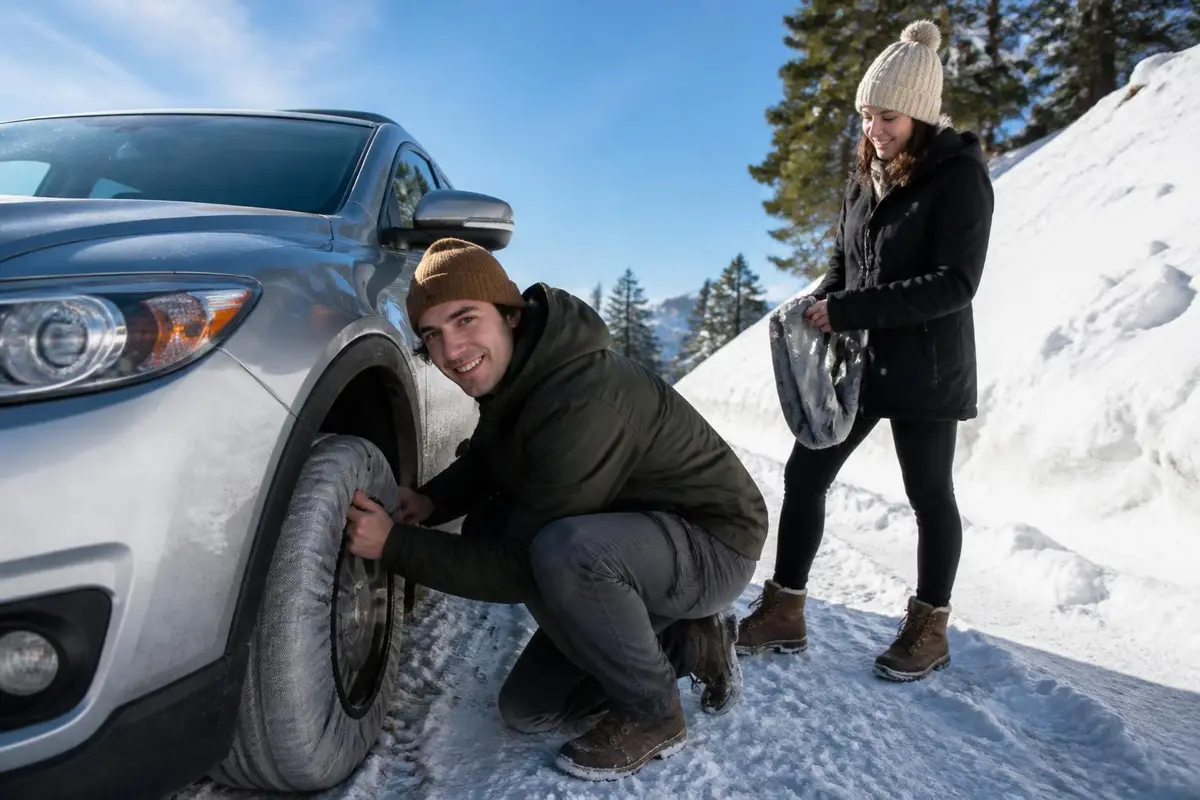
Installation: Socks Are Faster and Less Finicky
A snow sock stretches over the tire rather than needing to be draped, connected and tensioned the way a chain does — no fastener, no separate tool, and no drive-and-re-tighten step. Cable-style chains with an automatic tensioner have closed some of this gap, but a sock is still generally the faster install, particularly at a roadside stop in the dark and cold.
Legality: Check the Specific Requirement
California Vehicle Code §605 defines a "tire traction device" broadly, as any device or mechanism capable of improving a vehicle's traction, braking and cornering on snow or ice — a definition wide enough to include cable devices, hub-anchored plastic devices and fabric socks alongside metal chains, provided the specific product is labeled and manufactured to comply. Colorado's Chain Law similarly accepts an "approved alternative traction device" for most passenger vehicles, though commercial vehicle classes face stricter rules. AutoSock's own published regulatory guidance states it's approved in every US state that has a chain law, but that's one manufacturer's claim about its own product, not a blanket rule for fabric socks generally — confirming the exact wording for a given route and product matters before a trip. See are snow chains worth it for the full chain-control level breakdown.
Durability: Chains for Repeated Use, Socks for Occasional Use
Fabric wears faster on bare, dry pavement than metal chains do, which is why a sock is best treated as a get-through-the-storm item rather than something meant for daily winter driving over a full season. Metal chains, properly stored and maintained across seasons, hold up to more repeated use — part of why drivers who chain up often tend to own chains as their primary device rather than socks.
Recommended gear
Gear for snow and winter trips
Affiliate disclosure: As an Amazon Associate, we earn from qualifying purchases, at no extra cost to you. Purchases through these links help keep this site running and up to date. Learn more

Best for getting unstuck from sand, mud or snow without another vehicle.
- Nylon recovery boards that give spinning tires grip in sand, mud or snow.
- Double as a shovel to clear sand from in front of the tires.

Best for a kinetic rope with matching soft shackles.
- 7/8 in x 30 ft kinetic rope plus two 7/16 in soft shackles.
- Comes with a waterproof storage bag.

Best for a compact compressor for tires up to 33".
- Compact 12V compressor, 120 PSI, for tires up to 33 in.
- Small enough to keep in the vehicle full-time.

Best for plugging a tread puncture on the trail.
- Reamer-and-plugger kit for tread punctures.
- Lets you plug a tire on the trail instead of changing it.
We research products from manufacturer specs and owner feedback; we don't test them ourselves. How we choose.
Sources
- Colorado DOT — Passenger Vehicle Traction and Chain Laws — Fabric traction socks are accepted as an approved alternative traction device under Colorado's Chain Law for most passenger vehicles, but not for all commercial vehicle classes.
- Laclede Chain — SAE Classifications — Metal chains are rated and classed (SAE S/U/W) for clearance in a way fabric traction devices are not.
- Caltrans — Chain Controls / Chain Installation — R-1 through R-3 chain-control levels are written around chains and traction devices generally, not fabric socks specifically.
- California Legislative Information — Vehicle Code §605 — California's statutory definition of a "tire traction device" is broad enough to include cable, hub-anchored plastic and fabric devices, provided they meet structural-integrity and manufacturer-marking requirements.
- AutoSock — Regulations and Legal Status Updates — AutoSock states it is approved in every US state that has a chain law, per its own published regulatory guidance.