
Affiliate disclosure: As an Amazon Associate, we earn from qualifying purchases, at no extra cost to you. We research rather than test, and commissions never change our rankings. This site is reader-supported: those commissions pay for hosting, research and keeping every guide up to date, so if a guide helped you, buying through our links is an easy way to support it. How we rank · Full disclosure
TL;DR
- SAE Class S needs only 1.46 in of tread-face clearance and 0.59 in at the sidewall — Class U needs 1.97 in/0.91 in, and Class W (most light-truck chains) needs 2.50 in/1.50 in, per SAE/chain-maker fitment specifications.
- California's chain-control levels (R1/R2/R3) and Colorado's two-tier Traction Law/Passenger Vehicle Chain Law both scale by how bad the storm is, not by a fixed calendar date.
- Colorado's Traction Law accepts snow tires or all-weather tires with 3/16-inch tread as an alternative to chains; its Passenger Vehicle Chain Law (the more severe tier) requires chains or an approved alternative traction device on every vehicle, no exceptions.
- A chain sized for the wrong wheel-well clearance is the single most common fitment mistake — check the maker's chart against the truck's actual clearance, not the tire size alone.
At a Glance
| Chain type | Best for | Trade-off |
|---|---|---|
| Ladder-style link chain (SCC Peerless) | Sustained deep, packed snow on mountain passes | Heavier, rougher ride on bare pavement |
| Cable chain with auto-tensioner (HYR-A) | Fast roadside install at a chain-control stop | Less bite than a link chain in deep, unpacked snow |
| Heavy-gauge alloy (DEDC, 275–295mm) | Wider all-terrain/mud-terrain truck tires | Not built for narrower passenger-car sizes |
| Adjustable multi-width set (KYX, 235–285mm) | Households running more than one tire width | Less fitment precision than a size-specific set |
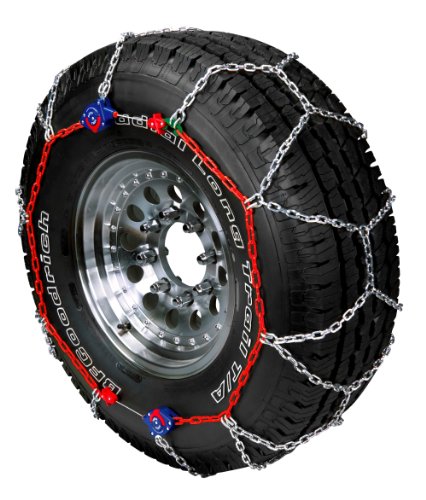
Best for Owners of light trucks and SUVs who want a well-known ladder-style chain sized specifically for LT tires.
- Auto-Trac ladder pattern.
- Sized for light truck/SUV tires.
- Set of 2.

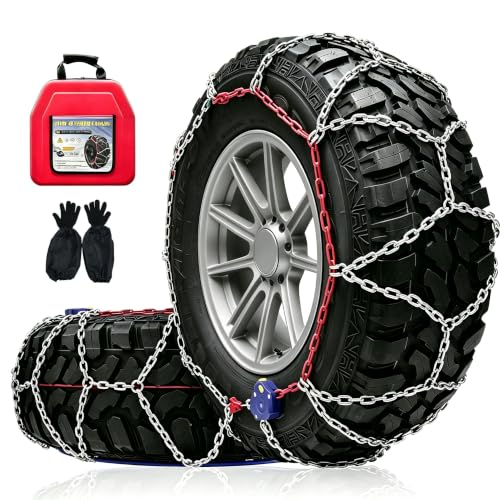
Best for Owners running larger 275–295-series tires who need a heavier-gauge chain built for that width.
- 4.5mm manganese steel.
- Auto-locking tensioner.
- Listed for 275/285/295 tire widths.
Best for Owners who want the fastest possible roadside install with an automatic tensioner rather than a lever-bar tool.
- 12mm chain gauge.
- Automatic tensioner.
- Marketed for pickup trucks and off-road SUVs.

Best for Owners with more than one vehicle in the household spanning a range of tire widths.
- Alloy steel construction.
- Adjustable for 235–285mm tire widths.
- 6-piece set.
SAE Chain Classes: The Clearance Numbers That Actually Decide Fit
A chain rated for the wrong tire size or wheel-well clearance either won't seat correctly or rubs against suspension components at full steering lock. SAE's chain-class system sets the actual numbers: Class S needs 1.46 inches of tread-face clearance and 0.59 inches at the sidewall, for vehicles with restricted wheel wells; Class U needs 1.97 inches / 0.91 inches for standard passenger vehicles; and Class W — the class most light-truck chains and light-truck-derived passenger chains use — needs 2.50 inches / 1.50 inches, per chain-maker SAE classification charts. A truck with 275mm-and-up all-terrain or mud-terrain tires generally needs Class W clearance even if the tire itself would physically fit a lighter chain, because the wheel well, not the tire, sets the ceiling. Check the actual measured clearance on the specific truck against the chain maker's chart rather than assuming a size class from tire width alone.
Ladder-Style vs Cable-Style Chains
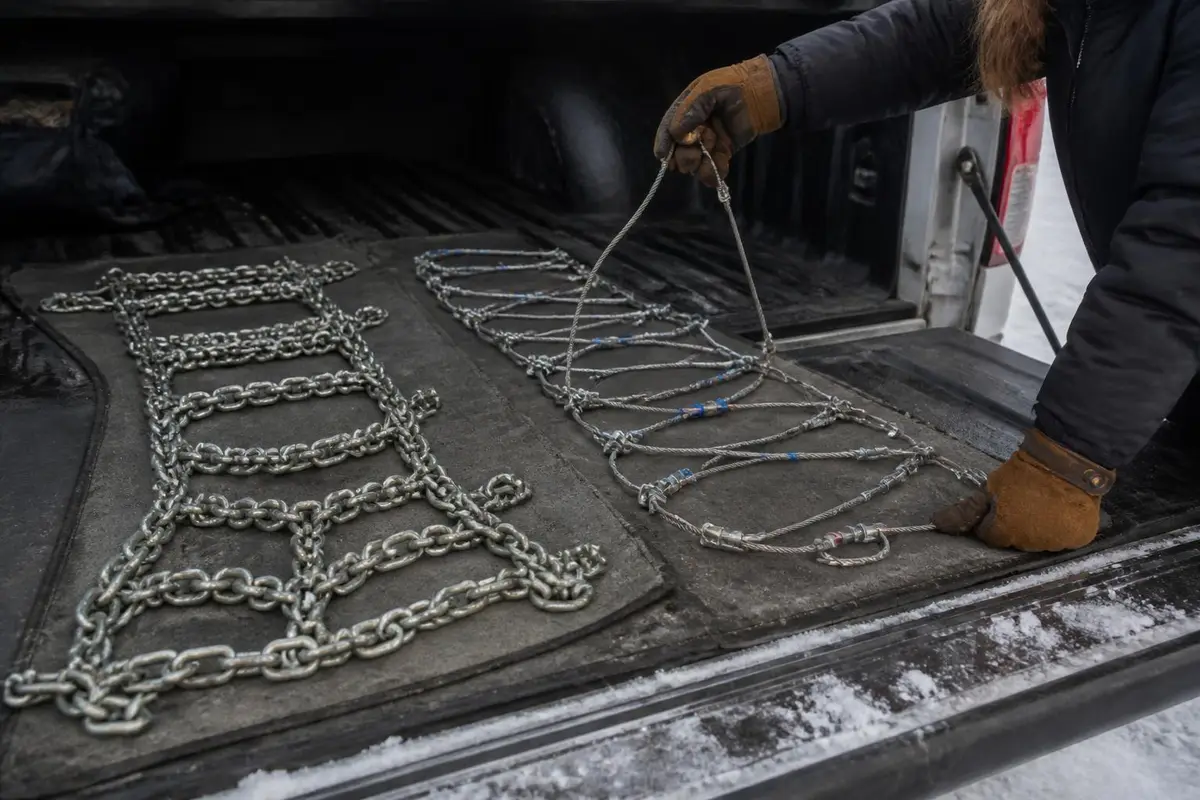
The SCC Peerless set is a traditional ladder-pattern chain — heavier and rougher-riding on bare pavement, but with the deep bite in packed snow that a mountain-pass climate rewards. The HYR-A set uses a lighter cable-style design with an automatic tensioner, which trades some of that deep-snow bite for a noticeably faster fit at a roadside chain-control stop.
Sizing for Wider Truck Tires
Trucks running wider all-terrain or mud-terrain tires (275mm and up) need a chain specifically rated for that width, not a standard passenger-car set stretched to fit — the DEDC set's heavier 4.5mm gauge is built with that wider fitment in mind. The KYX adjustable set trades some of that fitment precision for flexibility across a 235–285mm range, which is useful for households running more than one vehicle but is worth double-checking against your specific tire before a trip.
Chain Laws by State: What the Control Levels Actually Require
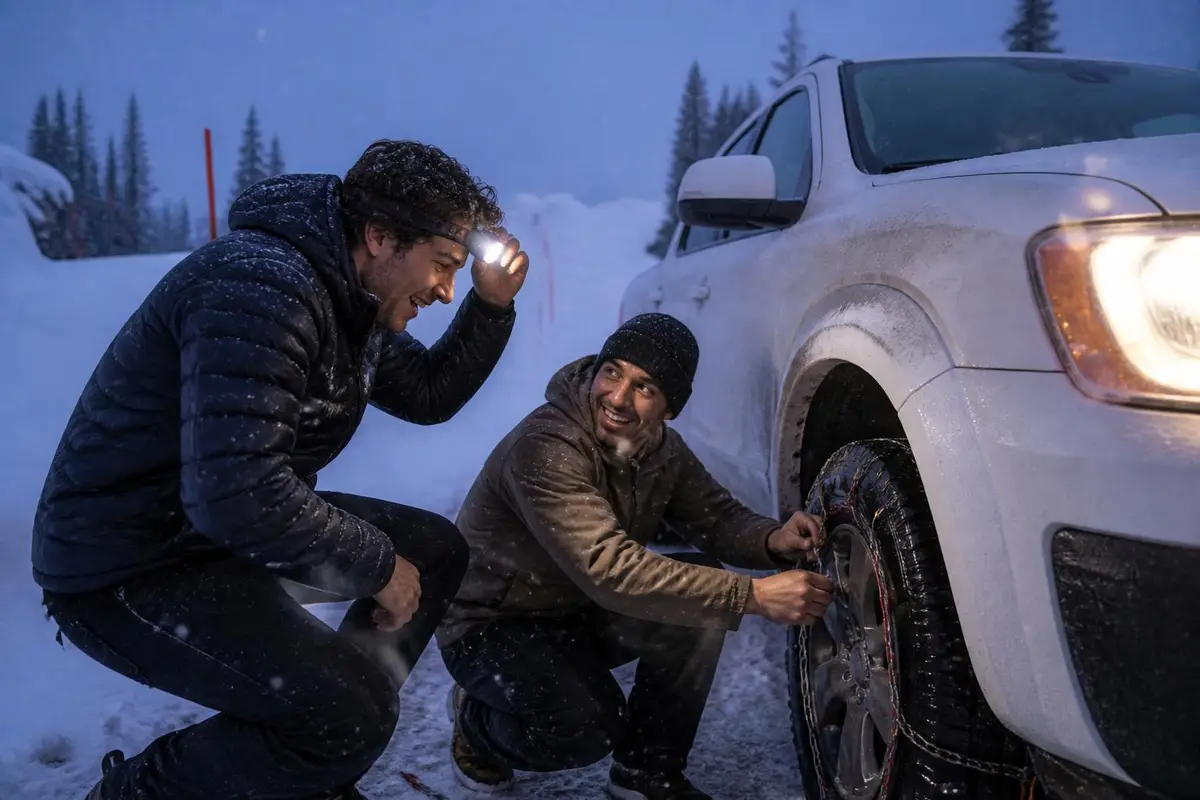
Chain-control requirements are state- and route-specific, tied to posted winter-storm severity rather than a year-round rule. Caltrans defines three escalating levels for California mountain routes: R1 requires chains on all vehicles except passenger vehicles and light-duty trucks under 6,000 lb GVWR running snow tires on at least two drive wheels; R2 requires chains or traction devices on all vehicles except 4WD/AWD vehicles running snow-tread tires on all four wheels; and R3 requires chains or traction devices on every vehicle, no exceptions — Caltrans notes highways typically close before conditions reach R3. Colorado runs a similar two-tier system: its Traction Law activates first and accepts AWD/4WD with mud-and-snow (M+S) or winter tires at 3/16-inch tread, all-weather tires at the same tread depth, or chains/an approved alternative traction device; its Passenger Vehicle Chain Law is the stricter final tier before road closure, requiring chains or an approved alternative traction device on every vehicle regardless of drivetrain. Colorado fines non-compliance $100 plus a $33 surcharge, rising to $500 plus a $157 surcharge if the violation causes a road closure. Confirm the current level for your specific route before a trip — conditions can escalate mid-storm; our how to put on tire chains guide covers installation and the speed limits chained vehicles need to observe.
How We Rank Tire Chains
Every set here is weighed against its manufacturer-stated gauge, tensioning method and fitment range, cross-referenced with a wide base of verified owner reviews on install speed, fit and durability. We do not buy or install tire chains ourselves — see how we rank for the full method and affiliate disclosure for how the site is funded.
Sources
- SAE J683 (via Laclede Chain — SAE Classifications) — Exact SAE chain-class clearance figures: Class S (1.46in/0.59in), Class U (1.97in/0.91in), Class W (2.50in/1.50in) — the numbers behind which class a wider truck tire actually needs.
- Colorado DOT — Passenger Vehicle Traction and Chain Laws — Colorado's Traction Law and stricter Passenger Vehicle Chain Law tiers, fine amounts, and the traction-device options each tier accepts.
- Caltrans — Chain Controls / Chain Installation — R1/R2/R3 chain-control level definitions — which vehicles are exempt at each level — for California mountain routes.
- National Weather Service — Winter Weather Watches, Warnings and Advisories — Winter Storm Watch/Warning definitions, used to frame when chain-control levels actually get posted.
- TRB (Ichihara & Mizoguchi) — Skid Resistance of Snow- or Ice-Covered Roads — Measured friction coefficients on packed/refrozen snow and ice, used as the underlying reason a chain's mechanical bite matters more than tire compound in deep snow.