

Affiliate disclosure: As an Amazon Associate, we earn from qualifying purchases, at no extra cost to you. We research rather than test, and commissions never change our rankings. This site is reader-supported: those commissions pay for hosting, research and keeping every guide up to date, so if a guide helped you, buying through our links is an easy way to support it. How we rank · Full disclosure
TL;DR
- A block heater warms coolant, not the battery — it's a separate fix from cold-weather cranking power.
- Phillips & Temro's own Zerostart FAQ recommends plugging in 3–4 hours before a planned cold-weather start; GM's factory block heaters carry a built-in thermostat that switches the heater on at 0°F (-18°C).
- Common cordset heater wattages run 400W or 600W at 120V, per Zerostart/Phillips & Temro's own product line.
- Diesel trucks lean on block heaters more because diesel fuel gels below its cloud point — a cold-weather problem gasoline engines don't share.

How a Block Heater Actually Works
Most block heaters use an electric heating element, either inserted into a coolant passage in the engine block (the traditional design) or applied as a pad or blanket around an external component, and plugged into a standard household outlet. Warming the coolant this way brings the engine closer to normal operating temperature before the first turn of the key, which eases starting and reduces the added wear a cold start causes compared with an engine that's already been gently pre-warmed.
Wattage and Plug-In Timing, From a Manufacturer's Own Numbers
Phillips & Temro (which makes the Zerostart line, one of the most common aftermarket and OEM-supplied block-heater brands) lists its Lit Plug cordset heaters at 400 or 600 watts on a 120-volt household circuit. The company's own FAQ says a block heater "should be plugged in at least 3-4 hours" to pre-warm a vehicle, and notes there's nothing detrimental about leaving it plugged in longer or overnight — the widely repeated "two hours is enough" guidance from other sources describes the minimum useful soak, not a hard ceiling. GM's factory-installed block heaters go a step further: the company builds an in-line thermostat into the cord that switches the heater on automatically once outside temperature drops to 0°F (-18°C), so the heater draws no power at all above that threshold even if it stays plugged in.
Who Actually Needs One
In regions where overnight temperatures regularly drop well below freezing — parts of Canada and the northern US in particular — a block heater is close to standard equipment. Natural Resources Canada's own guidance frames the benefit mainly in cold-start fuel and emissions terms: a cold engine runs a richer air-fuel mixture and works harder to pump thickened oil, so pre-warming the coolant reduces both the fuel burned and the wear that comes with those first minutes of running cold. In milder climates with only occasional hard freezes, that benefit shows up rarely enough that most owners skip installing one.
Why Diesel Trucks Lean on This More
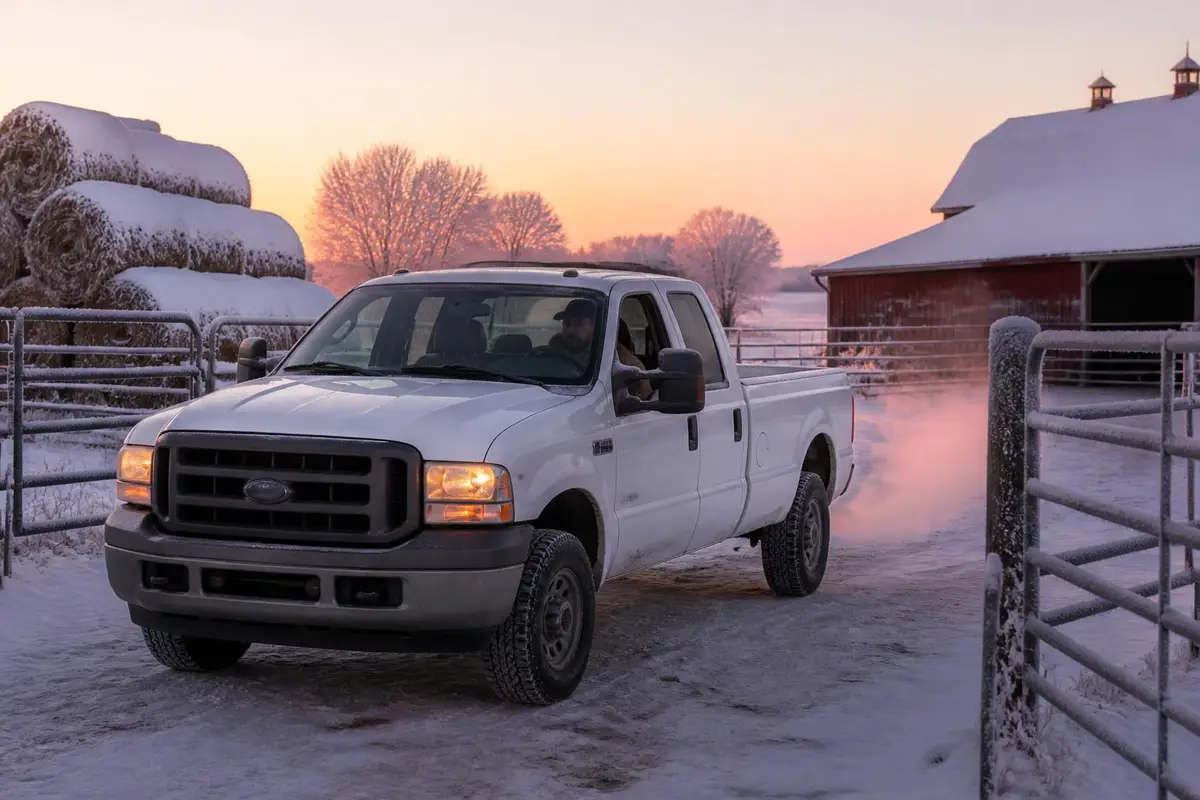
Diesel fuel contains paraffin wax that begins crystallizing as temperature drops, thickening the fuel toward its cloud point and risking clogged filters and fuel lines — a cold-weather problem gasoline engines don't share. A block heater addresses the engine-warming side of cold starts; winter-blend diesel or an anti-gel additive addresses the fuel-gelling side separately. Diesel trucks in cold climates commonly run both together rather than relying on either alone.
How Long to Plug It In
Commonly cited guidance is roughly two to four hours before a planned cold-weather start, with colder temperatures potentially calling for longer. A timer set to switch the heater on a few hours before your usual departure time is the more commonly recommended approach over leaving it plugged in continuously overnight, which uses more electricity than needed and isn't necessary for the heater to do its job.

Block Heater vs Battery Blanket
A block heater warms the engine and coolant; a battery blanket or wrap warms the battery itself, which addresses a separate cold-weather problem — a battery loses a substantial share of its cranking amps as temperature drops (see our winterizing checklist for the specific numbers). Some cold-climate owners run both together, since one warms the engine's ability to turn over and the other warms the battery's ability to actually turn it.
How We Research This
This page reflects Natural Resources Canada's published block-heater guidance and industry cold-weather diesel-fuel guidance, not first-hand installation by our team. See winter and snow 4WD for the wider cold-start picture, and how we rank for our full research method.
Recommended gear
Gear for snow and winter trips
Affiliate disclosure: As an Amazon Associate, we earn from qualifying purchases, at no extra cost to you. Purchases through these links help keep this site running and up to date. Learn more

Best for getting unstuck from sand, mud or snow without another vehicle.
- Nylon recovery boards that give spinning tires grip in sand, mud or snow.
- Double as a shovel to clear sand from in front of the tires.

Best for a kinetic rope with matching soft shackles.
- 7/8 in x 30 ft kinetic rope plus two 7/16 in soft shackles.
- Comes with a waterproof storage bag.

Best for a compact compressor for tires up to 33".
- Compact 12V compressor, 120 PSI, for tires up to 33 in.
- Small enough to keep in the vehicle full-time.

Best for plugging a tread puncture on the trail.
- Reamer-and-plugger kit for tread punctures.
- Lets you plug a tire on the trail instead of changing it.
We research products from manufacturer specs and owner feedback; we don't test them ourselves. How we choose.
Sources
- Natural Resources Canada — Block Heaters Save Fuel and Help the Environment (archived; current oee.nrcan.gc.ca URL is dead) — A block heater warms engine coolant so the engine starts more easily and runs with less initial wear in cold weather; a cold engine runs a richer air-fuel mixture and works harder to pump thickened oil; a timer set two hours before departure is usually enough rather than leaving it plugged in overnight.
- Cenex — Avoid Cold-Weather Diesel Problems — Diesel-specific cold-weather starting aids (block heaters, winter-blend fuel) address the fuel-gelling risk gasoline engines don't share.
- AAA Oregon — Temperatures Are Dropping & So Is Your Car's Battery Power — At 0°F a car battery loses roughly 60% of its rated strength versus warmer conditions, a separate cold-start factor from a block heater's coolant warming — the basis for the block-heater-vs-battery-blanket distinction.
- Phillips & Temro Industries — Zerostart FAQ — Manufacturer's own plug-in guidance: block heater should be plugged in at least 3–4 hours before driving, with no harm from leaving it plugged in longer; GM block heaters carry a built-in thermostat that activates at 0°F (-18°C).
- Phillips & Temro Industries — Lit Plug Heater Cordsets — Manufacturer-stated wattage options for block-heater cordsets: 400 or 600 watts at 120 volts.