

Affiliate disclosure: As an Amazon Associate, we earn from qualifying purchases, at no extra cost to you. We research rather than test, and commissions never change our rankings. This site is reader-supported: those commissions pay for hosting, research and keeping every guide up to date, so if a guide helped you, buying through our links is an easy way to support it. How we rank · Full disclosure
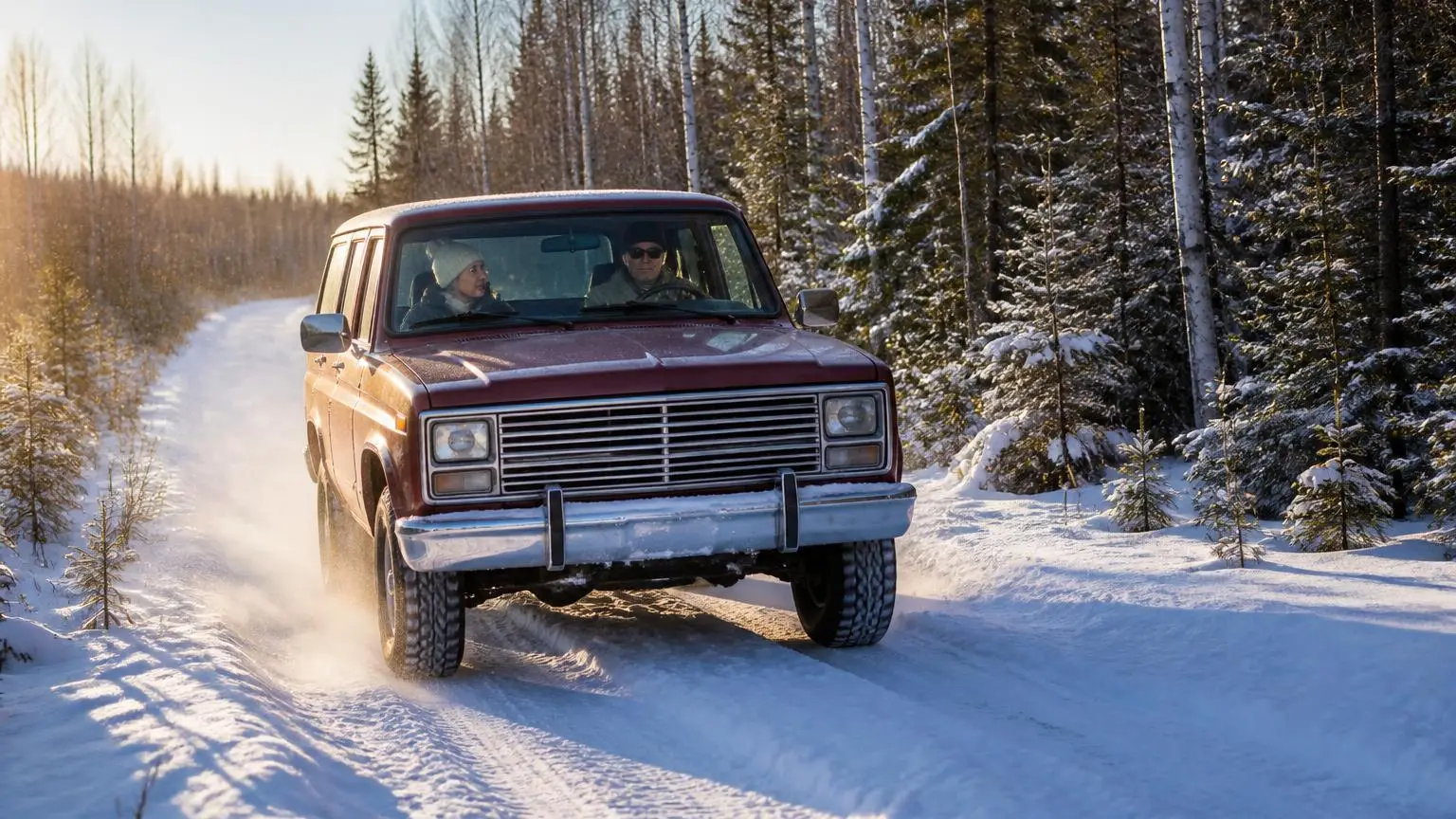
Winterizing a 4x4 comes down to a short list of checks — battery, fluids, tires and chain fitment — done before the first hard freeze rather than after. Most of it takes under an hour, and it targets the specific failure points cold weather actually causes: a battery that can't deliver enough cranking amps, a coolant or diesel mix that gels or freezes, and a chain that doesn't fit the tires it's meant for.
At a Glance
| Item | What cold does to it | Fix before the freeze |
|---|---|---|
| Battery | Loses ~35% of cranking power at 32°F, ~60% at 0°F (AAA) | Load-test it; replace if CCA is marginal |
| Coolant | Freeze protection depends on the water/glycol ratio | Check concentration against your climate's low |
| Diesel fuel | Wax crystals form near the cloud point (~15–20°F for #2 diesel) | Run a winter blend or anti-gel additive before a cold snap |
| Washer fluid | Summer fluid freezes around 32°F | Switch to a winter fluid rated to −20°F or lower |
| Tire pressure | Drops roughly 1 psi per 10°F, even with no leak | Recheck cold pressure against the door-jamb spec |

Battery: Test It, Don't Assume It
A battery's cranking power drops sharply as temperature falls: AAA's testing shows roughly a 35% loss at 32°F and about 60% loss at 0°F compared with its rated output. That drop compounds with a second problem — a cold engine's stiffer oil and tighter tolerances can need up to twice the cranking current to start. A battery that starts a truck reliably in October, at 35% below its rating, can fail outright once the same battery is also down 60% in January. Load-testing actual condition (most auto-parts stores do this free) and replacing a battery whose measured cold-cranking amps have fallen below the truck's cold-start draw is the step most worth doing before the season, not after a failed start.
Fluids: Coolant, Diesel and Washer Fluid
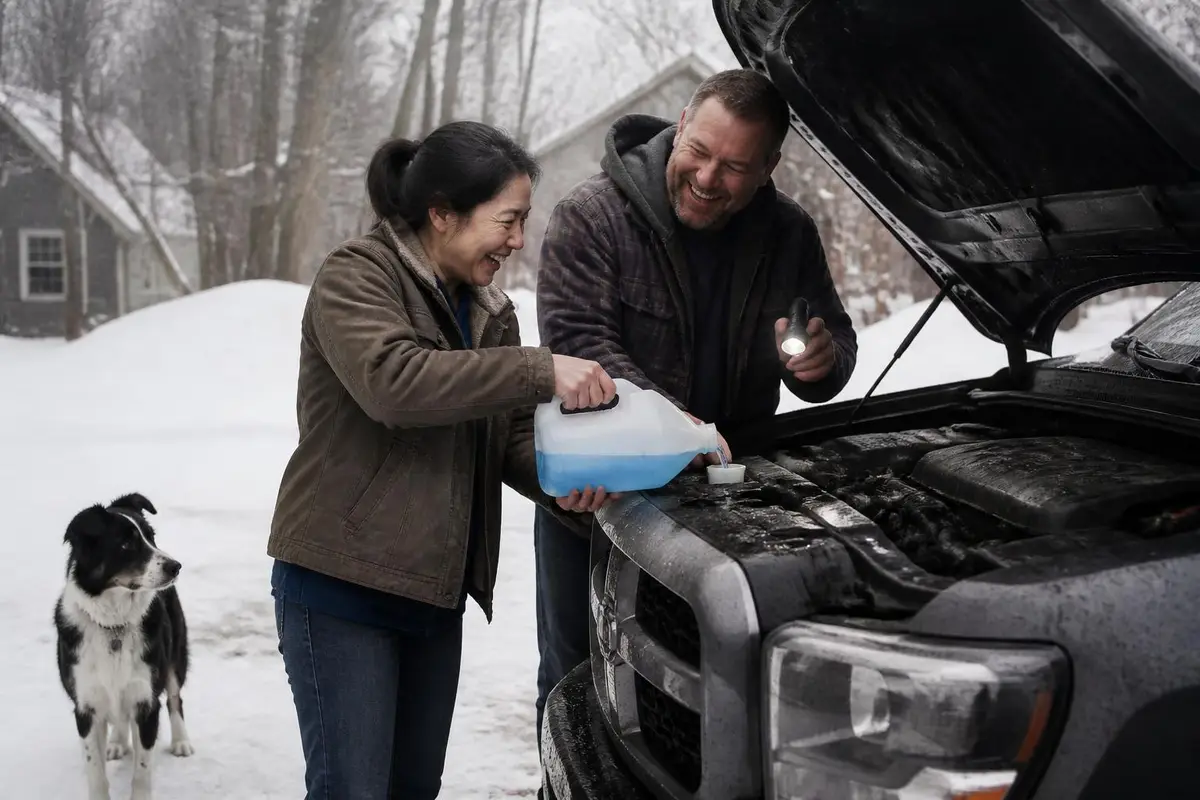
Coolant's freeze protection is set by its water-to-glycol ratio, not just "having antifreeze in it": a 50/50 mix protects to about −34°F, 60/40 to about −62°F, and 70/30 to about −84°F, while a mix diluted too far toward water loses that protection well above where it's actually needed. Diesel fuel starts forming visible wax crystals at its cloud point — typically 15–20°F for standard #2 diesel — and can stop flowing at its gel point, usually 0–15°F; a winter blend cut with #1 diesel, or an anti-gel additive added before temperatures approach the cloud point, prevents this. Washer fluid matters too: summer-blend fluid freezes around 32°F, while a winter-rated fluid using methanol or another alcohol stays liquid to −20°F or colder, and a frozen line leaves a windshield unable to be cleared of road salt and slush spray.
Tires, Chains and Tread Depth
Tire pressure drops by roughly 1 psi for every 10°F the temperature falls, independent of any actual leak, so a pressure checked in a warm garage in September reads noticeably low by the season's first hard freeze; recheck cold pressure against the door-jamb rating rather than assuming a fall fill-up still holds. Confirming a chain set's SAE clearance class actually matches the vehicle's current tire size — not just its approximate diameter — is worth doing at home before the season, not at a chain-control checkpoint mid-storm; see are snow chains worth it for the class and clearance numbers.
Cold-Start Prep: Block Heater and Oil Weight
A block heater, plugged in overnight, warms engine coolant and lubricants ahead of a cold start, which eases the strain on both the battery and the starter and reduces the engine wear that comes from oil that hasn't reached operating viscosity (Natural Resources Canada). It matters most where overnight lows regularly sit well below freezing, and more for a diesel, since a warm block also helps keep fuel above its gelling point on the first start of the day. Confirming the engine is running its manufacturer-specified winter-weight oil, where the owner's manual calls for a seasonal change, is a smaller step some owners skip, since a heavier summer-weight oil flows more sluggishly at cold start than the winter-specified weight.
Recovery Gear: What Changes Below Freezing
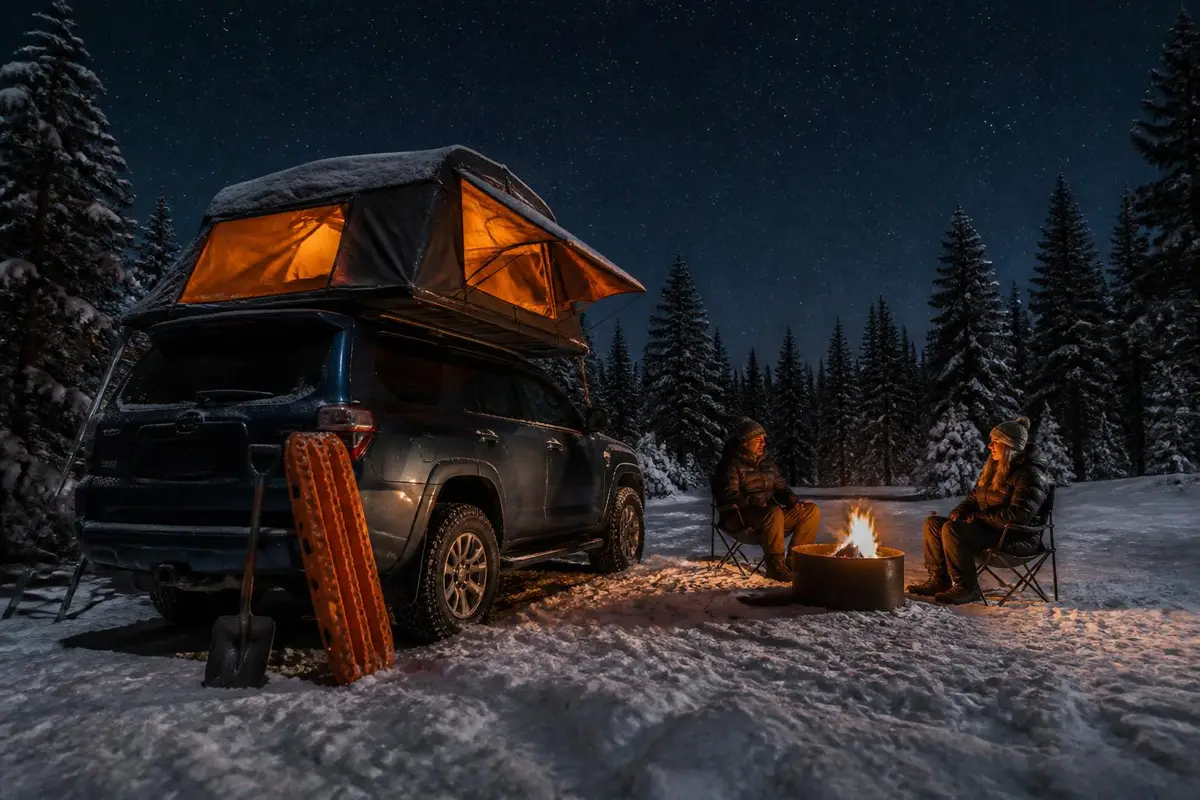
Synthetic winch rope and kinetic recovery ropes both stiffen in extreme cold, and a rope stored coiled tightly while frozen carries a higher chance of the outer sheath cracking under load. Winch grease also thickens in the cold, which raises the amp draw needed to overcome internal resistance — one more reason a winch sized with real margin above the vehicle's GVWR matters more in winter use than in summer. See recovery gear for GVWR-based winch sizing.
Recommended gear
Gear for snow and winter trips
Affiliate disclosure: As an Amazon Associate, we earn from qualifying purchases, at no extra cost to you. Purchases through these links help keep this site running and up to date. Learn more

Best for getting unstuck from sand, mud or snow without another vehicle.
- Nylon recovery boards that give spinning tires grip in sand, mud or snow.
- Double as a shovel to clear sand from in front of the tires.

Best for a kinetic rope with matching soft shackles.
- 7/8 in x 30 ft kinetic rope plus two 7/16 in soft shackles.
- Comes with a waterproof storage bag.

Best for a compact compressor for tires up to 33".
- Compact 12V compressor, 120 PSI, for tires up to 33 in.
- Small enough to keep in the vehicle full-time.

Best for plugging a tread puncture on the trail.
- Reamer-and-plugger kit for tread punctures.
- Lets you plug a tire on the trail instead of changing it.
We research products from manufacturer specs and owner feedback; we don't test them ourselves. How we choose.
Sources
- NHTSA — Winter Driving Tips — General pre-winter vehicle checks: battery, fluids, tires.
- AAA Oregon — Temperatures Are Dropping & So Is Your Car's Battery Power — A car battery loses about 35% of its cranking power at 32°F and about 60% at 0°F versus its rated output; a cold engine can need up to twice the current to start.
- Natural Resources Canada — Block Heaters — Block heaters warm coolant and lubricants for easier cold starts and less engine wear.
- Howes Products — Diesel Gelling: What It Is & How to Prevent It in Winter — Cloud point (~15-20°F) and gel point (~0-15°F) for #2 diesel, and how winter blends and anti-gel additives lower both.
- HELLA — Refilling Coolant (coolant mix ratio table) — Coolant freeze-protection temperatures by glycol/water ratio (50/50 ≈ −34°F, 60/40 ≈ −62°F, 70/30 ≈ −84°F).
- YourMechanic — At What Temperature Does Windshield Washer Fluid Freeze? — Summer-blend washer fluid freezes around 32°F; winter-rated fluid stays liquid well below 0°F using alcohol additives.
- Goodyear — Impacts to Tire Pressure During Cold Weather — Tire pressure drops roughly 1 psi for every 10°F the temperature falls.
- Caltrans — Chain Controls / Chain Installation — Checking chain fitment against current tire size before the season.