

Affiliate disclosure: As an Amazon Associate, we earn from qualifying purchases, at no extra cost to you. We research rather than test, and commissions never change our rankings. This site is reader-supported: those commissions pay for hosting, research and keeping every guide up to date, so if a guide helped you, buying through our links is an easy way to support it. How we rank · Full disclosure
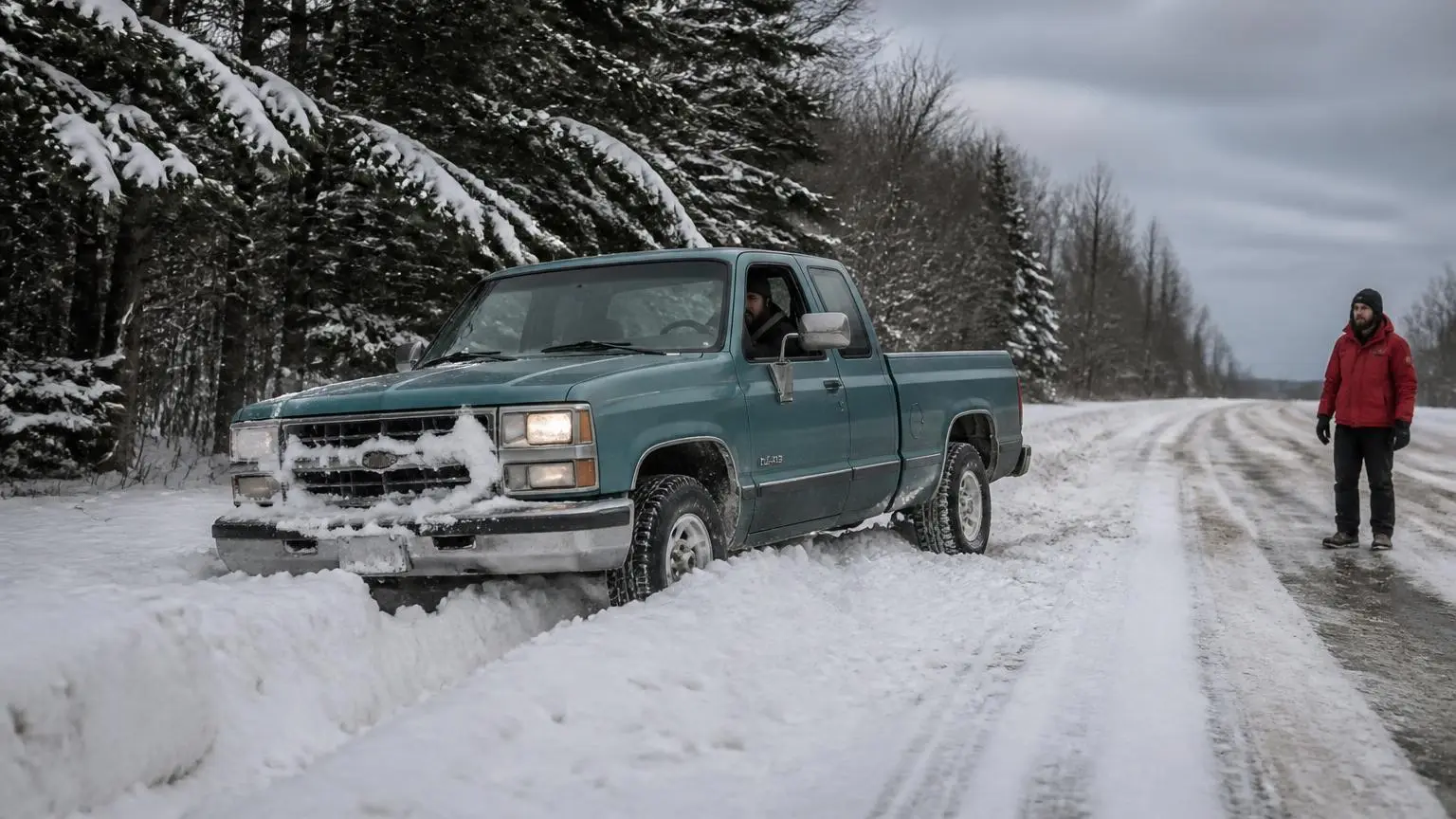
Clear packed snow from around and under the tires, engage 4WD if equipped, place a traction aid under the drive tire, and use short, gentle throttle inputs rather than sustained wheelspin, which melts the snow directly under the tire and lets it refreeze into slick ice.
At a Glance
| How stuck | What to try first | Why |
|---|---|---|
| Wheels spinning, vehicle hasn't sunk far | Traction aid under the drive tire, gentle throttle | Wheelspin melts snow into ice under the tire |
| Lightly stuck, some forward/back travel possible | Rocking technique (gentle drive/reverse alternation) | Widens the packed track under the tires |
| Buried to the frame or axle | Dig out first, then traction aid | Rocking alone can't clear that much depth |
| On ice, over water, or in a remote area alone | Call for recovery instead of continuing | Exposure risk climbs the longer self-recovery takes |
Assess Before You Move
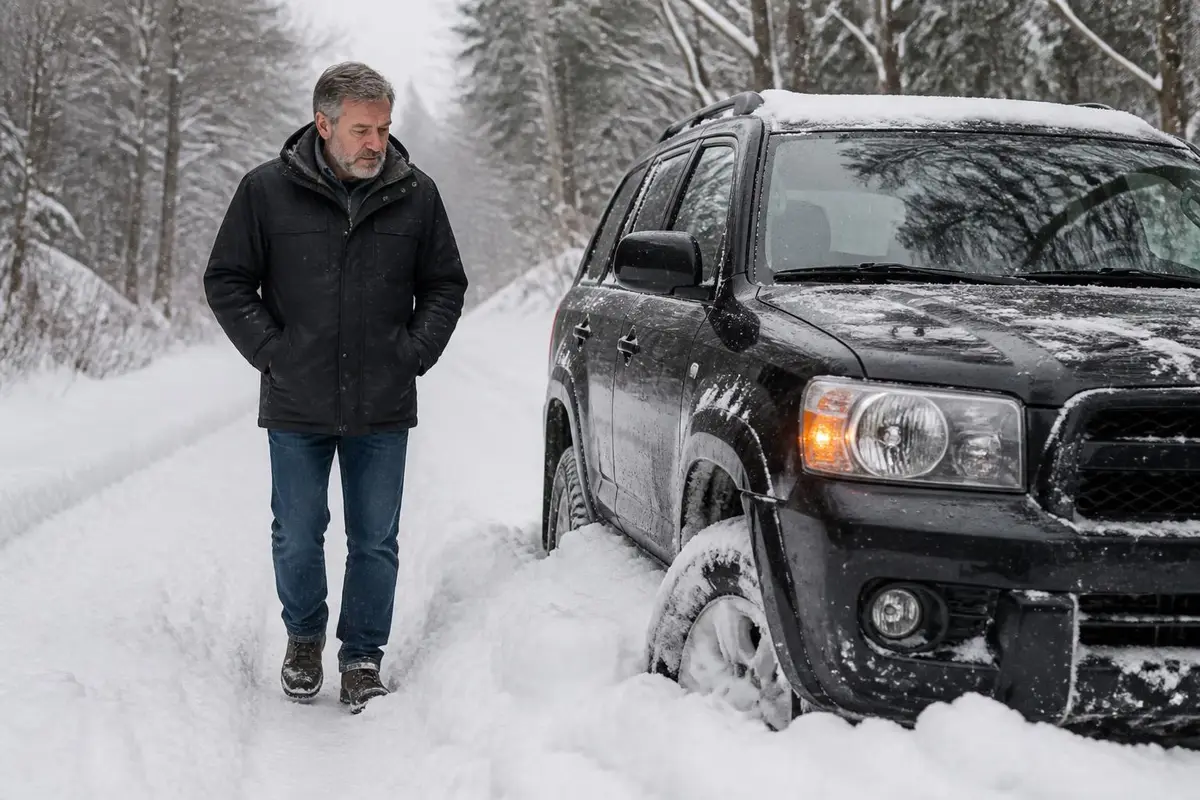
Get out and look at what's actually under and around the tires before doing anything — a vehicle high-centered on packed snow or ice needs different handling than one simply spinning on a slick surface. Clear snow away from the front (or rear, if reversing out) of each drive tire, and check for ice hidden under the snow directly beneath the tire.
Use a Traction Aid Under the Drive Tire
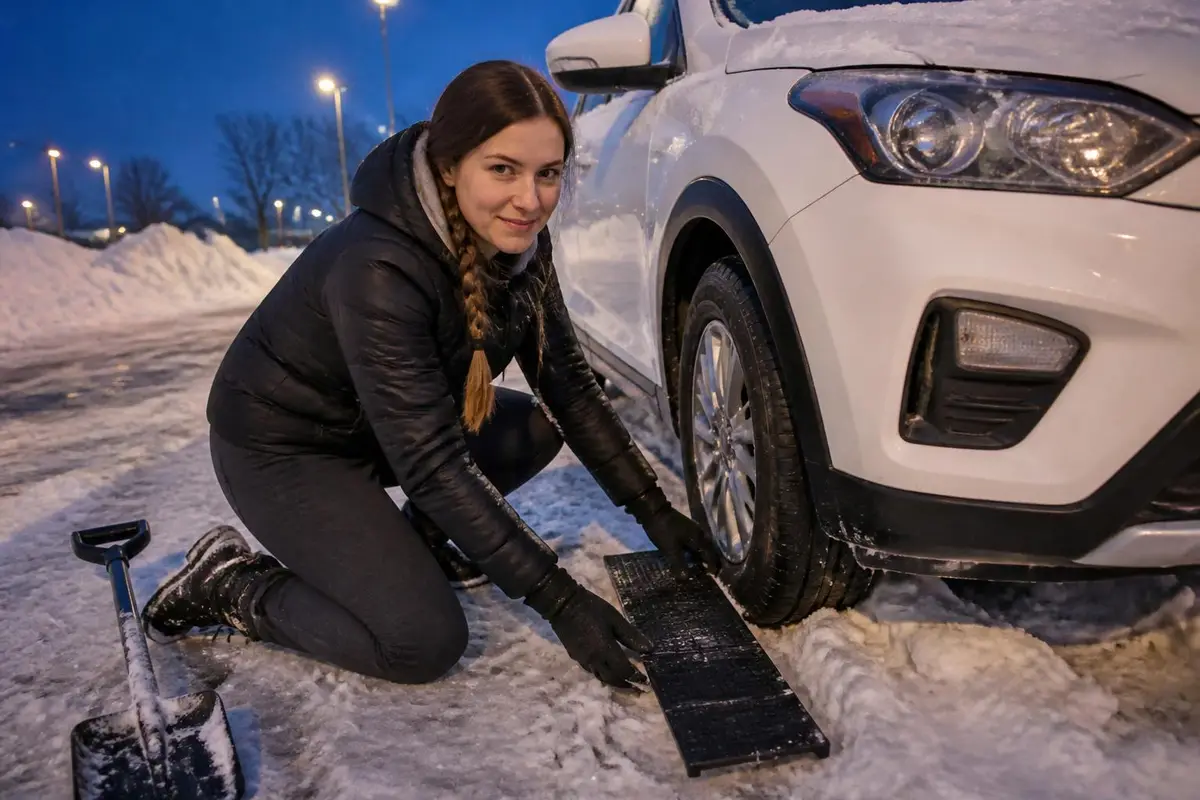
A traction board, floor mats, or an abrasive material like sand or kitty litter placed under the drive tire's leading edge gives a spinning tire something to bite into rather than just melting the snow surface — NHTSA's winter-driving guidance specifically recommends carrying abrasive material for this reason. See traction boards for snow for placement technique and why wet snow packs a board's teeth faster than dry powder.
The Rocking Technique
For a lightly stuck vehicle, gently alternating between drive and reverse — without flooring the throttle in either direction — uses the vehicle's own momentum to widen the packed track under the tires until it gains enough grip to move out. This works best on a vehicle that's only lightly stuck; a vehicle buried to the frame or axle needs digging and a traction aid first, since rocking alone won't clear that much depth.
Braking While Trying to Move: ABS Changes the Technique
NHTSA's guidance is direct on this point: with anti-lock brakes, apply firm, continuous pressure to the pedal and let the system pulse the brakes itself; pumping the pedal manually on an ABS-equipped vehicle just fights the system. Without ABS, pump the brake pedal instead, since a wheel that locks on snow or ice slides rather than grips, losing both steering control and what little braking traction remains. Knowing which system the vehicle has, before it matters, avoids the wrong reaction under pressure.
Engage 4WD and 4Lo Before You Start
If the vehicle has 4WD, engage it before attempting to move — a driver who shifts into 4WD without confirming it's actually engaged (a common issue on trucks with manual locking hubs) gets no real benefit despite the dash indicator showing 4WD selected. 4Lo adds torque multiplication at low speed for a heavily stuck vehicle needing maximum, controlled power rather than wheelspin. See 4WD drivetrain systems for engagement details.
Common Mistakes
Sustained wheelspin is the most consequential mistake — it melts the snow directly under the tire, which then refreezes as slick ice and leaves the vehicle worse off than before. Flooring the throttle during the rocking technique, rather than using gentle, controlled inputs, is a close second. Attempting to power through a deep, unassessed drift without first checking what's underneath is a third common error that can lead to a vehicle becoming genuinely high-centered.

When to Call for Recovery Help Instead
A vehicle buried to the frame, stuck on ice over water, or stuck in a remote area with no cell signal and no second vehicle is a situation where waiting for professional recovery is safer than continuing self-recovery attempts in cold conditions — exposure risk climbs the longer it takes: the National Weather Service's wind-chill chart shows exposed skin can freeze in as little as 30 minutes at 0°F with a 15 mph wind, and the CDC treats a core body temperature below 95°F — hypothermia — as a medical emergency requiring immediate attention. While waiting, NHTSA and AAA both give the same core guidance: stay with the vehicle, make it visible with bright markers, reflectors or the interior dome light, and run the engine only sporadically with the exhaust pipe clear of snow to avoid carbon monoxide buildup. See recovery kit checklist for what to carry so a lightly stuck situation doesn't become a genuinely dangerous one.
Recommended gear
Gear for snow and winter trips
Affiliate disclosure: As an Amazon Associate, we earn from qualifying purchases, at no extra cost to you. Purchases through these links help keep this site running and up to date. Learn more

Best for getting unstuck from sand, mud or snow without another vehicle.
- Nylon recovery boards that give spinning tires grip in sand, mud or snow.
- Double as a shovel to clear sand from in front of the tires.

Best for a kinetic rope with matching soft shackles.
- 7/8 in x 30 ft kinetic rope plus two 7/16 in soft shackles.
- Comes with a waterproof storage bag.

Best for a compact compressor for tires up to 33".
- Compact 12V compressor, 120 PSI, for tires up to 33 in.
- Small enough to keep in the vehicle full-time.

Best for plugging a tread puncture on the trail.
- Reamer-and-plugger kit for tread punctures.
- Lets you plug a tire on the trail instead of changing it.
We research products from manufacturer specs and owner feedback; we don't test them ourselves. How we choose.
Sources
- NHTSA — Winter Weather Driving Tips — Carry abrasive material (sand or kitty litter) for a stuck vehicle; with ABS, apply firm continuous brake pressure, without ABS pump the pedal; if stranded, stay with the vehicle, make it visible, and run the engine only sporadically with the exhaust clear.
- National Weather Service — Understanding Wind Chill — Exposed skin can freeze in about 30 minutes at 0°F with a 15 mph wind, informing when to stop self-recovery attempts and wait for help.
- AAA Oregon/Idaho — AAA Offers Tips for Motorists Stuck in Snow — Stay with the vehicle in extreme cold or heavy snow; set up reflectors or tie a bright cloth to the antenna to signal rescuers; keep the exhaust pipe clear.
- CDC — Preventing Hypothermia — Hypothermia (core body temperature below 95°F) is a medical emergency requiring immediate attention.