
Affiliate disclosure: As an Amazon Associate, we earn from qualifying purchases, at no extra cost to you. We research rather than test, and commissions never change our rankings. This site is reader-supported: those commissions pay for hosting, research and keeping every guide up to date, so if a guide helped you, buying through our links is an easy way to support it. How we rank · Full disclosure
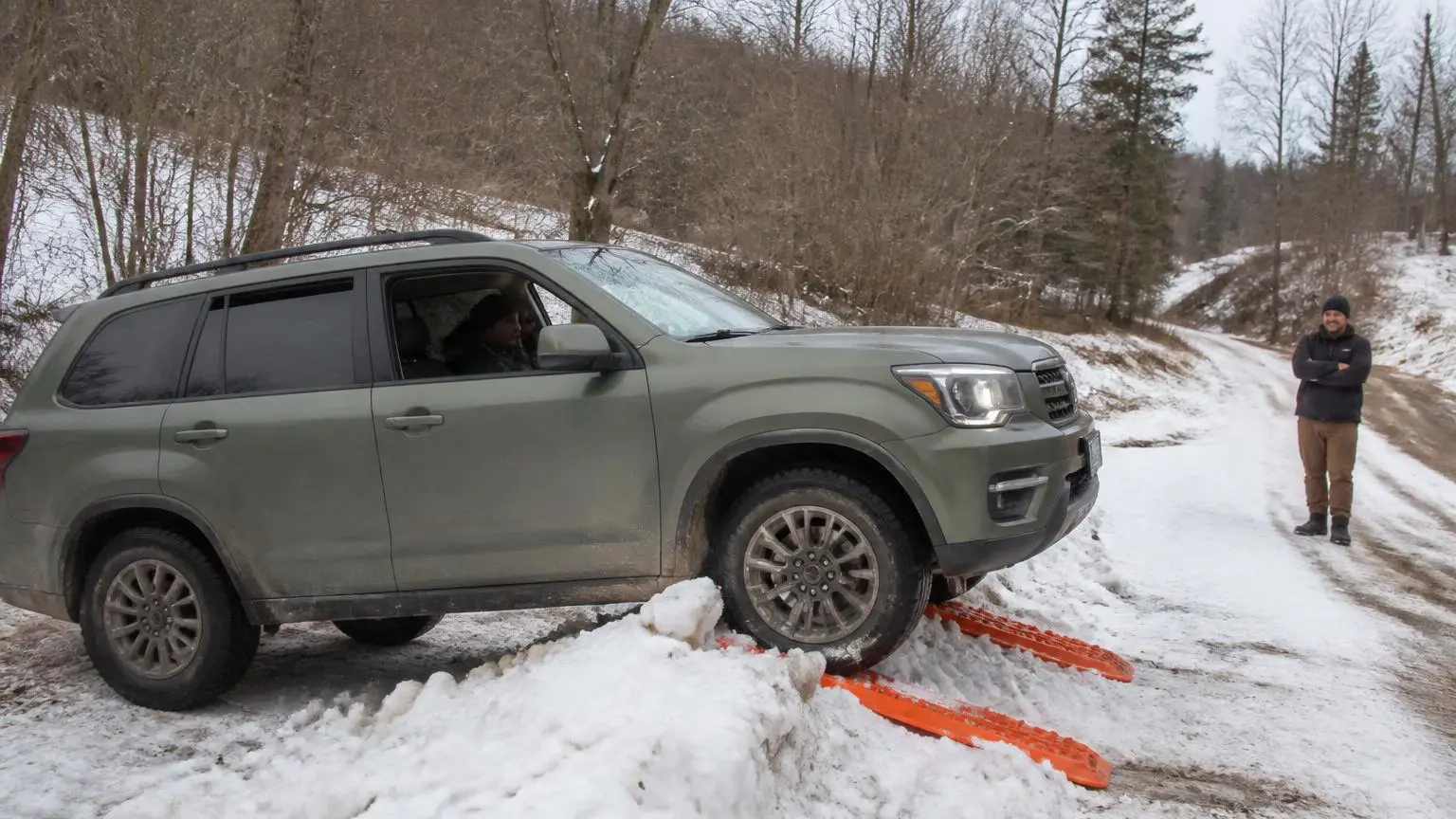
Traction boards work in snow the same basic way they work in sand or mud: placed under a spinning drive tire, their molded teeth give the tread something to bite into instead of just spinning against a slick surface (MAXTRAX). The difference in snow is how fast the teeth clog. Wet, heavy snow packs into a board's tread pattern within one or two tire rotations, while dry, cold powder behaves closer to sand and clogs far less.
How Traction Boards Work in Snow
A board's molded teeth grip the tread of a spinning tire once it's positioned under the drive wheel, converting wheelspin that would otherwise just melt or compact the surface into forward bite. MAXTRAX's own placement instructions call for angling the board under the tire's leading edge, in the direction of travel, so the tire climbs onto the teeth rather than spinning the board out from underneath before it can grip.
Dry Powder vs Wet, Heavy Snow
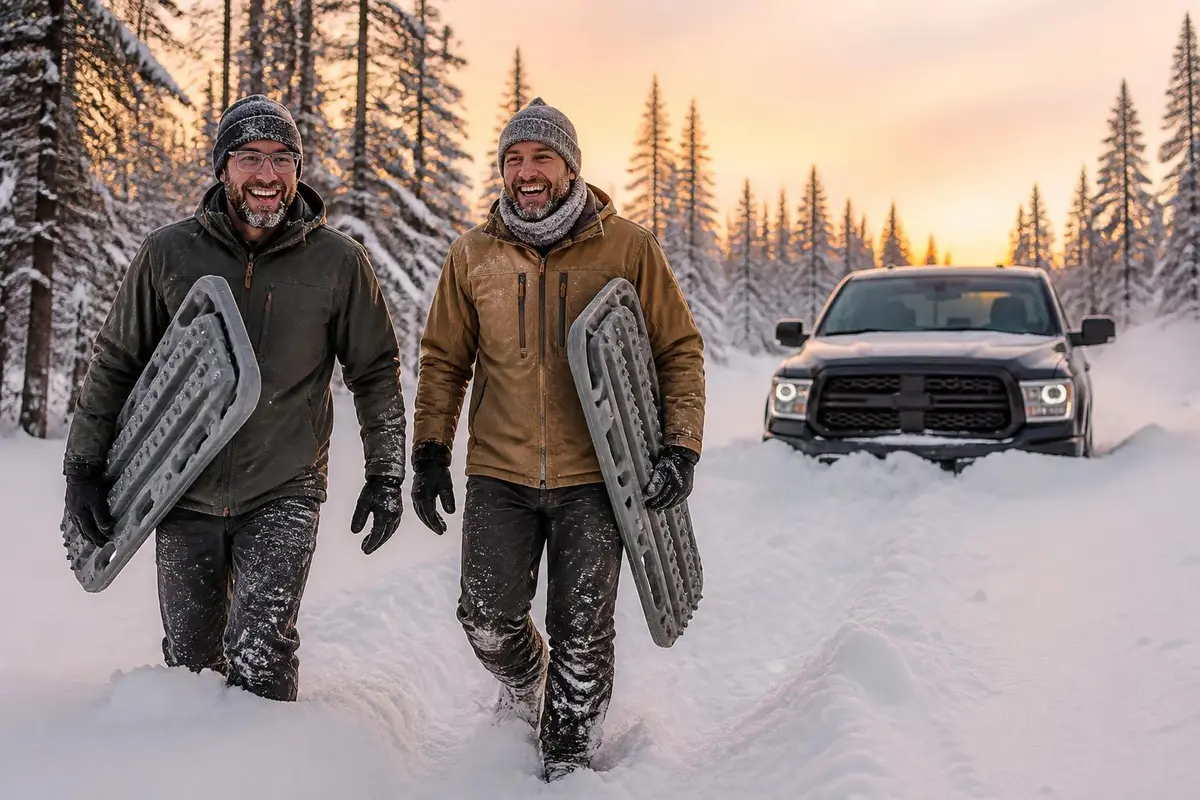
Dry, cold powder doesn't stick to a board's teeth as readily as wet snow does, so the board keeps working through repeated attempts with little clearing needed. Wet, heavy snow — common near the melting point, in spring conditions, or with a tire that's warmed the snow beneath it — packs solid into the tread pattern fast, and the board needs to be physically knocked or scraped clean between attempts to stay effective. This is the main practical difference from using the same board in dry sand, where clogging isn't a factor.
Placing the Board Correctly
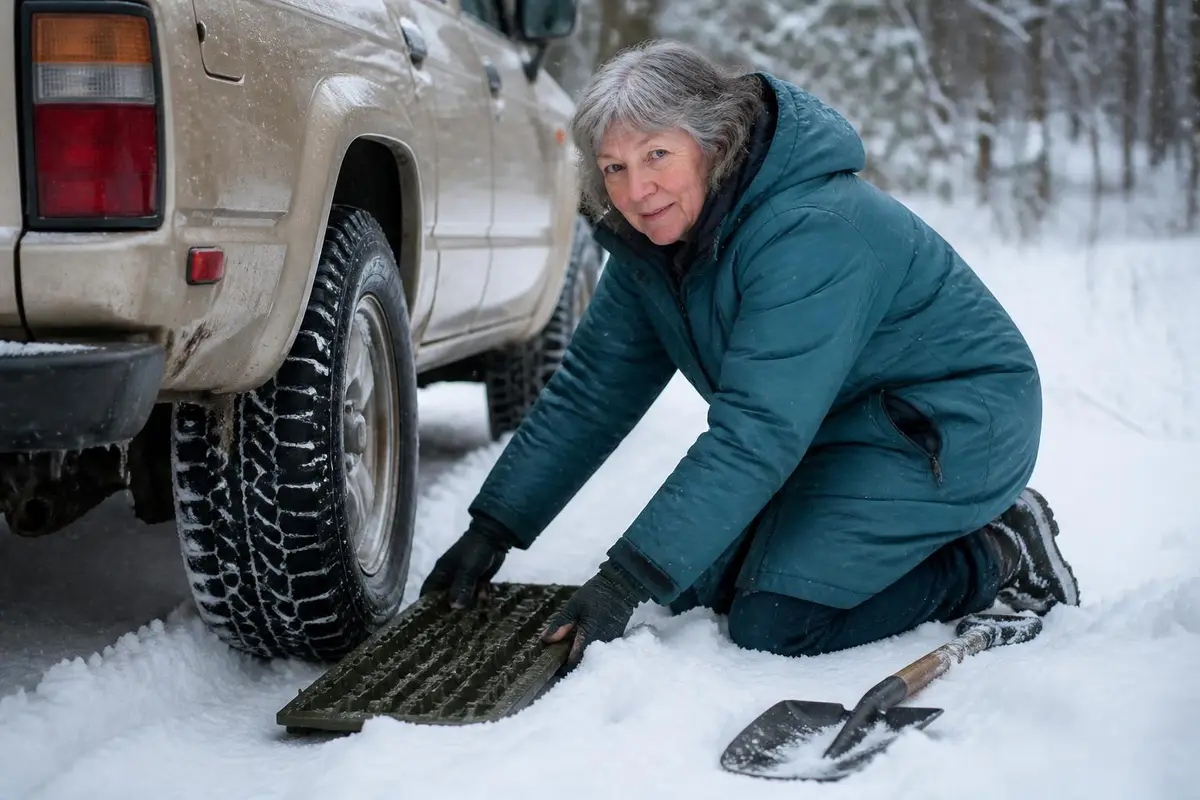
Clear packed snow or ice from directly in front of (or behind, if reversing) the stuck tire before placing the board, since it needs to contact the tire's actual tread rather than a wall of packed snow. Angling the board slightly, rather than laying it flat and too far from the tire, lets the tire climb the teeth instead of spinning the board out before it gains any traction — the most common first-attempt mistake.
What Traction Boards Don't Solve
Boards recover one stuck vehicle from one stuck spot. They are not a substitute for chains on a chain-controlled route, since chain-control law is written around SAE-classed chains, not recovery boards, and they don't add sustained traction the way a winter tire does for planned driving. NHTSA's own winter-driving guidance treats a board the same way it treats a bag of sand or kitty litter — an abrasive material to carry for a stuck vehicle, not a piece of driving equipment. See winter and snow 4WD for how chains, winter tires and traction boards each solve a different problem, and how to not get stuck in mud for the same placement technique applied to a different terrain.
Weight Ratings and Operating Temperature Are Published Specs, Not Guesses
Boards carry a stated vehicle weight rating from the manufacturer — ARB's TRED Pro, for example, is rated to 9,900 lb, while MAXTRAX's MKII is built to the same roughly 45 in x 13 in x 3.5 in footprint from an engineering-grade reinforced nylon. Exceeding a board's rated weight, or levering it against a sharp rock edge instead of loading it evenly under the tread, is how boards crack in the field. ARB publishes an explicit operating range for the TRED Pro of −15°C to 70°C (5°F to 158°F); MAXTRAX doesn't publish a hard number but its own FAQ recommends using caution in below-freezing conditions specifically because cold-stiffened nylon is less forgiving of a sudden, hard impact than the same board at room temperature.

Cold-Weather Storage and Care
Given that cold-weather caution, storing boards inside the cab or a heated area rather than a bare, unheated truck bed makes sense in the coldest climates, even within a board's rated operating range. Rinsing road salt and grit off after a winter recovery, rather than leaving it to dry on the surface, also helps the board's teeth and mounting hardware last.
Recommended gear
Gear for snow and winter trips
Affiliate disclosure: As an Amazon Associate, we earn from qualifying purchases, at no extra cost to you. Purchases through these links help keep this site running and up to date. Learn more

Best for getting unstuck from sand, mud or snow without another vehicle.
- Nylon recovery boards that give spinning tires grip in sand, mud or snow.
- Double as a shovel to clear sand from in front of the tires.

Best for a kinetic rope with matching soft shackles.
- 7/8 in x 30 ft kinetic rope plus two 7/16 in soft shackles.
- Comes with a waterproof storage bag.

Best for a compact compressor for tires up to 33".
- Compact 12V compressor, 120 PSI, for tires up to 33 in.
- Small enough to keep in the vehicle full-time.

Best for plugging a tread puncture on the trail.
- Reamer-and-plugger kit for tread punctures.
- Lets you plug a tire on the trail instead of changing it.
We research products from manufacturer specs and owner feedback; we don't test them ourselves. How we choose.
Sources
- MAXTRAX — Instructions for Use — Board placement technique (angled under the drive tire's leading edge) and how the molded teeth grip a spinning tire.
- MAXTRAX — FAQs — Boards are injection-molded from an engineering-grade reinforced nylon polymer; the manufacturer recommends using caution in below-freezing conditions.
- MAXTRAX USA — MAXTRAX MKII Black (product page) — MKII board dimensions (45 in x 13 in x 3.5 in) and per-board weight (7.5 lb).
- ARB / TRED Outdoors — TRED Pro Recovery Boards (product page) — TRED Pro is rated to a 9,900 lb vehicle weight and a published operating range of −15°C to 70°C (5°F to 158°F), illustrating that boards carry a stated weight rating and temperature range from the manufacturer.
- NHTSA — Winter Weather Driving Tips — Carrying an abrasive material (sand or kitty litter) in the vehicle as a traction aid for a stuck vehicle.