
Affiliate disclosure: As an Amazon Associate, we earn from qualifying purchases, at no extra cost to you. We research rather than test, and commissions never change our rankings. This site is reader-supported: those commissions pay for hosting, research and keeping every guide up to date, so if a guide helped you, buying through our links is an easy way to support it. How we rank · Full disclosure
At a Glance
| If you... | Choose | Why |
|---|---|---|
| Daily-drive the vehicle or drive it on the street at all | A selectable locker (ARB Air Locker, Eaton ELocker) | Disengages for normal cornering; a spool never does |
| Run a dedicated, trailer-hauled competition rock crawler | A spool | No mechanism to fail; simpler and tougher for trail-only use |
| Want the cheapest full-lock option and never drive on pavement | A spool | No actuation hardware (no air line, no wiring) to buy or install |
| Split time between trail and street | A selectable locker | Livable daily manners with full lock available on demand |

What a Spool Actually Is
A spool replaces the entire differential assembly with a solid, one-piece unit that welds — or in a "mini-spool" design, effectively locks — both axle shafts together permanently. There's no open state, no selectable engagement, and no internal mechanism to actuate at all: both wheels on that axle always spin at exactly the same speed, in every driving situation, with no exception. Yukon Gear & Axle, which manufactures both spools and mini-spools, describes the mini-spool specifically as replacing the carrier, spider gears and side gears with a solid unit while reusing the factory ring gear — a lower-cost path to a full lock than a complete spool-and-ring-gear swap. This is the most fundamental possible difference from a selectable locker, which retains an open, unlocked mode for normal driving.

On-Road Manners: No Contest
A selectable locker, disengaged, behaves like a normal open differential for daily driving and cornering. A spool offers no such option — every turn, at any speed, forces the axle to fight against the natural speed difference between the inside and outside wheel through a corner, producing tire scrubbing, hopping and meaningfully accelerated tire wear. This isn't a minor inconvenience; it's a defining, unavoidable characteristic of running a spool — Yukon Gear & Axle's own technical guidance recommends spools for dedicated off-road and drag-racing vehicles specifically, not street use, citing that same tire-chirp-and-wear behavior and reduced predictability in wet or snowy conditions. It's the single biggest reason most builds use a selectable locker instead.
Durability and Mechanical Simplicity
A spool's core advantage is that it has nothing to fail: no clutch packs, no air or electronic actuation mechanism, no moving parts beyond the solid unit itself. This makes it, by design, tougher and generally more affordable than any selectable locker, which by definition carries additional mechanical or electronic complexity to enable its selectable engagement. For a dedicated, trailer-hauled rock crawling vehicle, this simplicity is a genuine, deliberate advantage rather than a compromise.
Cost: Spool Is the Budget-Simple Option
A spool is generally the least expensive full-lock option in this category, reflecting its lack of any actuation mechanism. A selectable locker, whether air-actuated like the ARB Air Locker or electronically actuated like the Eaton ELocker, costs more to purchase and to install, since it requires additional plumbing or wiring beyond the core differential swap. For a dedicated trail-only vehicle where street manners are irrelevant, that cost difference is a real point in the spool's favor.

Who Actually Chooses Each Option
A spool suits a dedicated, trailer-hauled rock crawling rig that genuinely never sees regular street driving — competition rock crawlers are the clearest example of this use case. Both a spool and a selectable locker bolt into the same popular axle families (Dana 44, Dana 60 and others, per Spicer's own Crate Axle applications), so axle choice doesn't dictate which lock type is available. A selectable locker suits the vastly larger group of builders who want serious trail traction on demand while keeping the vehicle fully livable for daily or weekend street driving the rest of the time. For nearly every build that splits time between trail and street at all, a selectable locker is the more sensible choice.
Related Reading
See what is a locking differential for the full mechanics of the selectable-locker alternative, and ARB Air Locker vs Eaton ELocker for a direct comparison between the two leading selectable-locker actuation methods.
Recommended gear
Lockers and hubs for your drivetrain
Affiliate disclosure: As an Amazon Associate, we earn from qualifying purchases, at no extra cost to you. Purchases through these links help keep this site running and up to date. Learn more
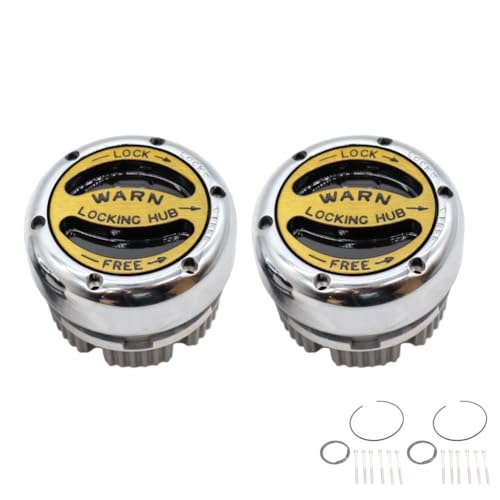
We research products from manufacturer specs and owner feedback; we don't test them ourselves. How we choose.
Sources
- Eaton — Detroit Locker Automatic Locking Differential — General locking-differential engineering background used to contrast against a solid spool's permanent lock.
- ARB — Air Locker — Selectable-locker actuation and disengaged-for-street-driving behavior, contrasted against a spool's permanent, non-selectable lock.
- Yukon Gear & Axle — How It Works: The Pros and Cons of Spools & Mini Spools — What a spool and mini-spool replace inside the differential, and the manufacturer's own recommendation that spools suit dedicated off-road/drag vehicles, not street use, due to tire chirp/wear and reduced wet/snow predictability.
- Eaton — ELocker Selectable, Electronic Locking Differential — Second example of an electronically actuated selectable locker, contrasted against a spool.
- Spicer (Dana) — Dana 44 Front Crate Axle — Dana 44/Dana 60 as axle families both a spool and a selectable locker bolt into.