
Affiliate disclosure: As an Amazon Associate, we earn from qualifying purchases, at no extra cost to you. We research rather than test, and commissions never change our rankings. This site is reader-supported: those commissions pay for hosting, research and keeping every guide up to date, so if a guide helped you, buying through our links is an easy way to support it. How we rank · Full disclosure
At a Glance
| System | Runs on dry pavement in 4WD? | Example |
|---|---|---|
| Part-time | No — binds through corners | Jeep Command-Trac (2.72:1 low range) |
| Part-time, Rubicon-only | No — binds through corners | Jeep Rock-Trac (4:1 low range) |
| Full-time (center differential) | Yes, on any surface | Some Land Rover, Subaru and full-size SUV platforms |
| Selectable "Auto 4WD" | Yes, while in that mode | Many modern trucks, as a mode alongside part-time 4-Hi/4-Lo |
A part-time 4WD system locks the front and rear axles together at the same speed with no way to compensate for cornering, so it should only be engaged on low-traction surfaces, while a full-time 4WD system uses a center differential to absorb that speed difference, allowing 4WD engagement on any surface, including dry pavement.
How Part-Time 4WD Works
A part-time transfer case gives the driver a direct, manually selected choice between 2WD, 4-Hi and, on most systems, 4-Lo. When shifted into either 4WD range, the front and rear driveshaft outputs are locked to spin at exactly the same speed, with no differential between them. This is a simple, direct mechanical connection, and it's specifically why part-time systems should not be run in 4WD on dry, high-traction pavement: with both axles forced to the same speed, cornering — where the front and rear wheels naturally travel slightly different distances — causes the drivetrain to bind against itself.
How Full-Time 4WD Solves the Cornering Problem
A full-time 4WD system adds a center differential between the front and rear driveshaft outputs, functionally similar to the differential inside an axle that lets its two wheels spin at different speeds. This center differential absorbs the speed difference between front and rear during cornering, which is what allows a full-time system to stay engaged in 4WD continuously, on any surface including dry pavement, without the binding a part-time system would experience under the same conditions.

Matching Engagement to Actual Surface Traction
The core rule for a part-time system is straightforward: engage 4WD only on a surface with enough give — snow, ice, mud, gravel or loose dirt — that some wheel slip is naturally possible, preventing the drivetrain bind that would occur on dry pavement's higher traction. A full-time system removes this consideration entirely for normal driving, since its center differential handles the speed compensation automatically regardless of surface.
Which Trucks Use Which System
Part-time systems remain common on dedicated off-road-focused trims across several manufacturers — Jeep's Command-Trac (2.72:1 low range) and Rubicon-only Rock-Trac (4:1 low range) are both part-time systems, per Jeep's own capability materials, and Toyota describes the current 4Runner's transfer case as an "electronically controlled two-speed transfer case," which is likewise a part-time-style high/low system rather than a full-time center-differential design. Full-time or "all-wheel-drive-like" 4WD systems are more common on SUVs and trucks marketed toward daily, all-surface use, including some Land Rover, Subaru and full-size SUV platforms — the current Toyota Land Cruiser is a full-time example, with a standard center differential lock across every trim per Toyota's own newsroom materials (see our center diff lock explainer for how that lock works). Checking a specific vehicle's owner's manual, rather than assuming based on the general "4WD" badge, is the reliable way to confirm which system a given truck actually uses — many modern trucks also offer a selectable "Auto 4WD" mode that behaves similarly to a full-time system without being permanently engaged.
Selectable Systems That Blend Both Approaches
Many modern trucks offer a middle option: a selectable "Auto" or "4A" mode that behaves like a full-time system, automatically managing torque distribution and permitting pavement use, alongside a traditional part-time 4-Hi/4-Lo mode for genuine off-road engagement. This gives an owner the pavement-safe flexibility of a full-time system when wanted, without giving up the simpler, more direct locked-axle connection a part-time mode provides for technical terrain.
Using 4WD for the First Time
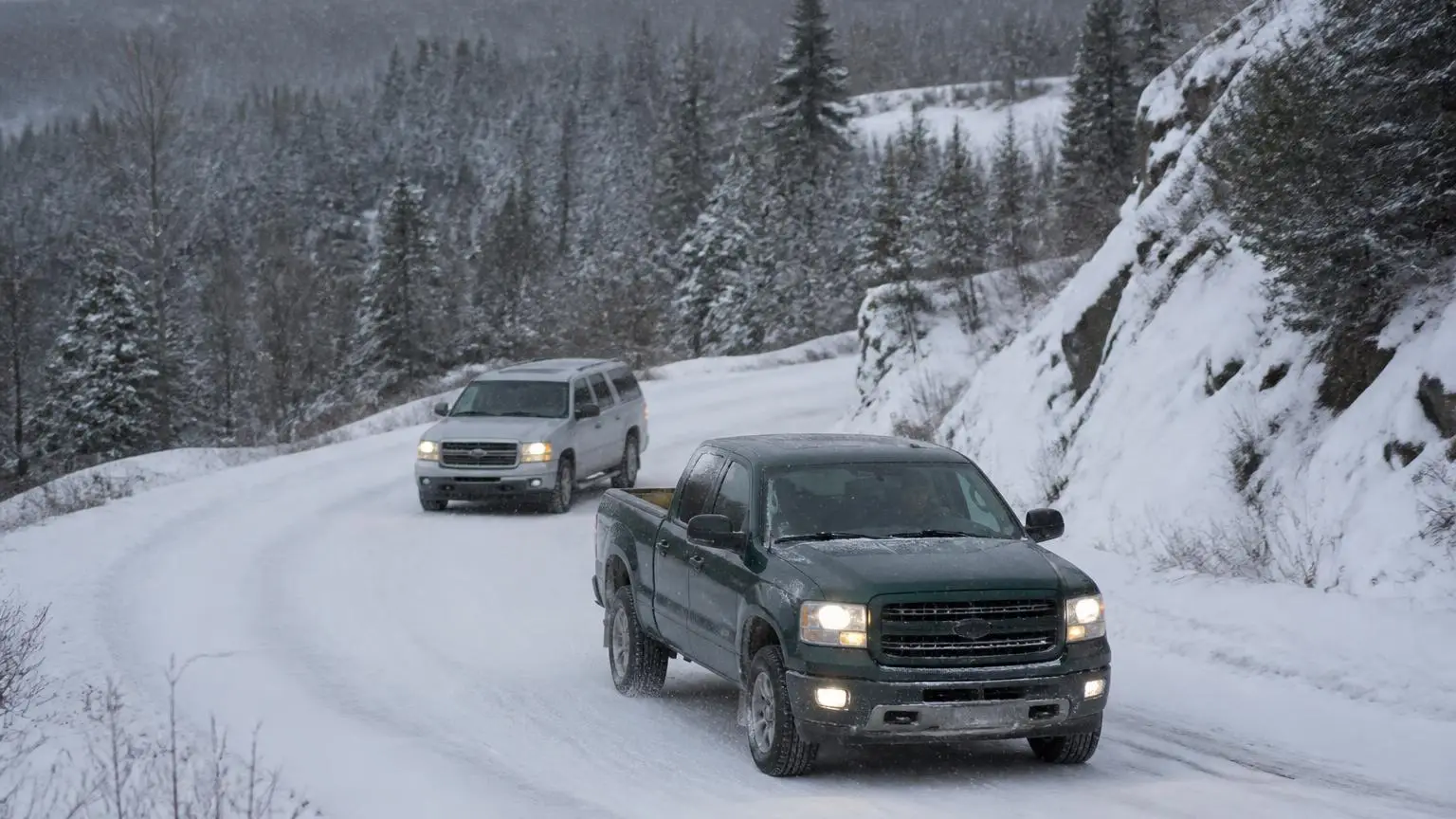
The easiest first run is on a surface you already know is slippery or loose, like a snowy lot, a gravel road or a dirt track, because 4WD is built for exactly those conditions. Ford's F-150 owner's manual says 4H and 4L are only intended for consistently slippery or loose surfaces, and that neither should be used on dry, hard-surfaced roads, where it can cause excessive noise, increased tire wear and possible damage to drive components. For the shift itself, the same manual says you can move from 2H to 4H at a stop or while driving, while shifting into or out of 4L means slowing to 3 mph or less and selecting neutral. Other trucks have different speed limits, so read your own manual first and then practice somewhere safe at low speed so the feel of the lever and the dash indicator is familiar before you ever need it. Once the road clears, switch back to 2WD or Auto if your truck has it.
What Real-Time 4WD Means
Real-time 4WD describes a system that decides for itself when the rear (or front) wheels get power, so the driver does not choose between 2WD and 4WD. Honda calls its version Real Time AWD with Intelligent Control System, and its feature guide says the system is electronically activated, sends power to the rear wheels proactively when accelerating and climbing hills, reacts quickly to traction loss, and shifts torque between front and rear in turns. Honda's guide also says it is tuned for snowy conditions. That makes it closer in spirit to the full-time and Auto systems above than to a part-time lever you must manage. The trade-off is control: with an automatic system you generally cannot lock both axles together by choice, which is what a part-time system offers for technical trails. Brands use "real-time" differently, so confirm in your manual how your vehicle's system behaves.
Jeep, Toyota, Land Rover and Subaru are trademarks of their respective owners. 4x4 & Overlanding is an independent publication and is not affiliated with, sponsored or endorsed by any vehicle manufacturer.
Related Reading
See how does a transfer case work for the full mechanical breakdown of high range, low range and shift mechanisms, and 4WD drivetrain systems for how transfer case type interacts with locking differentials and axle choice.
Recommended gear
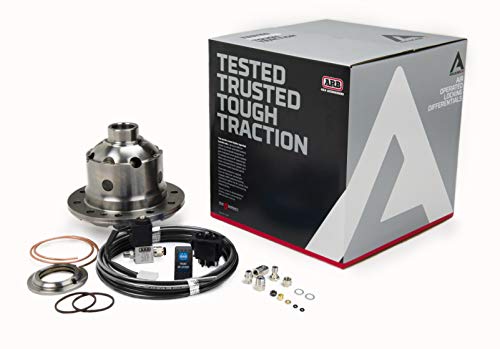
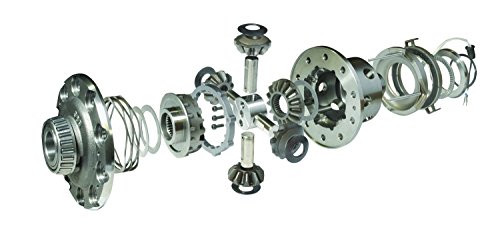
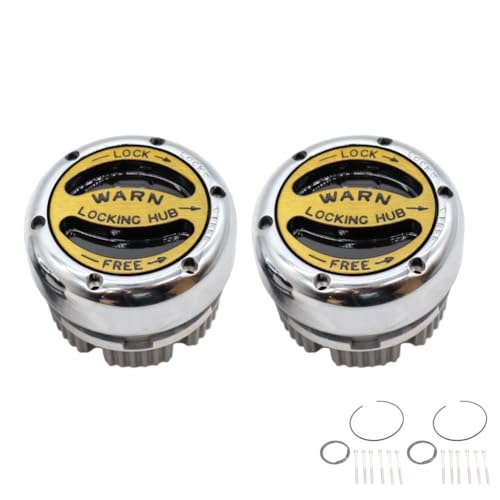
Lockers and hubs for your drivetrain
Affiliate disclosure: As an Amazon Associate, we earn from qualifying purchases, at no extra cost to you. Purchases through these links help keep this site running and up to date. Learn more
We research products from manufacturer specs and owner feedback; we don't test them ourselves. How we choose.
Sources
- Eaton — Detroit Locker Automatic Locking Differential — General drivetrain/differential engineering background for axle speed compensation.
- Jeep — 4x4 Systems (Command-Trac, Rock-Trac, Selec-Trac) — Command-Trac (part-time) vs Selec-Trac (full-time, center-differential) system behavior and which Jeep trims use each.
- Jeep — Wrangler Capability — Command-Trac's 2.72:1 low range and Rock-Trac's 4:1 low range as concrete part-time system examples.
- Toyota Newsroom — The All-New 2025 Toyota 4Runner — The 4Runner's electronically controlled two-speed transfer case as a part-time-style system example.
- Toyota Newsroom — 2026 Land Cruiser: Built to Explore — Land Cruiser's full-time system with standard center differential lock across every trim, as a full-time system example.