

Affiliate disclosure: As an Amazon Associate, we earn from qualifying purchases, at no extra cost to you. We research rather than test, and commissions never change our rankings. This site is reader-supported: those commissions pay for hosting, research and keeping every guide up to date, so if a guide helped you, buying through our links is an easy way to support it. How we rank · Full disclosure
TL;DR
- A chase light is an extra rear-facing light that lets a following driver track you through dust or at night.
- It adds to, and never replaces, the red taillamps and stop lamps FMVSS 108 requires at 15 to 72 inches high.
- Units range from a single amber pod to multi-function bars with red, amber and white sections.
- Current draw is small: a 12-watt pod pulls about 1 amp at 12 volts, but the wire run to the back is long.
- On public roads, state codes set rear light colors; California requires red to the rear except for listed lamps, so switch a chase light off on pavement there.
The Problem Chase Lights Solve
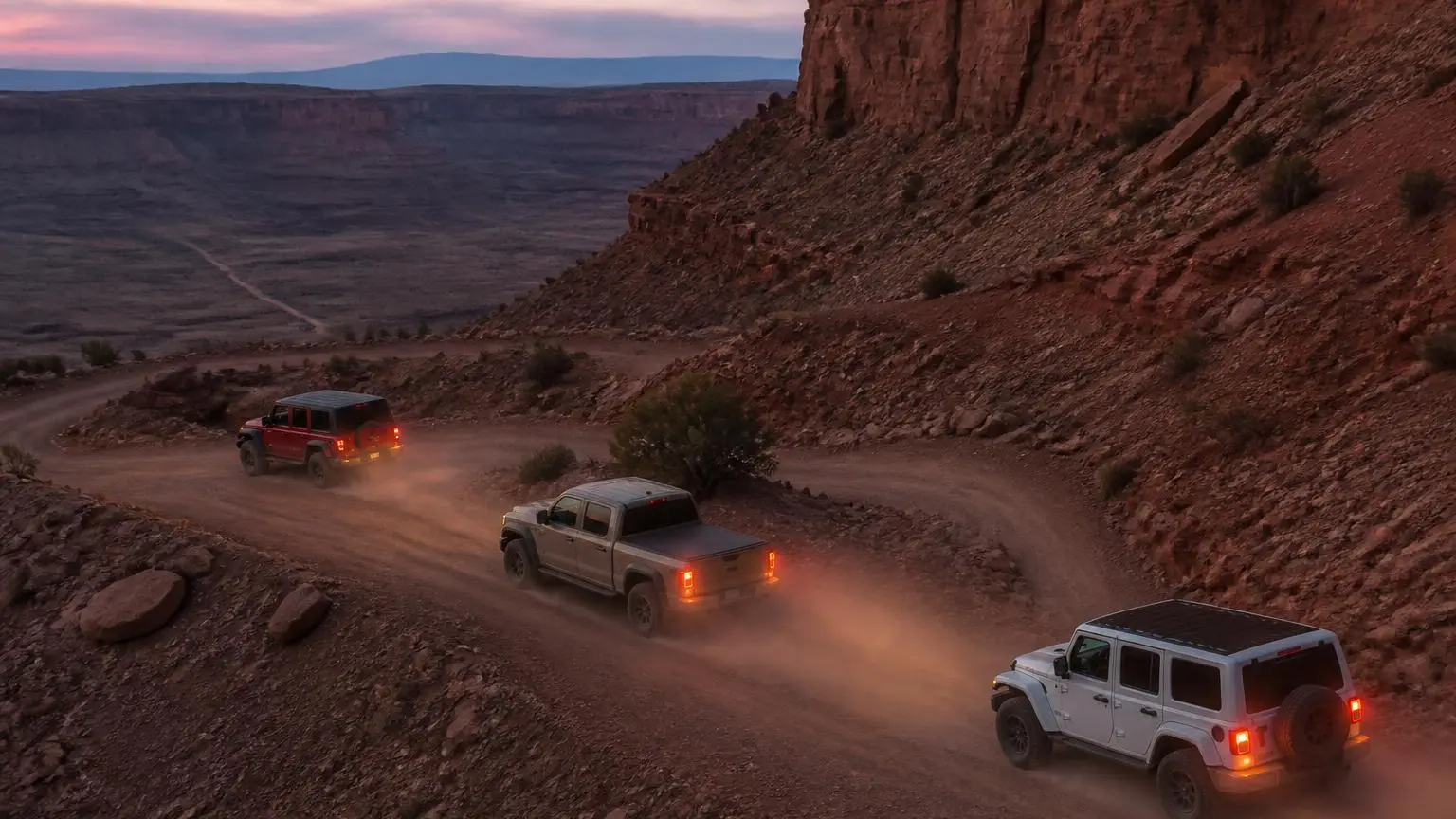
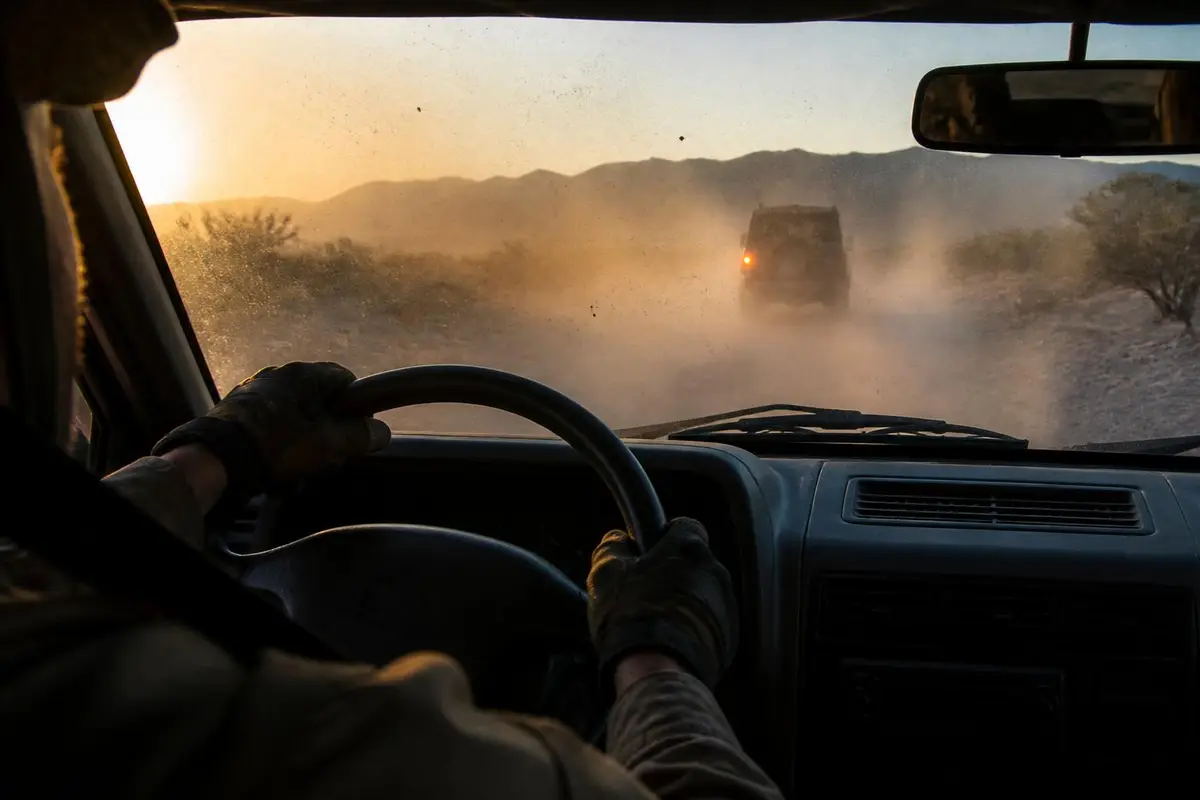
Federal Motor Vehicle Safety Standard 108 defines taillamps as steady-burning, low-intensity lamps that mark the rear of a vehicle, mounted 15 to 72 inches above the ground. That works on a paved road at normal following distances. On a dirt trail, the lead vehicle's own tires throw a dust cloud around those low lamps, following distances stretch and shrink, and turns and grades put the following driver at odd angles. A brighter light mounted high, on a roof rack, spare-tire carrier or roll cage, stays visible over more of that dust. Baja Designs markets its chase lights for exactly that: rear visibility in dust so groups behind can see you.
Colors and Functions
Chase lights range from a single pod to multi-function bars. Baja Designs' range shows the typical options:
| Product | Sections and colors |
|---|---|
| S2 Sport chase light kit | One pod with an amber work/scene lens, 1,581 raw lumens at 12 W |
| RTL (clear) | Solid red, solid amber, white center, solid amber, solid red |
| RTL-W | As above, with one amber section flashing |
| RTL-S | Solid red ends, flashing amber sections that can work as turn signals with an external flasher or switch panel, white center |
| RTL-G and RTL-B | Green or blue center section, which Baja Designs lists as race-series specific |
Baja Designs says it fits the pod kit with a diffused amber lens so the light is easy to spot without blinding drivers behind. Amber is also the color already used on rear turn signals, which FMVSS 108 allows in amber or red. For why amber may feel less glaring in dust, but doesn't scatter less, see amber light bars.
What Stays Required
FMVSS 108 Table I-a sets the rear lamps every truck and SUV must carry: two red taillamps, two red stop lamps (both 15 to 72 inches high), rear turn signals in amber or red, and white backup lamps. The standard also says no added lamp may impair the effectiveness of that required lighting. So mount a chase light where it doesn't block a required lamp, and don't wire it in a way that changes how a required lamp works. Off-highway rules carry the same idea: California's Vehicle Code §38345, in its off-highway vehicle division, requires at least one lighted red taillamp visible from the rear from a half hour after sunset to a half hour before sunrise. A chase light doesn't satisfy that on its own unless it provides that red taillamp.

Mounting and Aim
Mount the light on the rear of the vehicle, as high as is practical, on a rack crossbar, cage bar, tire carrier or bracket, and aim it straight back or slightly down. It doesn't need the reach of a forward light; it needs to be seen. A wide, diffused lens spreads the light so a follower sees it from off-angle, and a narrow spot optic would put glare straight into the following driver's eyes.
Wiring: Small Current, Long Run
The current is small. Amps equal watts divided by volts, so a 12-watt pod on a 12-volt system draws about 1 amp, a tenth of what a 120-watt light bar pulls. The run is long, though: the light is at the back and the switch is up front, which is why Baja Designs includes a 10-foot extension harness with its universal chase kit. Use the same fused, switched circuit as any auxiliary light, and if a multi-function unit's red sections are to follow the brakes, connect them through a proper interface rather than splicing into the factory stop-lamp circuit. The general method is in how to wire a light bar.
Who Actually Needs One
Chase lights earn their place in groups: UTV club rides, multi-vehicle overland trips and desert racing, where drivers follow each other through dust. A solo driver, or a group on hard-packed or wet trails that don't raise dust, gets much less from one. If your group runs at night, agree on what a flashing amber means before you roll out.
Public-Road Legality
State codes decide what may show to the rear on a public road. California is a clear example: Vehicle Code §25950 requires light visible from the rear to be red, with exceptions for lamps such as backup lamps and turn signals, and §24003 bars any lamp the code doesn't require or permit. A steady amber or white chase light is not one of those exceptions, so switch it off before you reach pavement there, and check your own state's code. Our light bar legality guide covers the wider state picture. For a product-level look, see the Baja Designs chase light review and the off-road lighting hub. This explainer draws on FMVSS 108, California's Vehicle Code and manufacturer product documentation; we don't install or test lighting ourselves (see how we rank).
Recommended gear
Lighting for trail camp and night driving
Affiliate disclosure: As an Amazon Associate, we earn from qualifying purchases, at no extra cost to you. Purchases through these links help keep this site running and up to date. Learn more

Best for road-legal SAE/DOT auxiliary lighting.
- Pair of SAE/DOT-compliant white LED pods.
- Street-legal auxiliary lighting with amber backlight.
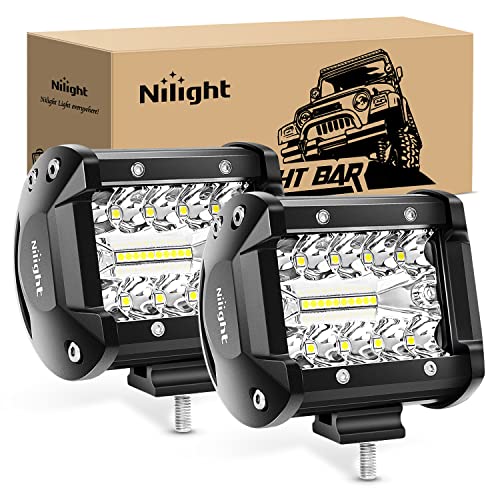
Best for affordable extra light for trail camp and night driving.
- Pair of 4 in, 60W flood/spot combo LED pods.
- Budget lighting for camp and slow trail driving.

Best for a compact compressor for tires up to 33".
- Compact 12V compressor, 120 PSI, for tires up to 33 in.
- Small enough to keep in the vehicle full-time.

Best for plugging a tread puncture on the trail.
- Reamer-and-plugger kit for tread punctures.
- Lets you plug a tire on the trail instead of changing it.
We research products from manufacturer specs and owner feedback; we don't test them ourselves. How we choose.
Sources
- Baja Designs — Rear Off Road Lights: RTL Light Bars & Chase Lights — Chase lights let others see you in dust; RTL, RTL-W, RTL-S, RTL-G and RTL-B color configurations; RTL-S amber sections usable as turn signals with an external flasher; green and blue centers race-series specific.
- Baja Designs — S2 Sport Universal Chase Light Kit — Amber work/scene lens chosen to be visible without blinding drivers behind; 1,581 raw lumens at 12 W; switch harness and 10-ft extension harness.
- 49 CFR 571.108 (FMVSS 108) — Lamps, reflective devices and associated equipment — Taillamp and stop-lamp definitions; Table I-a rear lamps (red taillamps and stop lamps at 15–72 in, amber or red rear turn signals, backup lamps); S6.2.1 no added lamp may impair required lighting.
- California Vehicle Code §25950 (lamp colors) — Light visible from the rear must be red, with listed exceptions such as backup lamps and turn signals.
- California Vehicle Code §24003 (unauthorized lamps) — No vehicle may carry a lamp the code doesn't require or permit.
- California Vehicle Code §38345 (off-highway vehicle taillamp) — At least one lighted red taillamp visible from the rear from a half hour after sunset to a half hour before sunrise.
- NIST — SP 330, The International System of Units (Section 2) — Volt defined as watt per ampere, so amps = watts ÷ volts for the current-draw example.