

Affiliate disclosure: As an Amazon Associate, we earn from qualifying purchases, at no extra cost to you. We research rather than test, and commissions never change our rankings. This site is reader-supported: those commissions pay for hosting, research and keeping every guide up to date, so if a guide helped you, buying through our links is an easy way to support it. How we rank · Full disclosure
The short answer on GVWR vs GVW: GVWR is the most your truck is allowed to weigh, and GVW is what it weighs right now. GCWR, GAWR and UVW are cousins of those two, and mixing them up is how people end up overloaded.
TL;DR
- GVWR (rating) is a limit. GVW (weight) is a measurement from a scale. GVW must stay at or under GVWR.
- GAWR is the limit per axle. GCWR is the limit for truck plus trailer. UVW is the empty weight.
- GVWR and GAWR are on the certification label at the driver's door. GCWR is in the owner's manual or towing guide.
- A rating is a number on paper. A weight is something you only learn by driving onto a scale.
Difference Between GVWR and GVW
The only letter that changes is the R, and it changes the meaning completely. The R stands for rating. A rating is a ceiling the manufacturer certifies. Without the R you have a weight, a real measurement of your truck on one day with one load.
Under federal rules, 49 CFR 571.3 defines GVWR as the maximum loaded weight of a single vehicle as specified by the manufacturer. Ford's towing guide puts GVW the other way round: base curb weight plus cargo weight plus passengers, and it states plainly that GVW is not a limit but the actual weight you get when the loaded vehicle is driven onto a scale. Its rule is simple: GVW must never exceed GVWR.
What Does GVWR Mean on a Truck?
On a pickup, GVWR is the whole-truck budget. The truck itself, every passenger, all gear, aftermarket parts like bumpers and racks, and any trailer tongue weight all spend from it. Your exact number is on the certification label that 49 CFR 567.4 requires, usually on the hinge pillar, door-latch post or door edge beside the driver's seat. For where to look and how the number is built, see what is GVWR.
Difference Between GVWR and GAWR
GAWR is GVWR's axle-sized cousin. The same label lists a Gross Axle Weight Rating for each axle, front to rear. 49 CFR 571.3 defines it as the load-carrying capacity of a single axle system as specified by the manufacturer.
Why it matters: the total can pass while one axle fails. Ford's guide says the total load on each axle must never exceed its GAWR, and it tells you to find actual axle weights on a scale. Tongue weight, a bed rack and a loaded bed all push down on the rear axle, so the rear GAWR is usually the first one to go.
Difference Between GVWR and GCWR
GCWR, Gross Combination Weight Rating, is the maximum the towing truck and the loaded trailer may weigh together. Ford's matching measured number is GCW, the weight of the loaded vehicle plus the fully loaded trailer, and GCW must never exceed GCWR.
Two points trip people up:
- GCWR is not on the door label. Ford points you to its trailer towing selector charts or your owner's manual.
- The truck's brakes are rated at GVWR, not GCWR. Ford recommends separate functional brakes on trailers weighing more than 1,500 lbs loaded.
So a truck can be within GVWR and within GCWR yet still be a poor match for a trailer that has no brakes of its own. See trailer hitch classes for the hitch side of the same question.
GVWR vs UVW
UVW, unloaded vehicle weight, is the bottom of the scale, where GVWR is the top. 49 CFR 571.3 defines it as the weight of a vehicle with the maximum capacity of all fluids necessary to operate it, but without cargo, occupants, or accessories that are ordinarily removed when not in use.
It is easy to confuse with curb weight, and the two are not worded the same. The same regulation defines curb weight as the vehicle with standard equipment and maximum fuel, oil and coolant, plus air conditioning and optional engine weight if fitted. Ford's own term, base curb weight, goes further and excludes any optional equipment. When a spec sheet gives an empty weight, check which of these names it uses before you subtract it from GVWR.
All Five Side by Side
| Term | Rating or measurement? | What it covers | Where to find it |
|---|---|---|---|
| GVWR | Rating (limit) | Whole loaded truck | Door label |
| GVW | Measurement | Your truck as loaded today | Certified scale |
| GAWR | Rating (limit) | One axle | Door label |
| GCWR | Rating (limit) | Truck plus loaded trailer | Owner's manual or towing guide |
| UVW | Weight, as defined by rule | Empty vehicle with all fluids | Maker spec sheet |
Putting It Together at a Scale
Here is the order that catches every one of these limits:
- Weigh the loaded truck alone for GVW and compare it with GVWR.
- Weigh the front axle, then the full truck, and subtract to get the rear axle weight. Compare each with its GAWR. Ford describes this front-then-all-wheels method.
- Weigh truck and trailer together for GCW and compare it with GCWR.
Our guide to using a CAT scale walks through the visit, and the towing and payload capacity checker does the sums once you have your numbers.
Recommended gear
Towing gear worth knowing
Affiliate disclosure: As an Amazon Associate, we earn from qualifying purchases, at no extra cost to you. Purchases through these links help keep this site running and up to date. Learn more

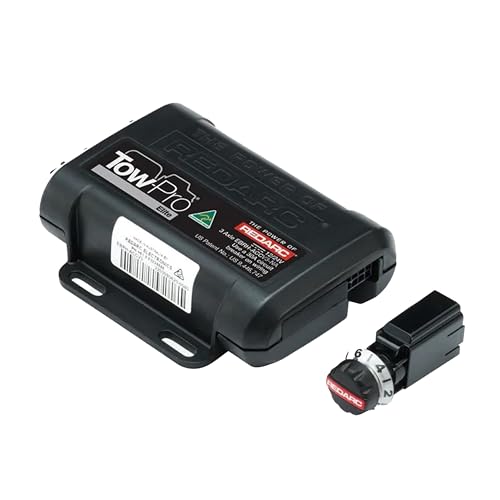


We research products from manufacturer specs and owner feedback; we don't test them ourselves. How we choose.