
Affiliate disclosure: As an Amazon Associate, we earn from qualifying purchases, at no extra cost to you. We research rather than test, and commissions never change our rankings. This site is reader-supported: those commissions pay for hosting, research and keeping every guide up to date, so if a guide helped you, buying through our links is an easy way to support it. How we rank · Full disclosure
TL;DR
- Payload is GVWR minus curb weight, and trailer tongue weight counts against it (Ford).
- Curb weight isn’t on the door label. The B-pillar tire placard gives your truck’s occupant-and-cargo limit instead (FMVSS 110).
- At 12% tongue weight, a 6,000-lb trailer adds 720 lbs to the truck. The default example here leaves 480 lbs of payload.
- This tool checks GVWR only. Check rear GAWR at a scale and GCWR in the towing guide, and derate 2% per 1,000 ft of elevation.
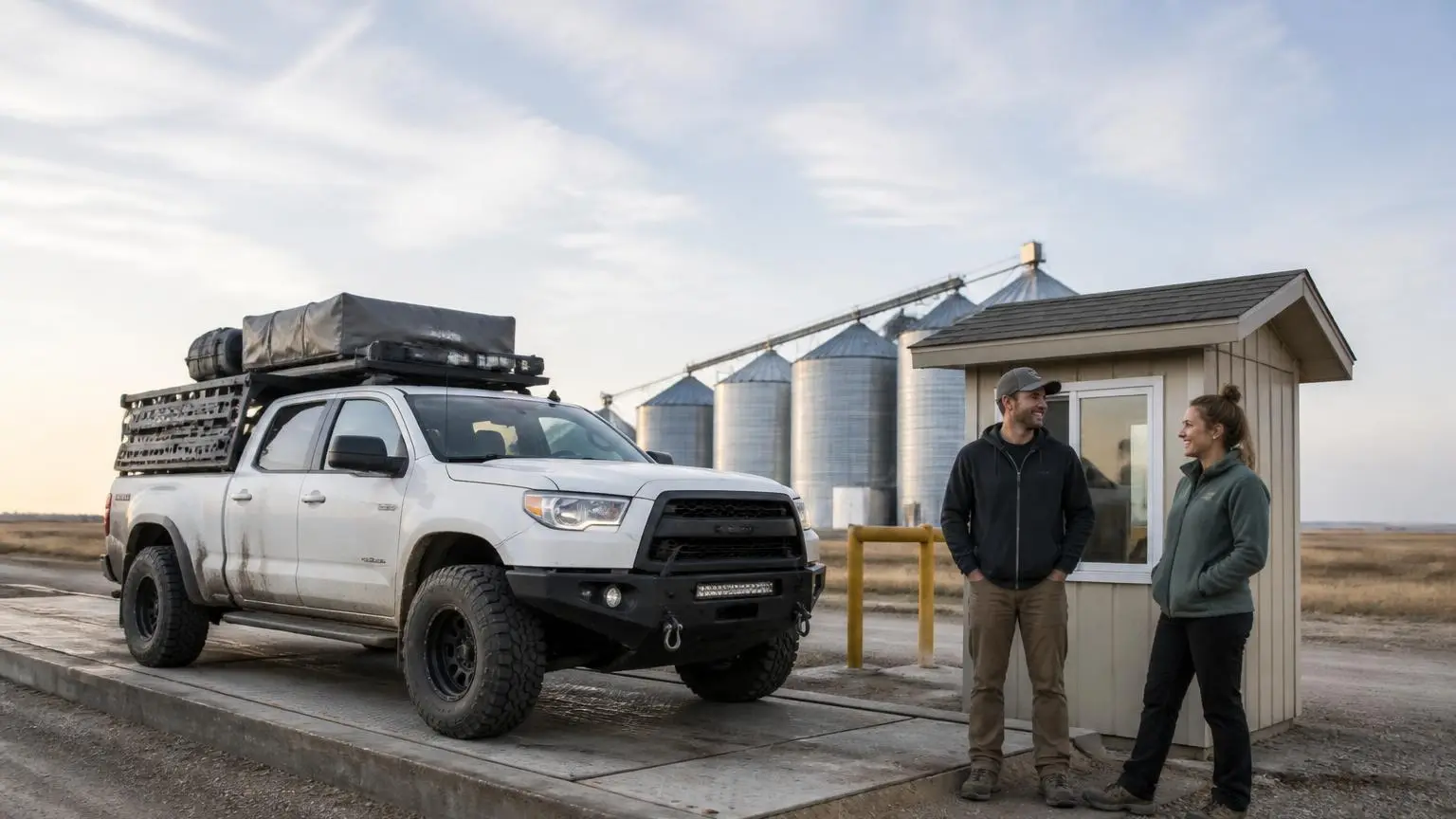
- Accessories count too: a 165-lb rooftop tent and a 59.5-lb rack come straight off payload.
Typical Accessory Weights (Maker-Published Only)
Two accessory weights confirmed from the makers’ own spec sheets. Other bolt-on parts vary by vehicle fitment and material, so weigh the part or check its own spec sheet and enter the real figure above.
| Accessory | Weight | Source |
|---|---|---|
| iKamper Skycamp 3.0 rooftop tent (3–4 person) | 165 lbs | iKamper product spec sheet |
| Yakima OverHaul HD rack system (towers + HD crossbars) | 59.5 lbs (rack hardware only, before cargo) | Yakima product spec sheet |
Bumpers, winches and skid plates add weight too, but the makers we checked (ARB, WARN) don’t publish a net installed weight on their product pages, so none is listed here. Weigh the part, or have the truck weighed before and after installation.
How This Is Calculated
Rated payload = GVWR − curb weight. Tongue weight (lbs) = trailer weight × tongue weight %. Remaining margin = rated payload − passengers/cargo − aftermarket accessory weight − tongue weight.
Payload follows Ford’s definition: GVWR minus base curb weight, with trailer tongue load counted as cargo. SAE J2807 is the procedure makers use to set trailer weight ratings and GCWR; it governs the towing figure, not this payload calculation.
This tool checks payload against GVWR only. It doesn’t check GCWR, axle ratings (GAWR), trailer brake requirements or hitch ratings, which are covered below.
Why Payload Runs Out Before Towing Capacity
Towing capacity and payload are separate ratings, and tongue weight draws on both. Take the calculator’s default truck: a 7,000-lb GVWR and 5,200-lb curb weight leave 1,800 lbs of payload. Two adults and gear at 600 lbs leave 1,200. A 6,000-lb trailer at 12% tongue weight takes 720 of those, leaving 480 lbs. Add a 165-lb rooftop tent and a 60-lb rack and only 255 lbs remain, even though a 6,000-lb trailer may be well under the truck’s tow rating. Ford’s maximum trailer ratings make the same point from the other direction: they assume only mandatory options, no cargo, and a 150-lb driver and 150-lb passenger. Every added option, passenger or accessory comes off that figure.
Where to Find Each Number
| Figure | Where it is |
|---|---|
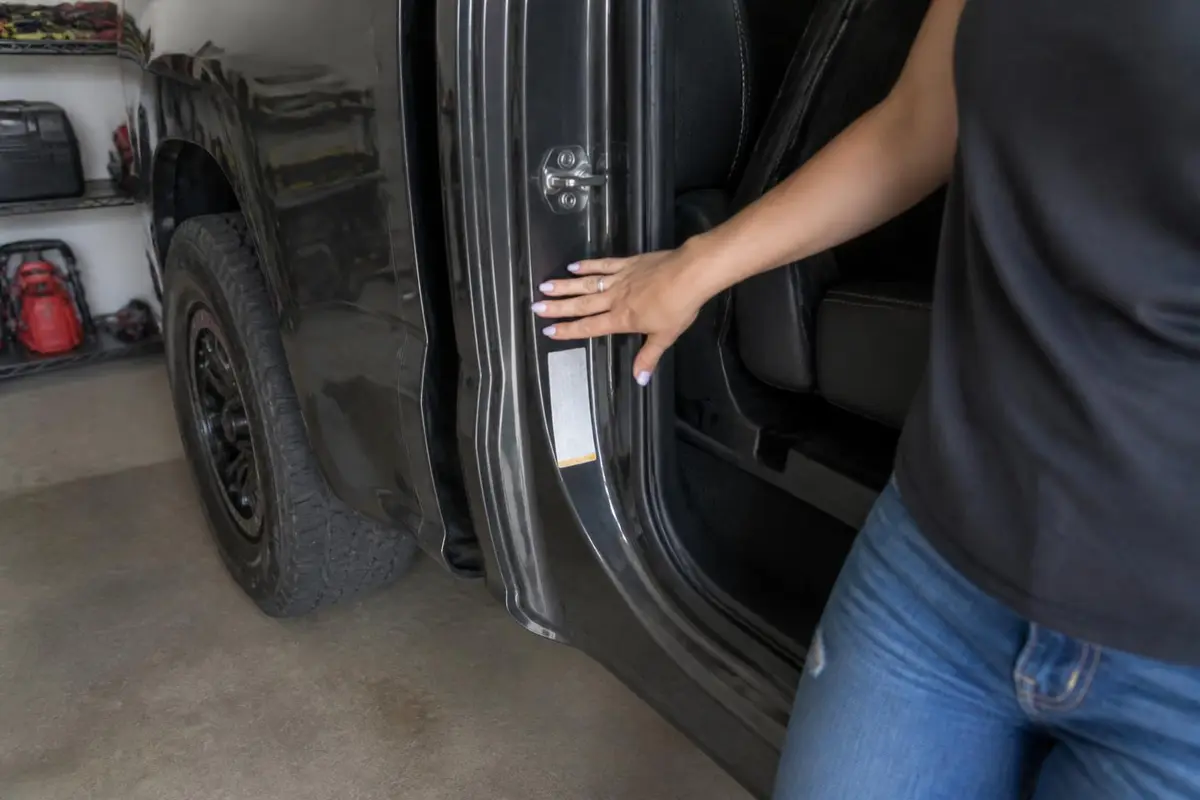
| GVWR and front and rear GAWR | Certification label on the driver’s door edge, latch post or hinge pillar (required by 49 CFR 567.4) |
| Occupant and cargo capacity for your exact truck | Tire and loading placard on the driver-side B-pillar (required by FMVSS 110) |
| Curb weight | Not required on either label; weigh the truck with a full tank, or use the maker’s figure for your configuration |
| GCWR and maximum trailer weight | Owner’s manual or the maker’s towing guide, by engine and axle ratio |
The placard’s occupant-and-cargo figure is effectively the truck’s as-built payload, so you can enter GVWR and GVWR minus that figure as curb weight to use it here. Anything added after the truck left the factory goes in the accessories field.
Checking the Rear Axle, Not Just GVWR
Ford notes that tongue load presses the back of the truck down and, if excessive, can lift the front wheels enough to reduce steering and braking. Ford’s towing notes say the added tongue load and passengers must not push the truck past its rear GAWR or its GVWR. This calculator checks GVWR only. To check the axles, Ford’s method is to weigh the hitched rig at a commercial scale: front wheels on the scale for front axle weight, then all four truck wheels for the truck total. Subtract to get the rear axle weight, and compare each with the GAWR on the door-edge label. A heavy winch bumper does the reverse, loading the front axle.
Checking GCWR Separately
GCWR caps the loaded truck plus the loaded trailer. Example: a truck weighing 6,500 lbs loaded pulling a 6,000-lb trailer makes a 12,500-lb combination, which has to be under that truck’s GCWR. Ford’s chart figures are calculated with SAE J2807, the industry procedure for setting GCWR and trailer weight ratings. Ford also says to reduce GVW and GCW by 2% per 1,000 feet of elevation to keep sea-level performance, so the same 12,500-lb combination behaves like a heavier one at altitude.
Trailer Brake Requirements Beyond Payload
Passing the weight checks doesn’t make a trailer legal to tow without brakes. RVIA’s 2017 summary of state codes shows brake thresholds from 1,500 lbs (California trailer coaches and camp trailers, Idaho, Nevada) through about 3,000 lbs in most states to 4,500 lbs in Texas. Ford recommends separate trailer brakes on any trailer over 1,500 lbs loaded, because the truck’s brakes are rated for its GVWR, not GCWR. See best brake controllers.
Matching the Hitch to the Numbers
Once tongue weight and trailer weight are known, the hitch has to be rated for both. CURT’s ceilings are 3,500 lbs trailer / 350 lbs tongue for Class 2, 8,000 / 800 lbs for Class 3 weight-carrying, and 10,000 / 1,000 lbs for Class 4. Individual receivers are often rated lower, so read the label on yours. See trailer hitch classes and is a weight-distribution hitch worth it.
"Am I Overweight After Mods?" — It’s a GVWR Question
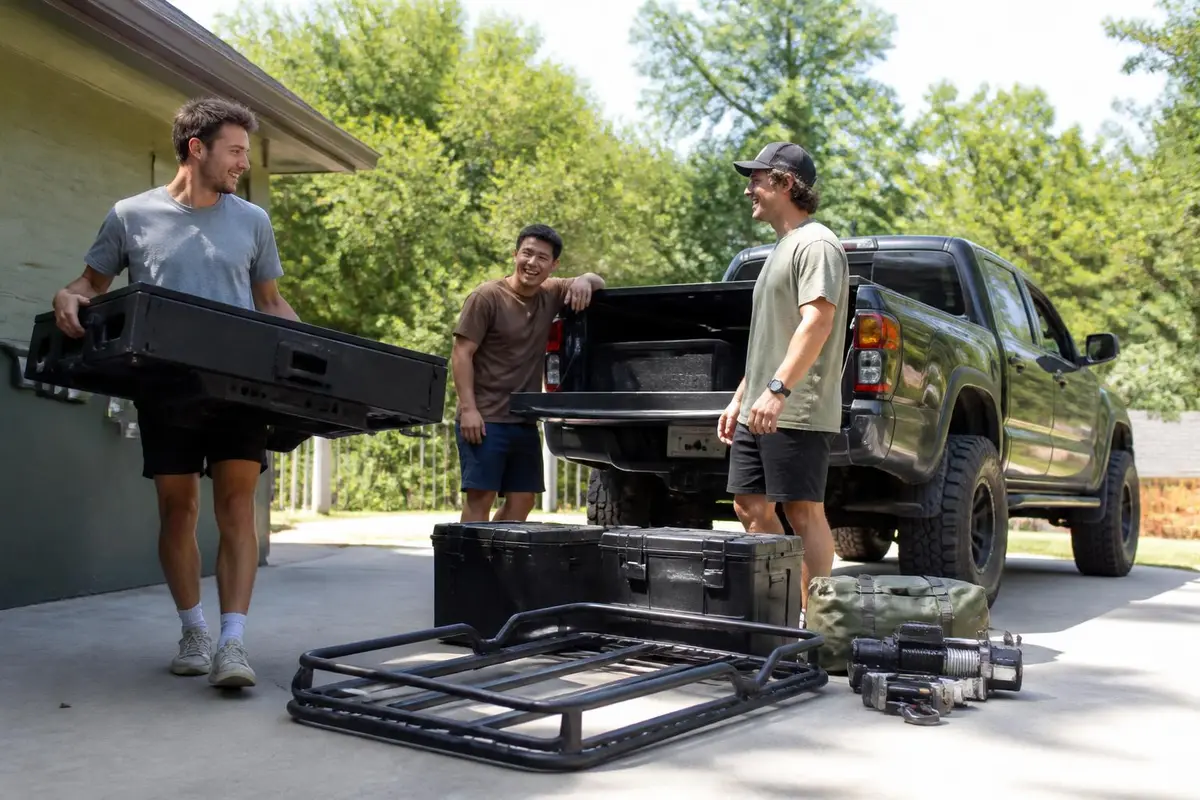
A front bumper, winch, roof rack, rooftop tent, skid plates and a long-range fuel tank each add weight that isn’t in the truck’s factory curb weight and isn’t on its placard. It counts against the same GVWR as passengers, cargo and tongue weight, which is why the calculator has a separate accessories field. Maker-published weights are the only reliable figures, like the two in the table above; otherwise weigh the truck before and after the work. See what is GVWR for how GVWR, GAWR and curb weight relate.
Recommended gear
Towing gear worth knowing
Affiliate disclosure: As an Amazon Associate, we earn from qualifying purchases, at no extra cost to you. Purchases through these links help keep this site running and up to date. Learn more



We research products from manufacturer specs and owner feedback; we don't test them ourselves. How we choose.
Sources
- Ford — 2026 RV & Trailer Towing Guide — Payload is GVWR minus base curb weight, with tongue load counted as cargo; maximum trailer ratings assume mandatory options, no cargo and 150-lb driver and passenger; tongue load and passengers must not exceed rear GAWR or GVWR; axle-weight scale method; 2% per 1,000 ft altitude derate; separate brakes above 1,500 lbs.
- 49 CFR 567.4 — Vehicle certification label requirements (Cornell LII) — The certification label shows GVWR and each GAWR and doesn’t have to show curb weight.
- 49 CFR 571.110 — FMVSS 110, Tire selection and rims; tire and loading placard (Cornell LII) — The B-pillar tire and loading placard states the most occupants and cargo the vehicle should carry.
- SAE International — J2807 Tow-Vehicle GCWR and Trailer Weight Rating Standard — SAE J2807 sets the procedure for GCWR and trailer weight ratings.
- Sherline Products — Hydraulic Trailer Tongue Weight Scale: Instructions and Trailer Loading Guide — Tongue weight of 10–15% for bumper-pull trailers, 12% ideal.
- RVIA — Trailer Brake Requirements: State Equipment and Road Use Law Summaries (08/2017) — State trailer brake thresholds from 1,500 to 4,500 lbs (as of August 2017).
- California Vehicle Code §26303 — Trailer coach and camp trailer brakes — California trailer coach and camp trailer brake threshold of 1,500 lbs.
- CURT Manufacturing — Types of Trailer Hitches and Hitch Classes — Class 2, 3 and 4 weight-carrying ratings.
- iKamper — Skycamp 3.0 Rooftop Tent — Skycamp 3.0 weighs 165 lbs and sleeps 3–4.
- Yakima — OverHaul HD — OverHaul HD rack system weighs 59.52 lbs.