
Affiliate disclosure: As an Amazon Associate, we earn from qualifying purchases, at no extra cost to you. We research rather than test, and commissions never change our rankings. This site is reader-supported: those commissions pay for hosting, research and keeping every guide up to date, so if a guide helped you, buying through our links is an easy way to support it. How we rank · Full disclosure
TL;DR
- A road surface's friction coefficient is what actually sets stopping distance — measured skid-resistance research puts ice at 0.1–0.2 and new snow at 0.2–0.25, versus roughly 0.7 for dry pavement.
- Because stopping distance scales with 1/friction, that difference alone means 3–7× longer braking distance on ice than on dry pavement at the same speed.
- NHTSA's winter-driving guidance: slow down, increase following distance, and don't crowd or pass a snowplow.
- Neither 4WD nor AWD shortens stopping distance — both only help acceleration traction, not braking or cornering grip.
Speed and Following Distance: The Friction Numbers Behind the Advice
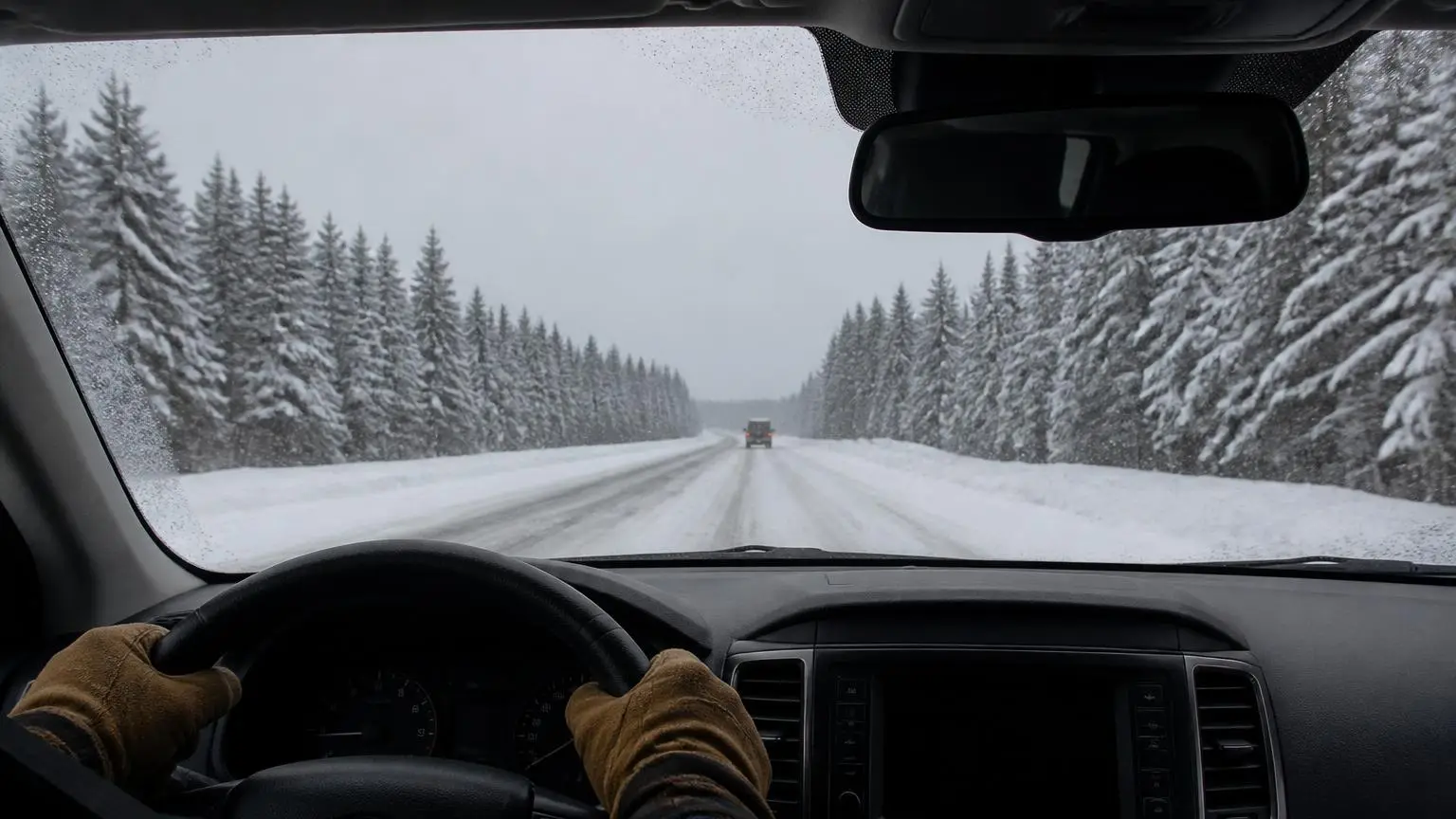
Stopping distance on snow and ice is meaningfully longer than on dry pavement, and reaction time doesn't change to compensate — reducing speed and increasing following distance well beyond a normal dry-road gap is the single change NHTSA winter-driving guidance emphasizes most. The reason is measurable: peer-reviewed skid-resistance testing (Transportation Research Board) puts braking-force friction coefficients at roughly 0.1 to 0.2 on ice, 0.2 to 0.25 on new snow, 0.25 to 0.3 on older packed snow and 0.3 to 0.4 on refrozen snow — all well below the roughly 0.7 commonly used for dry asphalt. Because braking distance scales inversely with the friction coefficient (distance is proportional to speed squared divided by friction), that gap alone means somewhere between 3 times (packed snow) and 7 times (glare ice) the stopping distance of dry pavement at the same speed, before accounting for a driver's own reaction time. Drivetrain (2WD, AWD or 4WD) doesn't change any of this: none of them improve braking grip, only acceleration traction.
Smooth, Deliberate Steering and Braking
Sudden steering or braking inputs are what typically turn a minor slide into an actual loss of control on a slick surface. Braking earlier and more gradually than usual, and steering with smaller, smoother corrections, gives the tires time to find grip rather than breaking traction outright.
If the Vehicle Starts to Skid
Ease off the accelerator and steer gently toward the direction you want the front of the vehicle to travel, rather than slamming the brakes or overcorrecting the steering. Overcorrection is a commonly reported cause of a minor rear-end slide turning into a spin, since a hard opposite steering input can send the vehicle sliding the other way once grip returns.
Hills, Bridges and Shaded Sections
Bridges and overpasses freeze before the rest of the road surface, since cold air circulates both above and below the deck, and shaded sections of road hold ice longer after the sun would have cleared an exposed stretch. Treating these sections with extra caution, even when the rest of a route looks clear and dry, avoids the surprise loss of grip they're known for.
What Drivetrain Actually Changes
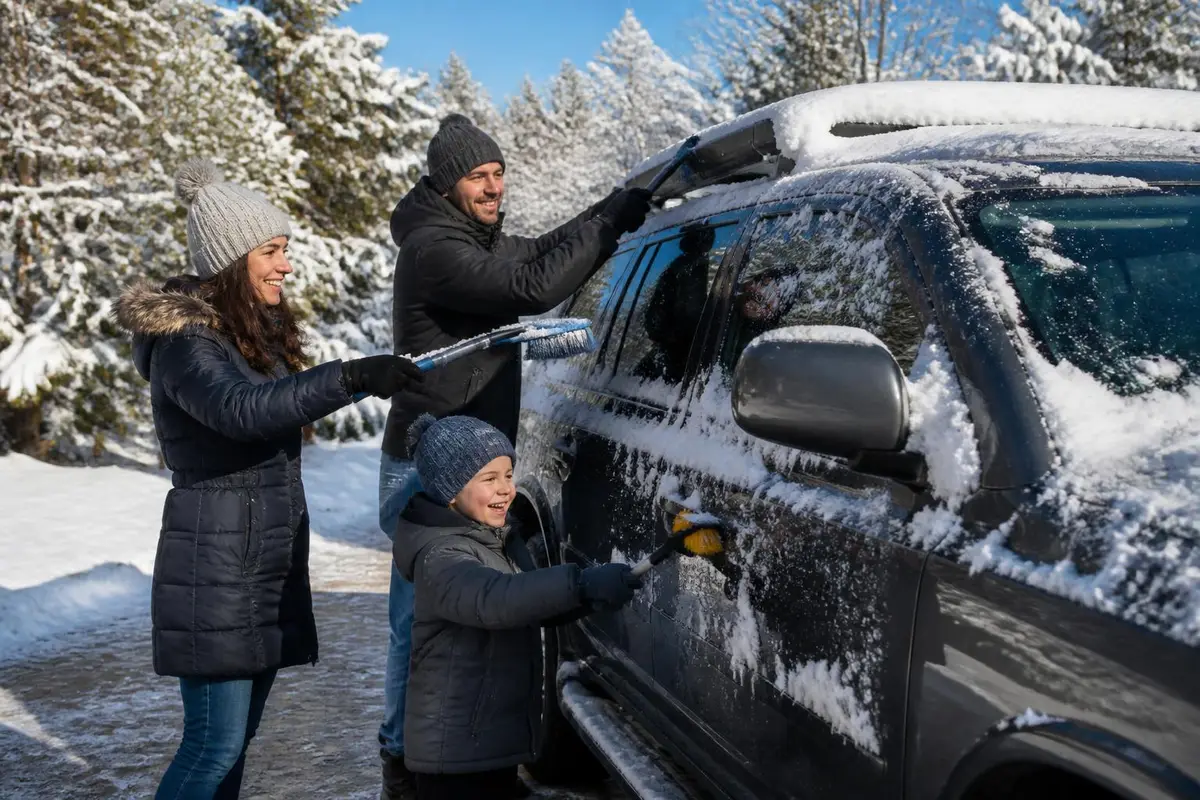
AWD and 4WD both help a vehicle get moving on snow, but they change nothing about how well the tires grip once you're trying to slow down or turn — the tire's compound and tread, not the drivetrain, decide that. See AWD vs 4WD in snow for the full comparison, and winter and snow 4WD for how winter tires and chains fit into the picture.
If You Get Stuck or Stranded
Stay with the vehicle if you're stranded away from help, run the engine only briefly and with the exhaust clear of snow to avoid carbon monoxide buildup, and use a winter emergency kit's supplies rather than attempting a long walk in poor conditions. See our winter car emergency kit checklist for what to carry.
How We Research This
This page reflects NHTSA and AAA winter-driving guidance, not first-hand driving demonstrations by our team. See winter and snow 4WD for the wider gear picture, and how we rank for our full research method.
Recommended gear
Gear for snow and winter trips
Affiliate disclosure: As an Amazon Associate, we earn from qualifying purchases, at no extra cost to you. Purchases through these links help keep this site running and up to date. Learn more

Best for getting unstuck from sand, mud or snow without another vehicle.
- Nylon recovery boards that give spinning tires grip in sand, mud or snow.
- Double as a shovel to clear sand from in front of the tires.

Best for a kinetic rope with matching soft shackles.
- 7/8 in x 30 ft kinetic rope plus two 7/16 in soft shackles.
- Comes with a waterproof storage bag.

Best for a compact compressor for tires up to 33".
- Compact 12V compressor, 120 PSI, for tires up to 33 in.
- Small enough to keep in the vehicle full-time.

Best for plugging a tread puncture on the trail.
- Reamer-and-plugger kit for tread punctures.
- Lets you plug a tire on the trail instead of changing it.
We research products from manufacturer specs and owner feedback; we don't test them ourselves. How we choose.
Sources
- NHTSA — Winter Weather Driving Tips — Slow down and increase following distance on snow/ice; don't crowd or pass a snow plow; battery power drops in cold weather; general winter-driving safety guidance.
- AAA Oregon — Temperatures Are Dropping & So Is Your Car's Battery Power — Cold-weather vehicle readiness context supporting the wider winter-driving-safety section.
- TRB (Ichihara & Mizoguchi) — Skid Resistance of Snow- or Ice-Covered Roads — Measured braking-force friction coefficients: ice 0.1–0.2, new snow 0.2–0.25, old/packed snow 0.25–0.3, refrozen snow 0.3–0.4 — the basis for the 3–7x stopping-distance figure versus a roughly 0.7 dry-pavement coefficient.
- National Weather Service — Winter Weather Watches, Warnings and Advisories — Winter Storm Watch/Warning/Advisory definitions, for recognizing when conditions genuinely call for this driving technique.
- Colorado DOT — Passenger Vehicle Traction and Chain Laws — Context that reduced-speed guidance applies regardless of drivetrain or traction-device compliance tier.