
Affiliate disclosure: As an Amazon Associate, we earn from qualifying purchases, at no extra cost to you. We research rather than test, and commissions never change our rankings. This site is reader-supported: those commissions pay for hosting, research and keeping every guide up to date, so if a guide helped you, buying through our links is an easy way to support it. How we rank · Full disclosure
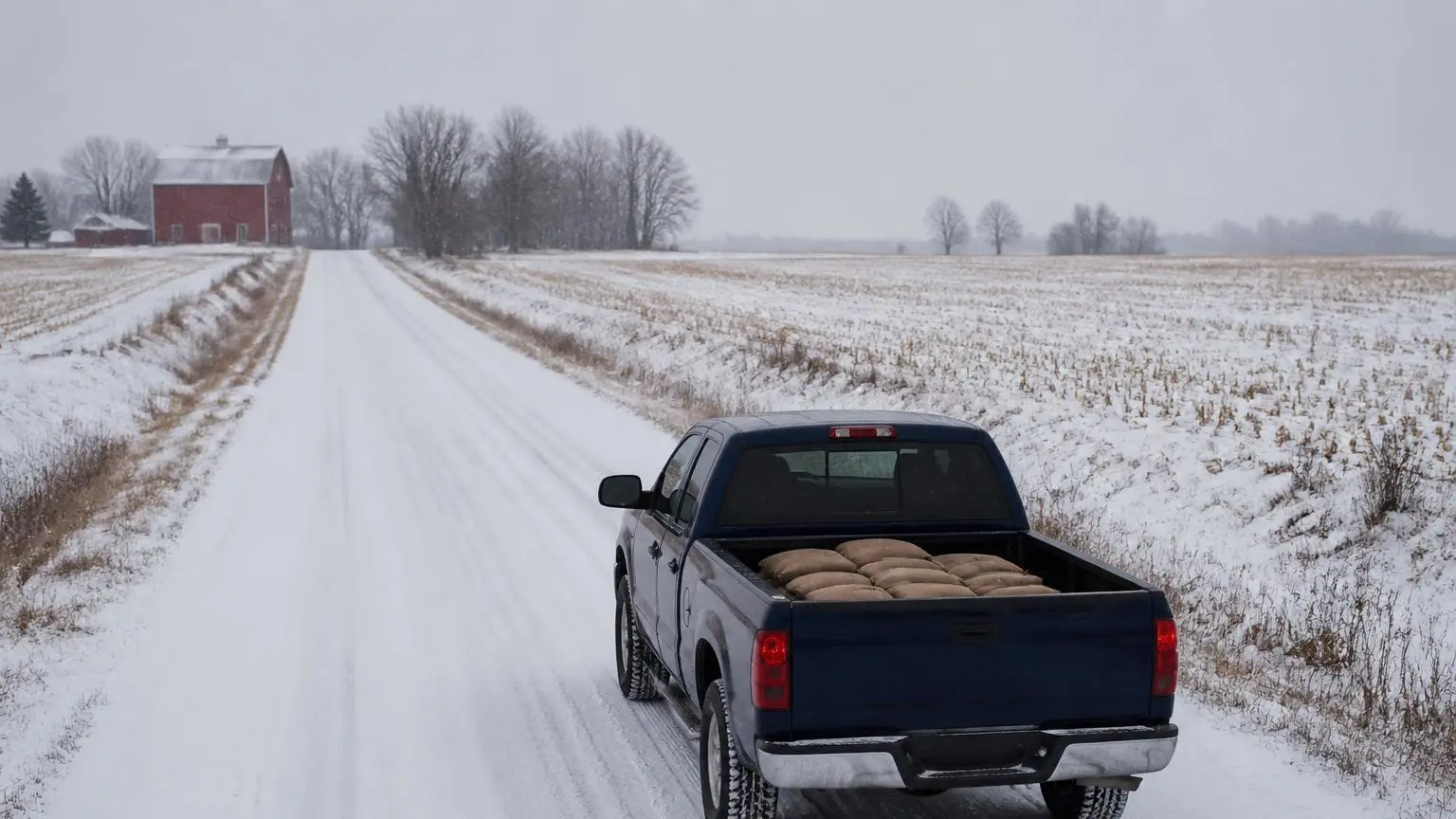
A modest amount of weight placed over the rear axle can help a lightly loaded pickup's rear tires find traction in snow, because friction at a tire's contact patch scales with the normal force pressing it onto the road (HyperPhysics) — the same physical relationship that makes a heavily loaded tire grip better than a bare one. There's no official manufacturer figure for how much to add; the only hard limit is the truck's actual rated payload, printed on the federally mandated Tire and Loading Information label, which the added weight has to stay inside alongside everything else in the bed.
Why Added Weight Can Help Traction
Friction available at a tire's contact patch is proportional to the normal force pressing it onto the road — physics' standard model of friction (HyperPhysics) puts it as friction force equals the coefficient of friction times the normal force. More downward force on a tire generally means more available grip, up to the tire's limit. An empty pickup bed puts relatively little of the truck's weight over the rear axle, which on a 2WD or rear-biased truck can leave the driven rear tires short on that downward force in snow or on ice. Adding weight directly over or just ahead of the rear axle increases the load on those tires and can noticeably help the truck pull away from a stop or hold traction on a slight grade.
How Much Weight Is Reasonable
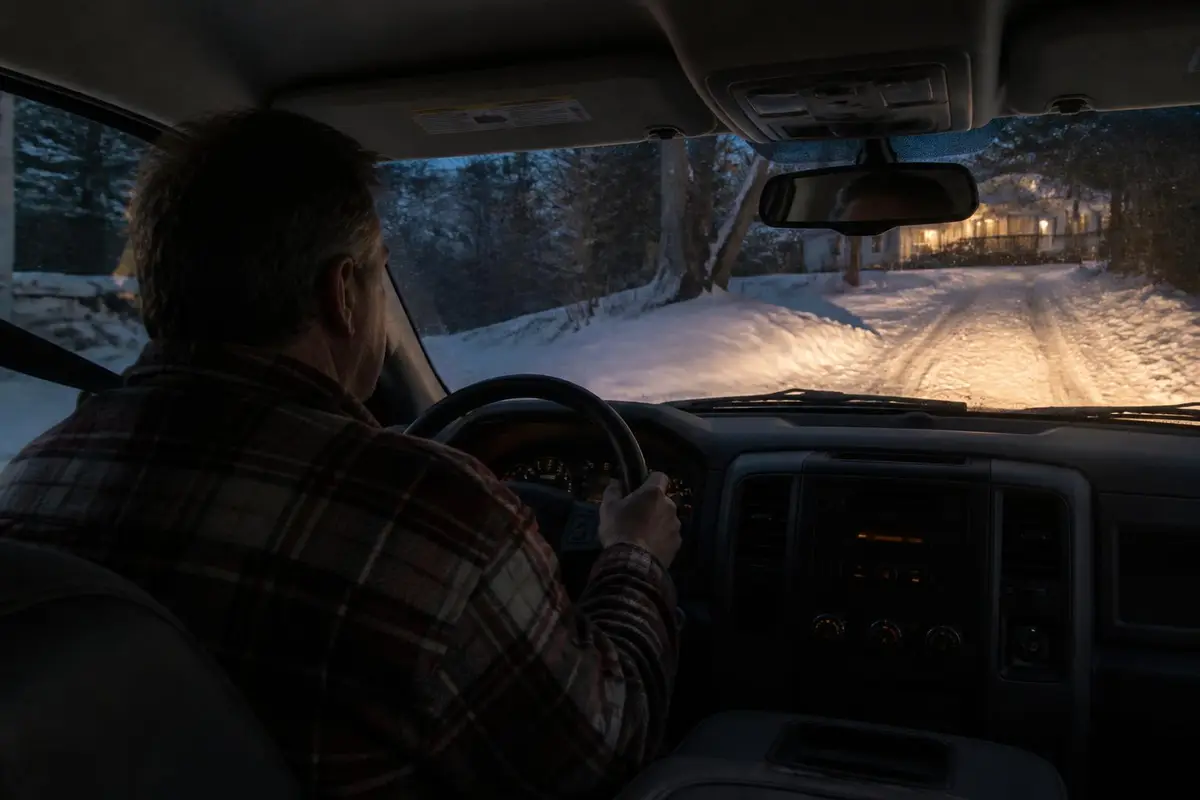
Neither NHTSA nor vehicle manufacturers publish a specific "add this many pounds for winter" figure — it depends on the individual truck's empty weight distribution and its rated payload, both of which vary by model, cab configuration and bed length. The only real constraint is the truck's rated GVWR and payload; whatever is added for winter traction still has to fit inside that number alongside passengers, gear and anything else already loaded. See towing and payload capacity checker for how to read that figure correctly.
Reading the Tire and Loading Information Label
Federal rule FMVSS 110 requires every vehicle under 10,000 lb GVWR to carry a Tire and Loading Information label — typically black text on a yellow background on the driver's door jamb or B-pillar — showing the vehicle's maximum occupant and cargo weight, its recommended cold tire pressure, and its original tire size (NHTSA's TireWise program). That combined-weight figure is the actual payload ceiling: passengers, cargo already in the bed, and any weight added for winter traction all count against the same number, and the placard, not a general "add some sandbags" rule of thumb, is the number that actually applies to a specific truck. A separate label, the Safety Compliance Certification Label required under 49 CFR 567.4, states the truck's GVWR itself — the maximum loaded weight of the whole vehicle, from which payload is calculated as GVWR minus curb weight.

Placement Matters as Much as Amount
Weight belongs as far forward in the bed as practical, centered over or slightly ahead of the rear axle — not stacked at the tailgate, which adds leverage behind the axle rather than downward force onto it, and can actually lighten the front axle's steering grip in the process. Secured, low-profile weight (sandbags, water jugs, weighted totes) that can't shift or become a projectile under hard braking is the safer approach over loose, unsecured material.
What Added Weight Doesn't Fix
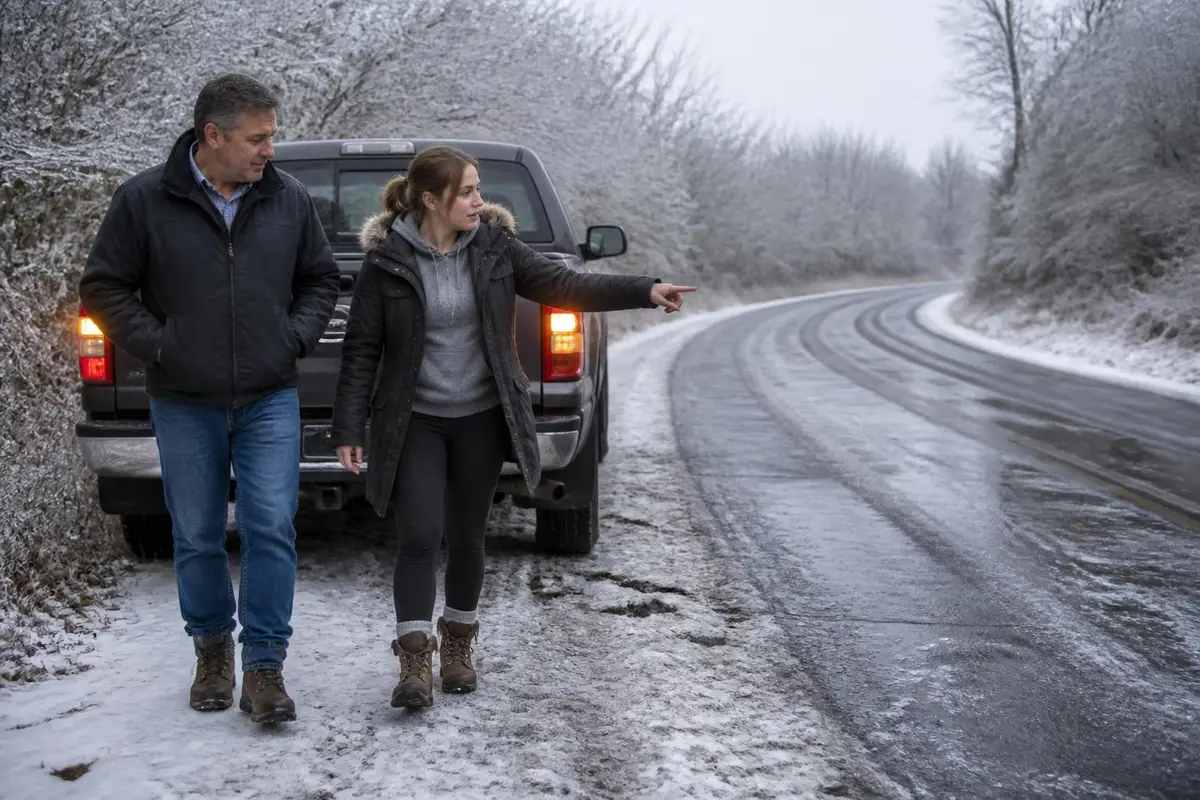
Weight in the bed changes traction on acceleration for a lightly loaded truck; it does nothing for braking distance or cornering grip, which depend on tire contact regardless of how much weight is over the axle — the same limitation drivetrain has (see AWD vs 4WD in snow). A worn or wrong-rated tire remains the bigger factor in overall winter safety than bed weight alone.
Traction Bars on a Lifted Truck: Different Job, Same Goal
Traction bars stop the rear axle from twisting under power, which is a different problem from not having enough weight over the tires. On leaf-spring rear suspensions, drivetrain torque can make the axle rotate opposite to the tire, bending the springs in what is called axle wrap. One patent filing describes how heavy towing or hard acceleration can cause this, wasting power, stressing drivetrain parts and producing wheel hop, where the tires briefly lose grip, and notes that vehicles with lifted suspensions or soft or high-torque springs are more prone to it. A traction bar limits that twisting. In winter that can help a lifted truck keep its tires planted on slick starts, but it does nothing to add downward force. For a light bed, ballast over the axle and traction bars solve two separate problems, and either can be used within the truck's rated payload.
Winter Truck Campers and Payload
A truck camper is the heaviest thing most owners will ever put in a bed, so payload is the first filter, not insulation. Northern Lite advises always checking the payload capacity of whatever truck you use, and says its 8-11 and 9-6 models need at least a three-quarter-ton pickup, with the 10-2 requiring a one-ton. For cold weather, look for a four-season build: Northern Lite states that its campers have an R7 insulation value, double-insulated cabover areas, and testing down to minus 20 C with water on board, and that slides would compromise that rating. Whatever the brand, compare the camper's wet weight, with water and gear, against your door-jamb payload, because the camper, passengers and any extra winter weight all share that single number.
Recommended gear
Gear for snow and winter trips
Affiliate disclosure: As an Amazon Associate, we earn from qualifying purchases, at no extra cost to you. Purchases through these links help keep this site running and up to date. Learn more

Best for getting unstuck from sand, mud or snow without another vehicle.
- Nylon recovery boards that give spinning tires grip in sand, mud or snow.
- Double as a shovel to clear sand from in front of the tires.

Best for a kinetic rope with matching soft shackles.
- 7/8 in x 30 ft kinetic rope plus two 7/16 in soft shackles.
- Comes with a waterproof storage bag.

Best for a compact compressor for tires up to 33".
- Compact 12V compressor, 120 PSI, for tires up to 33 in.
- Small enough to keep in the vehicle full-time.

Best for plugging a tread puncture on the trail.
- Reamer-and-plugger kit for tread punctures.
- Lets you plug a tire on the trail instead of changing it.
We research products from manufacturer specs and owner feedback; we don't test them ourselves. How we choose.
Sources
- NHTSA — Winter Driving Tips — General winter vehicle-preparation guidance; NHTSA does not publish a specific winter-ballast weight figure, and neither do vehicle manufacturers — any added weight still has to stay inside the truck's rated GVWR and payload.
- NHTSA — TireWise: Tire Safety Ratings and Awareness — The federally required Tire and Loading Information label shows a vehicle's maximum occupant-and-cargo weight, recommended cold tire pressure and original tire size.
- HyperPhysics (Georgia State University) — Standard Model of Friction — Friction force is proportional to the normal force pressing two surfaces together (F = μN), the basic physics behind why added weight over a tire increases available grip.
- eCFR — 49 CFR 567.4, Requirements for Manufacturers of Motor Vehicles — The Safety Compliance Certification Label states the vehicle's GVWR; payload is calculated as GVWR minus curb weight.