
Affiliate disclosure: As an Amazon Associate, we earn from qualifying purchases, at no extra cost to you. We research rather than test, and commissions never change our rankings. This site is reader-supported: those commissions pay for hosting, research and keeping every guide up to date, so if a guide helped you, buying through our links is an easy way to support it. How we rank · Full disclosure
TL;DR
- Check the warranty first: Ford's 5-year/60,000-mile powertrain warranty covers the transfer case and all its internal parts.
- Check for a recall by VIN: GM's 14V374 fixed a transfer case neutral-shift defect on 392,459 trucks and SUVs with a free reprogram.
- A 4x4 warning light means a fault is logged, not which part failed. Get it scanned before accepting a rebuild quote.
- Internal failures mean removing and stripping the case either way, so get quotes for both rebuild and replacement.
- Prevention: follow the fluid schedule (every 150,000 miles normal, 60,000 towing on a 2017 gas Super Duty) and keep part-time 4WD off dry pavement.
At a Glance
| Check | Why it matters | Where to look |
|---|---|---|
| Powertrain warranty | Ford's covers the transfer case and all its internal parts for 5 years or 60,000 miles | Your warranty booklet or the maker's website |
| Open recalls | Recall remedies are done by the manufacturer; 14V374 was a free software reprogram | NHTSA recall search by VIN |
| Diagnosis | A warning light only says a fault exists, not which part failed | A scan and inspection |
| Repair vs replace | Internal repairs require removing and stripping the case either way | Quotes for both paths |
Check the Warranty First
Transfer cases are usually covered as powertrain. Ford's powertrain warranty lasts 5 years or 60,000 miles, whichever comes first, and lists the "transfer case (including all internal parts)" among covered parts. On four-wheel-drive vehicles it also covers automatic front locking hubs, locking rings, axle shafts, driveshafts and U-joints. If your truck is inside the powertrain term, a covered failure shouldn't cost you the repair. Check the exact coverage for your VIN, because terms vary by manufacturer and model year.
Fluid matters for coverage too. Ford's owner's manual warns that using transfer case fluid that doesn't meet the specified standard could cause component damage the warranty doesn't cover.
Check for an Open Recall
Some transfer case faults are safety defects with a free fix. In recall 14V374, GM recalled 392,459 vehicles: 2014–2015 Chevrolet Silverado and GMC Sierra, and 2015 Chevrolet Tahoe and Suburban and GMC Yukon. An electrical short could shift the transfer case to neutral without driver input. Parked without the parking brake, the vehicle could roll away; while driving, it would lose drive power. Dealers reprogrammed the transfer case control module free of charge. NHTSA's VIN search shows open recalls up to 15 years old, and more where the manufacturer offers longer coverage.

Get the Failure Diagnosed
A warning light is where diagnosis starts. Ford's Super Duty manual says its CHECK 4X4 light displays when a 4x4 fault is present, and that the system typically stays in the last 4x4 mode selected rather than dropping back to two-wheel drive. The possible causes run from the cheap to the costly:
- External and electrical: low or leaking fluid, a worn output seal, a faulty switch, sensor, shift motor or control module. These can often be fixed without opening the case; 14V374 was fixed with software alone.
- Internal: worn or damaged gears, chain or bearings. These require removing the transfer case and stripping it.
A scan for stored fault codes and a fluid check narrow it down before anyone quotes a rebuild.
Repair vs Replace
For an internal failure, most of the labor is the same whichever way you go: the case has to come out of the vehicle. The choice is between rebuilding your unit with new internal parts and fitting a replacement unit, either new or remanufactured. When the internal damage is widespread, the parts bill for a rebuild can approach the price of a replacement unit. When it's limited to one bearing or seal, rebuilding is usually cheaper. Ask for a written quote on both, and compare the warranty offered on each, since coverage on remanufactured units varies by rebuilder.
What Causes Transfer Case Damage, and How to Avoid It
Owner's manuals list the habits that damage transfer cases:
- Running a part-time case in 4H or 4L on dry pavement. Ford says this produces excessive noise, increases tire wear and may damage drive components. Jeep calls the symptom crow hop.
- Forcing a low-range shift. Ford's system won't shift into 4L above 3 mph. Jeep says to shift at 2 to 3 mph in neutral, and that shifting at a dead stop is possible but not recommended, because the gear teeth may not line up.
- Skipping fluid service, especially after deep water.
| Operating condition | Change transfer case fluid |
|---|---|
| Normal use (gasoline and diesel) | Every 150,000 miles |
| Towing a trailer (gasoline engine) | Every 60,000 miles |
| Off-road operation (diesel engine) | Every 50,000 miles |
| Transfer case submerged in water | Change required (listed exception) |
Other vehicles have different schedules and fluids. One current Ford owner's manual, for example, specifies 1.9 quarts of Motorcraft MERCON LV. Use your own manual's figures.
Related Reading
See how a transfer case works for the mechanism, part-time vs full-time 4WD for why dry-pavement use matters, and the cost to regear for a related drivetrain job.
Recommended gear
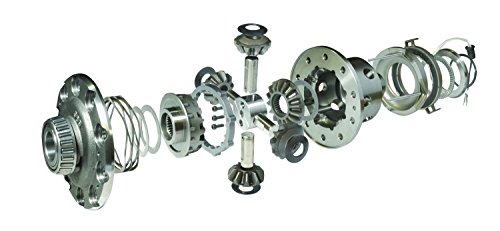
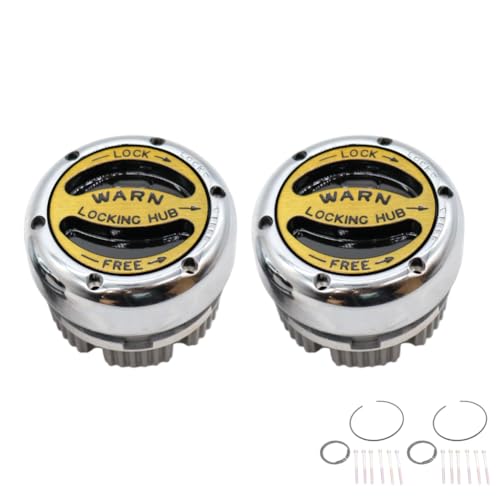
Lockers and hubs for your drivetrain
Affiliate disclosure: As an Amazon Associate, we earn from qualifying purchases, at no extra cost to you. Purchases through these links help keep this site running and up to date. Learn more
We research products from manufacturer specs and owner feedback; we don't test them ourselves. How we choose.
Sources
- Ford — What Parts Are Covered by the Powertrain Warranty? — Ford powertrain warranty: 5 years or 60,000 miles; covers the transfer case including all internal parts, automatic front locking hubs, locking rings, axle shafts and driveshafts.
- NHTSA — Recall 14V374 — GM recall 14V374: 392,459 vehicles (2014–2015 Silverado/Sierra, 2015 Tahoe/Suburban/Yukon); transfer case could shift to neutral; free control-module reprogram.
- NHTSA — Recall 14V-374 owner notice documents — Recall 14V-374 documentation for the transfer case neutral-shift condition.
- NHTSA — Check for Recalls — NHTSA's VIN recall search, which covers safety recalls up to 15 years old unless the manufacturer offers more.
- Ford Owner's Manual — Using Four-Wheel Drive (2017 Super Duty) — CHECK 4X4 light displays when a 4x4 fault is present; the system stays in the last mode; 4L won't shift above 3 mph.
- Ford Owner's Manual — Normal Scheduled Maintenance (2017 Super Duty) — 2017 Super Duty: change transfer case fluid every 150,000 miles in normal use.
- Ford Owner's Manual — Special Operating Conditions Scheduled Maintenance (2017 Super Duty) — 2017 Super Duty: transfer case fluid every 60,000 miles towing (gasoline), every 50,000 miles off-road (diesel); change if submerged.
- Ford Owner's Manual — Transfer Case Fluid Capacity and Specification — Transfer case fluid (MERCON LV, 1.9 quarts) and Ford's warning that off-spec fluid can cause damage the warranty doesn't cover.
- Ford Owner's Manual — Using Four-Wheel Drive (2017 Expedition) — Ford: 4H or 4L on dry, hard-surfaced roads may damage drive components.
- Jeep — 4x4 FAQ & Glossary — Crow hop; shift into low range at 2–3 mph in neutral; dead-stop shift not recommended because gear teeth may not align.