
Affiliate disclosure: As an Amazon Associate, we earn from qualifying purchases, at no extra cost to you. We research rather than test, and commissions never change our rankings. This site is reader-supported: those commissions pay for hosting, research and keeping every guide up to date, so if a guide helped you, buying through our links is an easy way to support it. How we rank · Full disclosure
At a Glance
| Surface | Typical mode | Why |
|---|---|---|
| Gravel, dirt, light snow | 4H (4WD High) | Extra traction at normal driving speed |
| Deep, unplowed snow or a steep snowy grade | 4L (4WD Low) | Torque multiplication and slow, controlled speed |
| Mud or sand | 4H or 4L, by depth | Momentum and traction matter more than on firmer ground |
| Rock crawling, steep climbs/descents | 4L | Low range for precise, slow wheel placement |
| Dry pavement | 2H (disengaged) | No center differential to absorb turning speed differences |
Ford's and GMC's own owner documentation set the pattern nearly every part-time 4WD truck follows: engage before the surface gets slick, use High for speed-appropriate loose surfaces and Low for slow, technical ones, and disengage before dry pavement.
Gravel and Dirt Roads
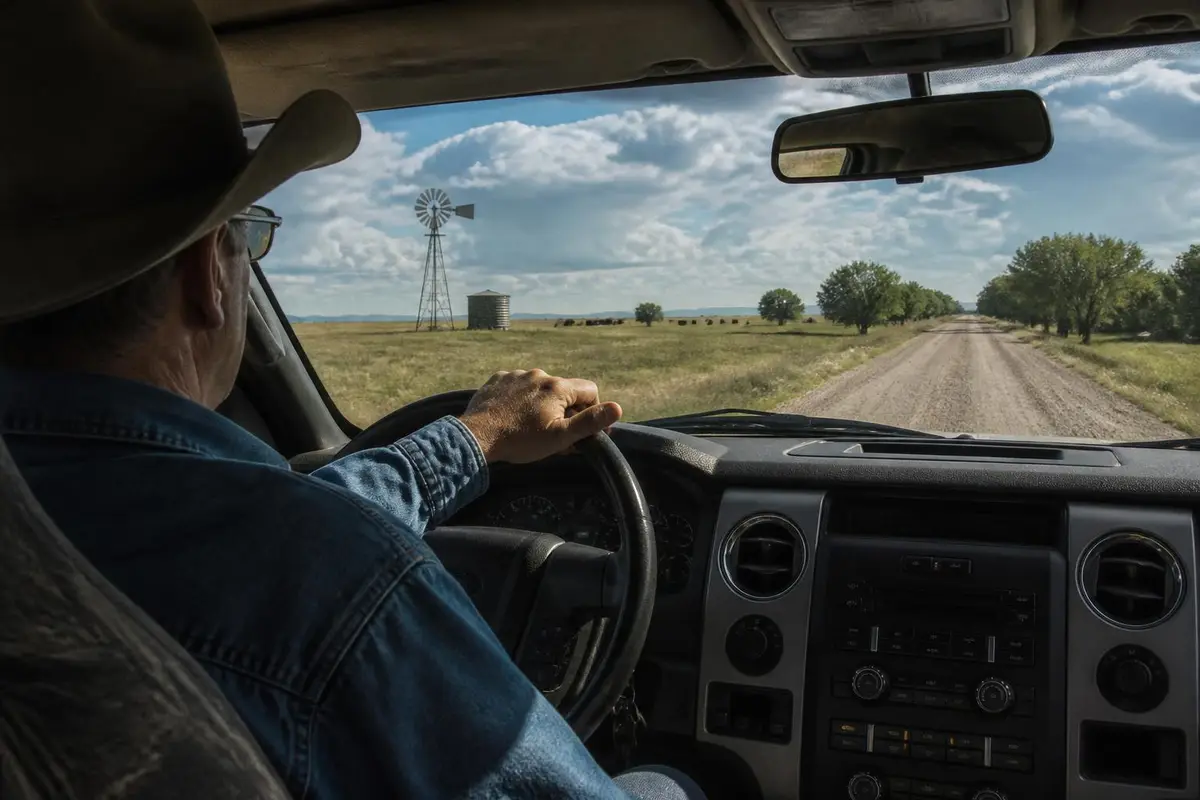
Gravel and unpaved dirt roads are the most common everyday case for 4H. Ford's manual lists 4A (Auto) and 4H both as appropriate for "off-road or winter conditions," and GMC's AutoTrac guide calls its equivalent 4 Hi setting suited to "loose, slippery or demanding terrain, such as gravel." Engaging before entering a long gravel stretch, rather than waiting for a slide, keeps the extra traction available from the first turn.
Snow and Ice
Most snow and ice driving at normal road speed calls for 4H or an automatic mode; GMC specifically markets its AUTO setting for "driving on wet roads or in winter conditions." Reserve 4L for genuinely deep, unplowed snow or a steep snowy grade. See 4 high vs 4 low for the fuller range comparison and AWD vs 4WD in snow for how drivetrain choice itself factors into winter traction, alongside tires.
Mud and Sand
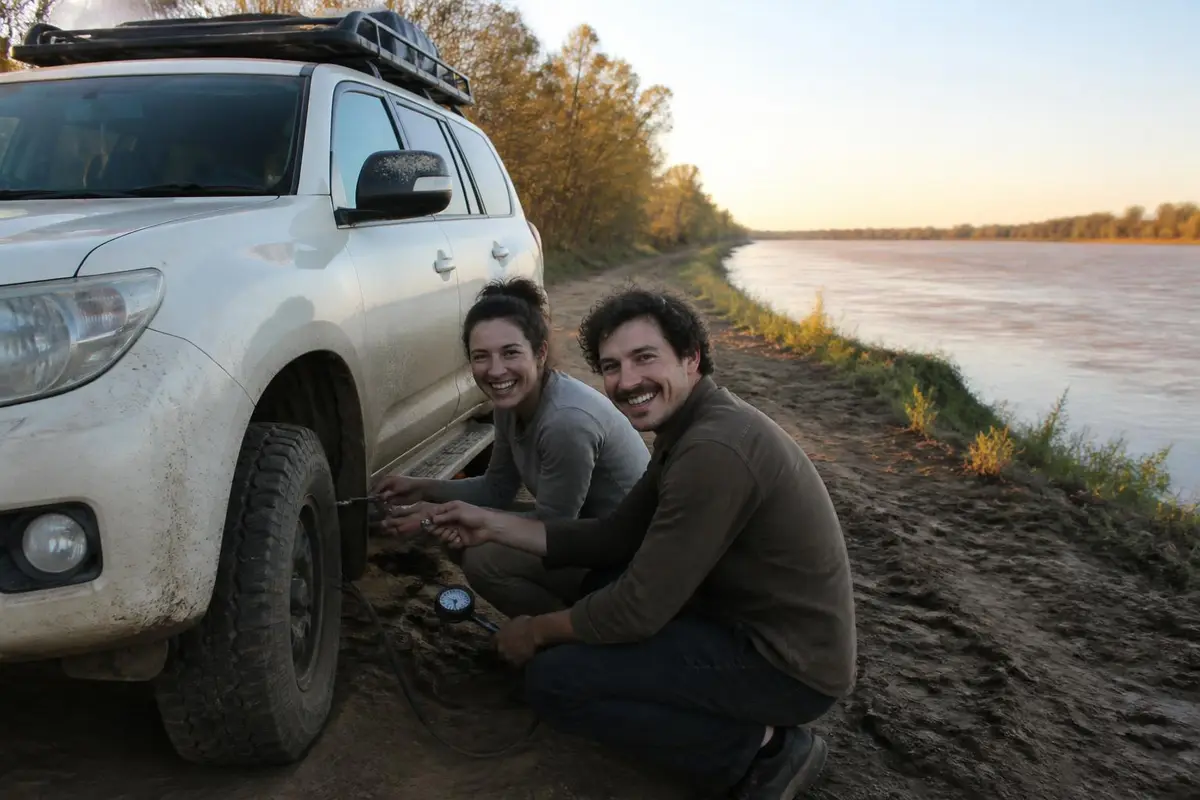
Mud and sand both reward steady momentum over raw speed. GMC lists "deep sand, mud or snow" together as the textbook case for 4 Lo, where the lower gearing gives more torque at a controllable speed. Airing down works alongside the right range on sand specifically — the National Park Service's guidance for the Medano Pass road at Great Sand Dunes tells drivers to reduce tire pressure to about 20 psi for dry, soft sand, on top of engaging low range — dropping pressure increases the tire's contact patch the same way on any loose surface, per BFGoodrich's own off-road tire guidance. See how to not get stuck in mud and how to drive on sand for the terrain-specific technique that goes alongside engaging the right range.
Rock Crawling and Steep Grades
Technical terrain — large rocks, a steep climb or descent, an obstacle requiring careful wheel placement — is squarely 4L territory. GMC's documentation notes 4 Lo is for "more control of the vehicle's speed when you're crossing obstacles or rocks, or climbing and descending steep grades," but caps it at 45 mph and requires under 3 mph to shift into or out of the range. Toyota's own FJ Cruiser documentation shows what low range buys mechanically: its 2.566:1 low-range gearset combines with the axle ratio for a 33.76:1 crawl ratio (automatic) or 41.84:1 (manual) — a multiplication of engine torque that lets a driver crawl an obstacle at walking pace instead of riding the clutch or brake in high range. See what is rock crawling for the full technique this range choice supports.
Dry Pavement: When Not to Use It
On a part-time 4WD system, dry, high-traction pavement is the one surface where 4WD should stay disengaged. Ford's owner's manual is direct about the consequence: "Do not use 4H or 4L mode on dry, hard surfaced roads. Doing so can produce excessive noise, increase tire wear and may damage drive components." That's because a part-time system has no center differential to absorb the speed difference between the front and rear axles that a turn produces on high-traction pavement — see 4WD on the highway for the full explanation of that binding effect.
Engaging Proactively, Not Reactively
Engage 4WD before the surface change, not after a tire has already lost traction. A vehicle that's already spinning a wheel on ice or bogging down in sand has lost the momentum that made the moment recoverable in the first place — engaging 4WD at that point helps less than engaging it the moment the surface looked questionable.
Recommended gear
A first recovery kit for any 4WD
Affiliate disclosure: As an Amazon Associate, we earn from qualifying purchases, at no extra cost to you. Purchases through these links help keep this site running and up to date. Learn more

Best for a complete strap, shackle and glove kit in one bag.
- Straps, shackles, gloves, damper and a recovery bag in one kit.
- Covers most vehicle-to-vehicle recoveries without buying parts separately.

Best for getting unstuck from sand, mud or snow without another vehicle.
- Nylon recovery boards that give spinning tires grip in sand, mud or snow.
- Double as a shovel to clear sand from in front of the tires.

Best for airing all four tires down to a set pressure at once.
- Automatic deflators preset between 6 and 30 PSI.
- Air all four tires down at once, then stop at the set pressure.

Best for airing back up before you hit pavement.
- Portable 12V compressor rated to 150 PSI.
- Sized for truck and SUV tires.
We research products from manufacturer specs and owner feedback; we don't test them ourselves. How we choose.
Sources
- Ford — Owner's Manual: Using Four-Wheel Drive — Ford's definitions of 2H/4A/4H/4L and its warning against running 4H or 4L on dry, hard-surfaced roads.
- GMC — How the AutoTrac 2-Speed Transfer Case Works — GMC's AUTO/4Hi/4Lo mode use cases (gravel, wet/winter roads, deep sand/mud/snow, obstacles and grades), the 45 mph 4 Lo limit and under-3-mph shift requirement.
- National Park Service — 4WD Medano Pass Primitive Road (Great Sand Dunes) — NPS guidance to reduce tire pressure to about 20 psi for dry, soft sand, cited alongside engaging low range for sand.
- Toyota USA Newsroom — 2014 Toyota FJ Cruiser 4WD System — Worked crawl-ratio numbers (33.76:1 automatic / 41.84:1 manual) showing what low range's gear reduction does for technical, slow-speed terrain.
- BFGoodrich — 4x4 Driving Guide: Off-Road Tire Selection — General airing-down guidance that pairs with engaging the right 4WD range on loose surfaces.