
TL;DR
Big Bend National Park's primitive backcountry roads — Old Ore Road, River Road and Black Gap Road — require a genuine high-clearance 4x4 as defined by the NPS. No permit is needed to drive them by day, but any roadside campsite needs an in-person permit from Panther Junction.
Recommended
Recommended for this trail
Affiliate disclosure: As an Amazon Associate, we earn from qualifying purchases, at no extra cost to you. We research rather than test, and commissions never change our rankings. This site is reader-supported: those commissions pay for hosting, research and keeping every guide up to date, so if a guide helped you, buying through our links is an easy way to support it. How we rank · Full disclosure

Best for fast inflation of larger off-road tires.
- Heavy-duty 12V off-road compressor.
- Built for inflating larger off-road tires quickly.

Best for plugging a tread puncture on the trail.
- Reamer-and-plugger kit for tread punctures.
- Lets you plug a tire on the trail instead of changing it.
Quick answers
- Need a 4WD, or will AWD/2WD do?
- Yes — 4WD with low range is what the research basis for this place calls for (true 4WD, low-range transfer case; minimum 15-inch rims; at least 8 inches of ground clearance).
- Trailers/RVs OK?
- Not confirmed — check with National Park Service, Big Bend National Park before you go.
- Dogs allowed?
- Not confirmed — check with National Park Service, Big Bend National Park before you go.
- Campfires allowed?
- Not confirmed — check with National Park Service, Big Bend National Park before you go. Fire restrictions change with drought and season — confirm the current status with National Park Service, Big Bend National Park before you light one.
- Permit or pass needed?
- Required — a recreation pass/permit (see the official page for current requirements: link below).Official page
- Suggested air-down range?
- Check conditions — no official air-down range is on file for this place; ask at the entrance station or land-manager office.
- Seasonal closures?
- Black Gap Road's drive-in campsites are currently closed
- Cell coverage?
- Little to none along these roads Don’t rely on it — carry a satellite messenger or PLB.
About this place
About Big Bend Backcountry Roads
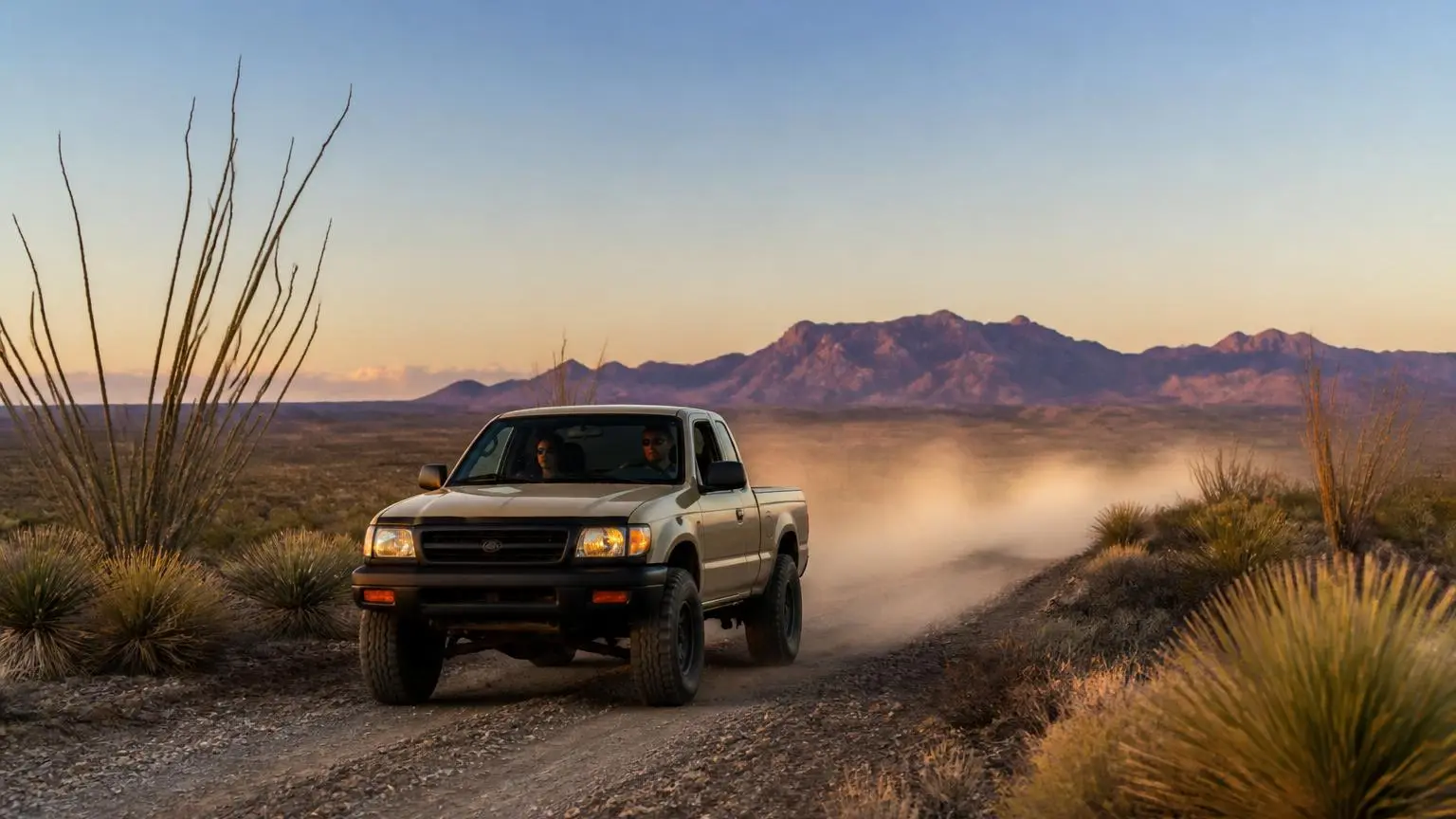
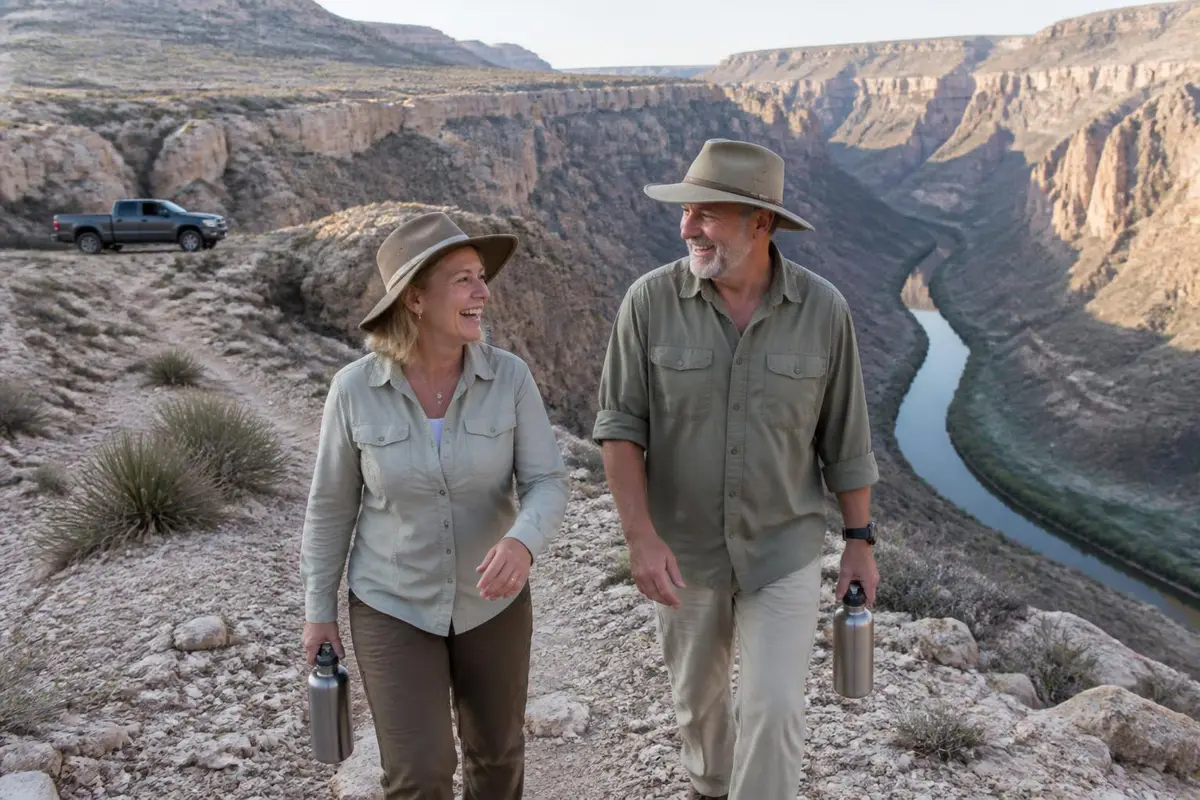
Beyond its paved scenic drives, Big Bend National Park holds a network of primitive backcountry roads — Old Ore Road, River Road, Black Gap Road, Glenn Springs Road and Old Maverick Road — that cut through some of the most remote desert terrain in the lower 48 states.
Old Ore Road is the best-known of these, running about 26 miles along an early-1900s ore-hauling route between Dagger Flat Road and Rio Grande Village Road, past historic sites and desert geology like Ernst Tinaja.
These roads see far fewer visitors than the park's paved routes, which is part of the appeal for high-clearance 4x4 owners, but it also means help is genuinely far away if something goes wrong.
Why you need 4WD at Big Bend Backcountry Roads
The National Park Service defines exactly what counts as a high-clearance 4x4 for these roads: an SUV or truck-type vehicle with at least 15-inch rims, a low-range transfer case, at least 8 inches of ground clearance, and true four-wheel drive. Rangers won't issue backcountry campsite permits to passenger cars, minivans or RVs for this reason.
Old Ore Road is rocky and sandy with a 25 mph speed limit, and can become deeply rutted or impassable after rain or heavy use. River Road and Black Gap Road are even less maintained and reported as rougher — this is genuine backcountry driving, not a graded scenic loop.
How hard is it?
Level of difficulty
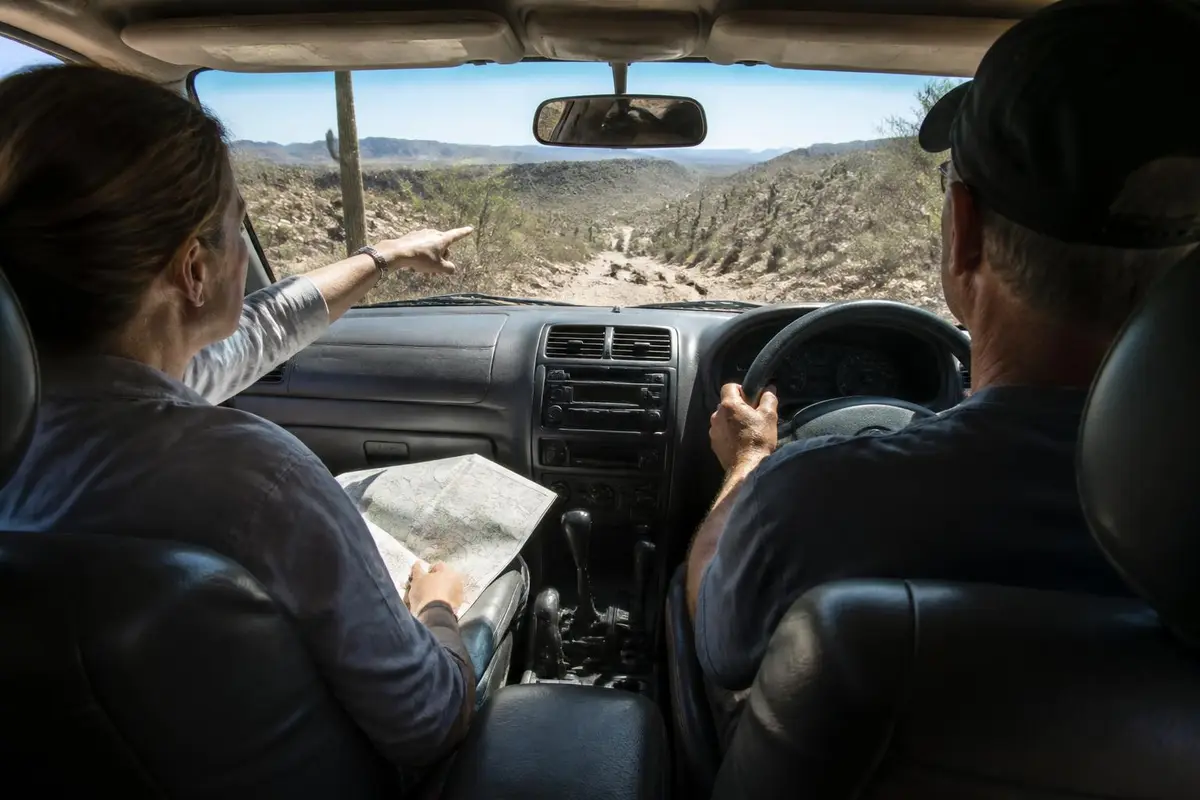
The NPS itself defines a strict, specific high-clearance 4WD standard for these roads and will not issue backcountry campsite permits to passenger cars, minivans or RVs; visitor reports range from a straightforward few-hour Tacoma crossing to reports of steep inclines, washouts and sharp rocks depending on recent weather, placing this solidly in the moderate-to-challenging range with real variability.
Gear this band commonly needs
- 4WD with low range (required)
- A/T or M/T tires, 31"+ recommended
- Rated recovery points front & rear
- Basic recovery kit (strap, shackles)
Hazards flagged for Big Bend Backcountry Roads
- limited cell coverage
Gear list is our generic trail-rating rubric for this band, not place-specific. Hazards are pulled from this place's own visitor reports and rules, only when explicitly mentioned.
Can My Rig Do It?
Save your rig (tire size & lift height) to see a quick comparison against what Big Bend Backcountry Roads commonly needs.
General guidance only — this compares your saved tire size and lift height against the band's typical gear list, not your actual driving experience, tread pattern, or current trail conditions. It is not a go/no-go decision.
What visitors say
Pros and cons, according to visitors
What visitors love
- One reviewer completed Old Ore Road in a stock Toyota Tacoma in under 3 hours with only a few difficult spots and reported seeing no other people the whole way source
- Visitors describe River Road as offering gorgeous, remote views of the valley and surrounding mountains not seen from the paved park roads source
- The historic route and roadside geology along Old Ore Road, including sites like Ernst Tinaja, are called out as worth the drive on their own source
What visitors warn about
- Other reviewers describe Old Ore Road as having steep inclines, washouts, high-center sections and sharp rocks depending on recent conditions source
- River Road is rarely maintained and can turn rough after weather, requiring genuine high-clearance capability rather than just all-wheel drive source
- Visitors are warned there is little to no cell coverage on these roads, and are advised to carry a spare tire and tell someone their planned route and return time source
Plan your trip
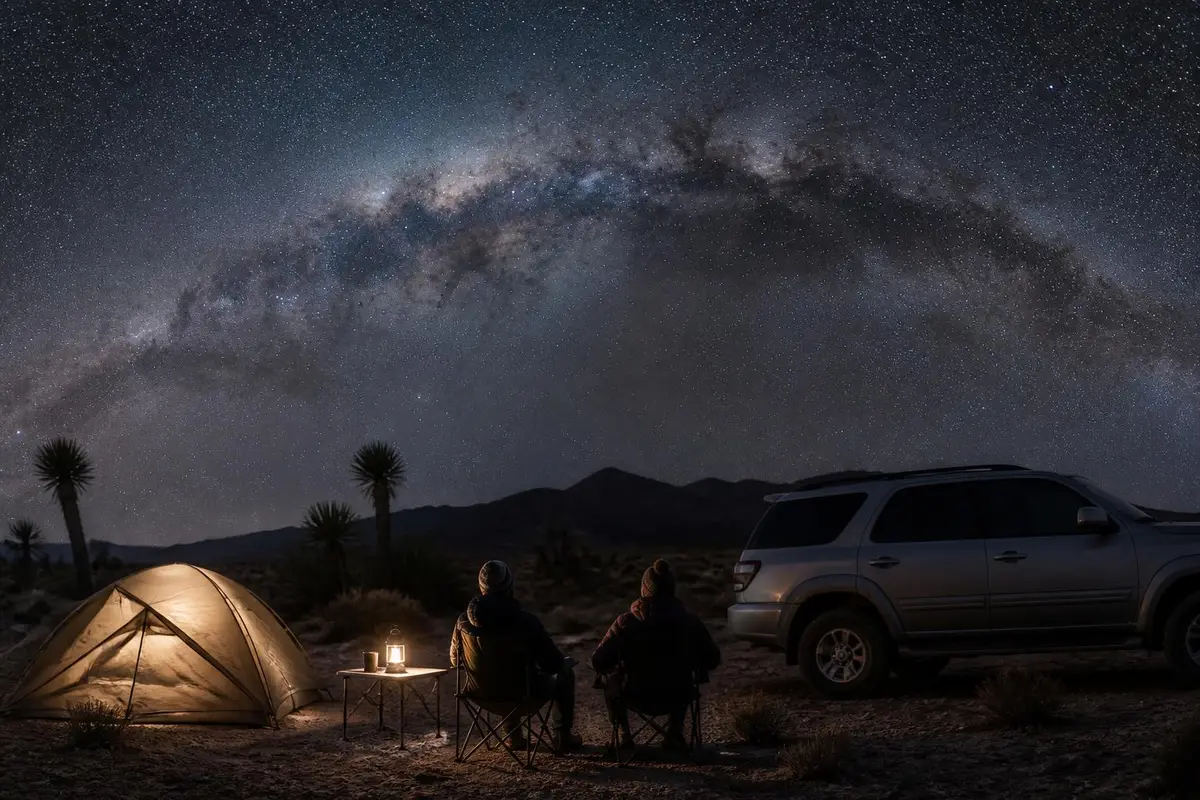
What it's like in the dry, wet and cold seasons
Dry season
November through April
The most comfortable season for backcountry driving here, avoiding the most extreme desert heat on remote, slow-going roads far from any help.
Wet season
summer monsoon, July-September
Rain can quickly make these primitive roads deeply rutted or genuinely impassable — the National Park Service specifically warns conditions change fast after storms.
Cold season
December-February
Generally mild days but cold desert nights; road access is otherwise similar to the rest of the dry season.
Best time to go
November through April, checking current road conditions with Panther Junction Visitor Center before any backcountry drive, since conditions change quickly after rain.
Season & Access
Typical open window
November through April, checking current road conditions with Panther Junction Visitor Center before any backcountry drive, since conditions change quickly after rain.
Managing agency
National Park Service, Big Bend National Park
Official map / permit page
Conditions change: confirm with the land manager before you go.
Our recommendations
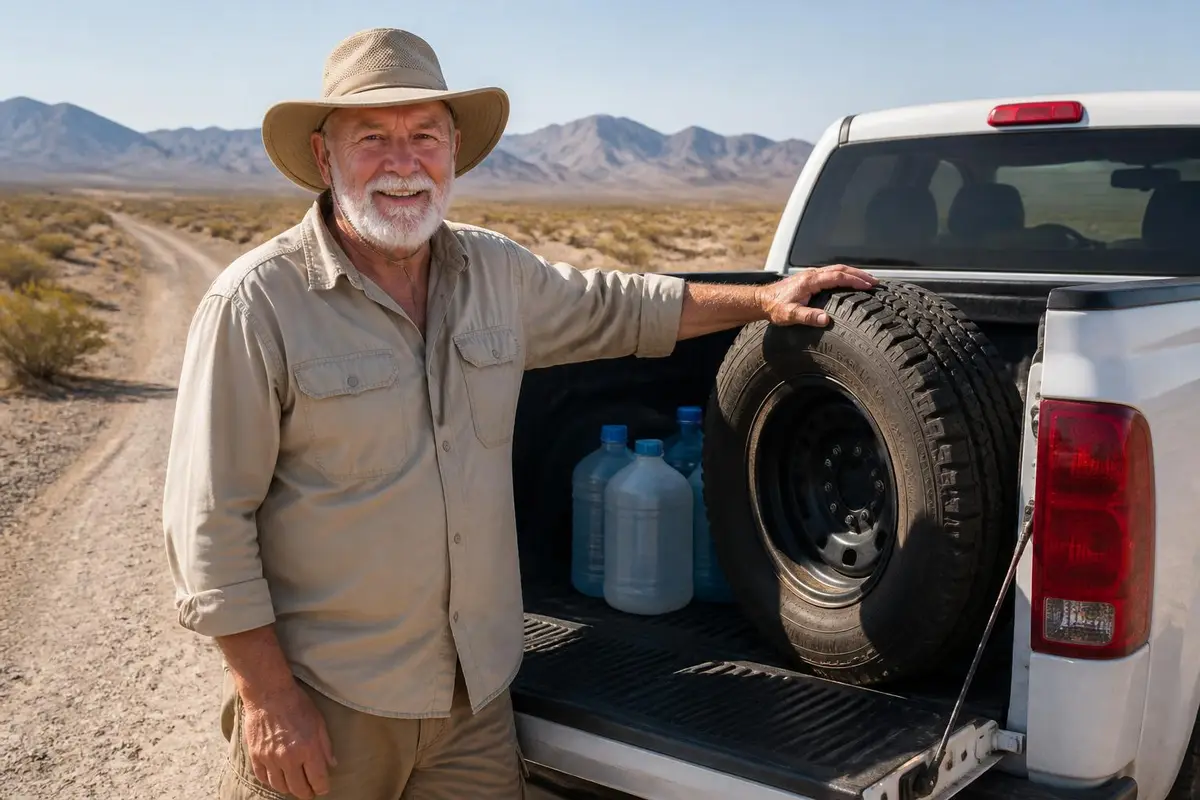
- Check current road conditions at Panther Junction Visitor Center before setting out
- Confirm your vehicle meets the park's specific high-clearance 4x4 definition before attempting these roads
- Carry a full-size spare and basic recovery gear — help is genuinely far away
- Tell someone your planned route and expected return time before heading out
- Get any backcountry campsite permit in person at Panther Junction, up to 24 hours ahead
- Carry more water and fuel than the mileage suggests; nothing is available on these roads
- Avoid these roads entirely after heavy rain until conditions are confirmed passable
Amenities
Camping
Primitive roadside campsites along Old Ore Road, River Road, Glenn Springs Road and Old Maverick Road, permit required; Black Gap Road's drive-in campsites are currently closed
Toilets
None on the backcountry roads themselves; only at developed park facilities
Drinking water
No potable water on any of these roads
Fuel on site
None; fuel up at Panther Junction, Rio Grande Village or Study Butte before entering the backcountry
Cell coverage
Little to none along these roads
Air-up
Not confirmed — check with the land manager before you go.
Also good to know
Old Ore Road runs between Dagger Flat Road and Rio Grande Village Road; speed limit is 25 mph
Recommended
Air down, air up
Affiliate disclosure: As an Amazon Associate, we earn from qualifying purchases, at no extra cost to you. Purchases through these links help keep this site running and up to date. Learn more

Best for airing all four tires down to a set pressure at once.
- Automatic deflators preset between 6 and 30 PSI.
- Air all four tires down at once, then stop at the set pressure.

Best for airing back up before you hit pavement.
- Portable 12V compressor rated to 150 PSI.
- Sized for truck and SUV tires.
Getting there
Where is Big Bend Backcountry Roads?
Topo tiles: USGS The National Map. Fallback layer: © OpenStreetMap contributors.
Old Ore Road, near its junction with Dagger Flat Road, Big Bend National Park (29.2988, -103.2453) · Nearest town: Alpine, TX
How to get there
Old Ore Road connects Dagger Flat Road to Rio Grande Village Road in the park's eastern side; River Road runs along the park's southern edge nearer the Rio Grande; Black Gap Road branches off further east. All are accessed from the park's paved road network — there's no separate entrance fee beyond the standard Big Bend National Park entrance fee. Fuel and basic supplies should be topped up at Panther Junction, Rio Grande Village or Study Butte before heading onto any of these roads, since nothing is available once you're on them.
Supplies & services
Gas, groceries, mechanics and towing
Nearest shops and gas stations
Gas station
- ALON Gas Station3.1 mi
311 Park Route 13, Big Bend National Park, TX 79834
Google Maps Apple Maps - Sunoco31.8 mi
55 Main Street, Lajitas, TX 79852
Google Maps Apple Maps
Groceries
- Cottonwood General Store17 mi
53710 TX-118, Terlingua, TX 79852
Google Maps Apple Maps - Little Burro Country Store29.7 mi
51491 TX-118, Alpine, TX 79830
Google Maps Apple Maps
Closest mechanics, towing and tire shops
Mechanic
- Terlingua Auto17.8 mi
23341 FM170, Terlingua, TX 79852
Google Maps Apple Maps
Towing / recovery
Nothing listed within about 60 miles. Carry what you need.
Tire shop
Nothing listed within about 60 miles. Carry what you need.
Distances are straight-line miles from the map pin; the drive is longer. Listings come from Google Maps business data (checked September 2026); emails are shown only where the business publishes one on its own website. Hours change, so call ahead, especially off-season.
Stay safe
Emergency services
In an emergency, call 911 first
Police, fire, ambulance and search & rescue. The contacts below are a courtesy and can change.
Nearest hospital
Big Bend Regional Medical Center
2600 N Hwy 118, Alpine, TX 79830
Nearest hospital, in Alpine, roughly 100 miles from the park's interior roads
Google Maps Apple MapsSheriff
Brewster County Sheriff's Office
Covers Big Bend National Park and the surrounding area
Land manager
Big Bend National Park — Panther Junction Visitor Center
1 Alsate Dr, Big Bend National Park, TX 79834
Main visitor center and permit office for the park
Google Maps Apple MapsBefore you lose signal
Cell coverage is little to none on these backcountry roads; carry a satellite messenger and tell park staff or a companion your planned route, since Big Bend is one of the most remote national parks in the lower 48 and emergency response can take significant time.
Good to know
Rules and permits
No permit is needed simply to drive Old Ore Road, River Road or Black Gap Road during the day, but any roadside campsite along them requires an in-person backcountry permit from Panther Junction Visitor Center, issued up to 24 hours before your first night. Rangers will not issue that permit to a passenger car, minivan or RV — only to vehicles meeting the park's specific high-clearance 4x4 definition. Old Ore Road carries a 25 mph speed limit, and Black Gap Road's drive-in campsites are currently closed.
Permit: No permit is needed simply to drive the roads during the day, but a backcountry permit is required for any of the primitive roadside campsites along these roads, obtainable only in person at Panther Junction Visitor Center up to 24 hours before your first night's stay. Rangers will not issue a backcountry road permit to a passenger car, minivan or RV — only vehicles meeting the park's high-clearance 4x4 definition. (official page)
- No permit needed simply to drive the roads by day, but a backcountry permit (obtained in person at Panther Junction, up to 24 hours ahead) is required for any roadside campsite
- Rangers will not issue backcountry road/camping permits to passenger cars, minivans or RVs — only vehicles meeting the park's high-clearance 4x4 definition
- 25 mph speed limit on Old Ore Road
- Black Gap Road's drive-in campsites are currently closed
- Stay on designated roads — this is a national park, and off-road travel beyond the established routes is not permitted
Gear for this trip
Gear for long, remote routes
Affiliate disclosure: As an Amazon Associate, we earn from qualifying purchases, at no extra cost to you. Purchases through these links help keep this site running and up to date. Learn more

Best for carrying drinking water where none is available.
- 5-gallon (20 L) BPA-free, food-grade water container.
- Military-style jug that stacks and stores in the bed.

Best for extra fuel on long, remote routes (EPA & CARB compliant).
- 5-gallon (20 L) NATO-style steel jerry can with spout.
- EPA and CARB compliant.
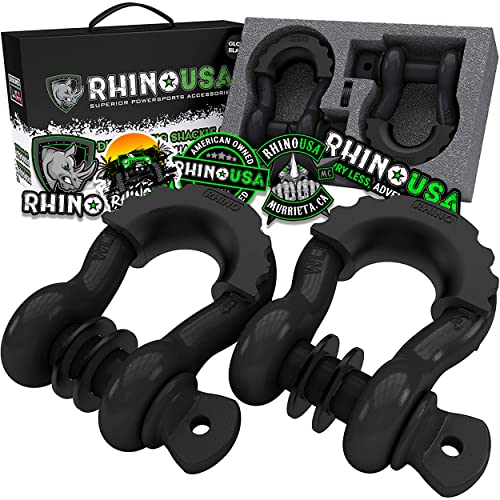
Best for rated connection points for straps and ropes.
- 3/4 in D-ring shackles, 41,850 lb listed break strength (2-pack).
- Connect straps to rated recovery points.
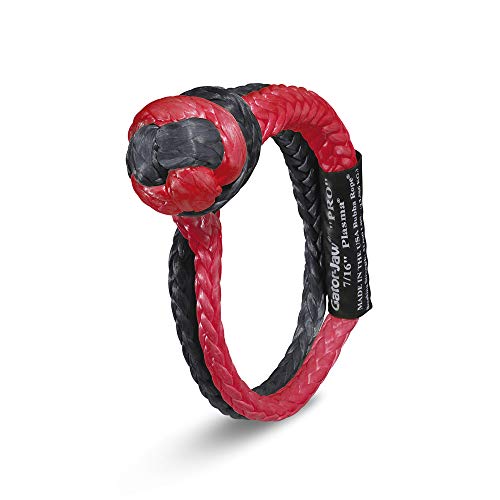
Best for a lighter alternative to steel shackles.
- 7/16 in synthetic soft shackle, 52,300 lb listed breaking strength.
- Lighter than a steel shackle and won't become a projectile.
We research products from manufacturer specs and owner feedback; we don't test them ourselves. How we choose.
Straight answers
Big Bend Backcountry Roads FAQ
Do you need a permit to drive Big Bend's backcountry roads?
Not to drive them during the day, but any roadside campsite along Old Ore Road, River Road, Black Gap Road, Glenn Springs Road or Old Maverick Road requires a backcountry permit, issued only in person at Panther Junction Visitor Center up to 24 hours ahead.
What counts as a high-clearance 4x4 in Big Bend?
The National Park Service defines it specifically: an SUV or truck-type vehicle with at least 15-inch rims, a low-range transfer case, at least 8 inches of ground clearance, and true four-wheel drive. Rangers won't issue backcountry permits to passenger cars, minivans or RVs.
How long is Old Ore Road?
Old Ore Road runs about 26 miles between Dagger Flat Road and Rio Grande Village Road, following an early-1900s ore-hauling route, with a posted 25 mph speed limit.
Is River Road harder than Old Ore Road?
Reviewers and the National Park Service both describe River Road as rarely maintained and rougher after weather, generally considered more demanding than Old Ore Road, which sees more regular grading.
Can you camp along Big Bend's backcountry roads?
Yes, at primitive roadside campsites along Old Ore Road, River Road, Glenn Springs Road and Old Maverick Road, with a permit from Panther Junction. Black Gap Road's drive-in campsites are currently closed.
Is there cell service on Big Bend's backcountry roads?
Little to none. Visitors are advised to carry a spare tire, extra water, and tell someone their planned route and expected return time before heading out.
Sources
Researched from official land-manager, county and hospital sites plus published visitor reports. We have not driven every trail ourselves. See how we research.
- National Park Service — Primitive Roadside Campsites, Big Bend National Park — Permit process, high-clearance 4x4 vehicle definition, vehicle-type restrictions
- National Park Service — Old Ore Road — Old Ore Road length, route description, speed limit
- National Park Service — Black Gap Road — Black Gap Road maintenance status and campsite closure
- National Park Service — Contact Us, Big Bend National Park — Panther Junction Visitor Center address and phone number
- Brewster County, TX — Sheriff — Sheriff's office phone number
- Big Bend Regional Medical Center — Contact Us — Nearest hospital name, address and phone number
- Visitor reports (Truck Camper Adventure, Hitched to Bex, Wander-Filled Life, AllTrails), summarized — Pros/cons paraphrased from real visitor reports
Keep exploring
More 4x4 places
Coral Pink Sand Dunes, Utah
sand dune OHV area · difficulty 4/10
Death Valley Backcountry Roads, California
national park primitive 4x4 road network · difficulty 5/10
Fish Creek Wash, California
desert wash / badlands 4x4 road · difficulty 3/10
Glamis (Imperial Sand Dunes), California
sand dunes (OHV recreation area) · difficulty 7/10
Hatfield-McCoy Trails, West Virginia
OHV trail network · difficulty 6/10
Johnson Valley, California
OHV recreation area / rock-crawl trail network · difficulty 9/10
Mojave Road, California
historic desert 4x4 route · difficulty 5/10
Uwharrie National Forest, North Carolina
national forest OHV trail network · difficulty 6/10